CORMACK, ALLAN MACLEOD
- 4 Min Read

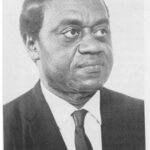
PHOTO CAPTION: Allan MacLeod Cormack. SOURCE: Alchetron.
Allan MacLeod Cormack (February 23, 1924 – May 7, 1998), Nobel Laureate in Physiology or Medicine, is renowned as one of the developers of computerised axial tomography (CAT) scanning, today better known as computed tomography (CT). His pioneering insight was that X-rays of the body or brain could be taken from multiple angles, accounting for variations in how different tissues absorb radiation, and then processed by a computer to reconstruct three-dimensional images of the body’s interior. This breakthrough transformed diagnostic medicine worldwide.
Cormack was born in Johannesburg, South Africa, on February 23, 1924, to a Scottish mother, Amelia MacLeod, and a father, George Cormack. His mother was a teacher and his father an engineer, and they had immigrated to South Africa just before World War I. They eventually settled in Cape Town, where Cormack attended Rondebosch Boys’ High School and showed early promise in tennis, debating, and astronomy, through which he developed an enthusiasm for physics and mathematics.
He pursued his undergraduate and postgraduate studies at the University of Cape Town (UCT), graduating with a B.Sc. in Physics in 1944 and an M.Sc. in Crystallography in 1945. During this time, he studied under Professor R.W. James, a leading physicist whose mentorship deeply influenced him. Notably, James later taught two future Nobel laureates: Aaron Klug and Allan Cormack.
Cormack left South Africa for England after completing his Master’s degree. He worked as a research student at St. John’s College in Cambridge. He returned to South Africa as a lecturer at the University of Cape Town from 1950 to 1956 to teach in the Physics Department and then, after a year’s research fellowship at Harvard University, became assistant professor of physics at Tufts University. His main research at Tufts centred on the interaction of subatomic particles. He advanced to full professor in 1964 and was the chairman of the department from 1968 to 1976, and retired in 1980.
As the only qualified nuclear physicist in Cape Town, he was asked to spend part of the week at Groote Schur Hospital (later famous for heart transplant surgery) to deal with radioactive materials, and in particular, to find a way to measure X-ray absorption by different parts of the body.
It was there, for the first time, that he began to think about the X-ray imaging problem and how most of the information in an X-ray was being wasted. In 1956, Cormack went to Harvard University on sabbatical, where he began completely different work with the physicists Norman Ramsey and Richard Wilson on the scattering of protons.

PHOTO CAPTION: Godfrey N. Hounsfield with the CT scan.
Cormack’s landmark contribution came from his theoretical work on computed tomography. He developed the mathematical methods by which X-ray data, captured from multiple angles, could be processed into sharp, cross-sectional images of the human body. His work, paired with the engineering advances of Godfrey Hounsfield, resulted in the modern CAT scan. For this achievement, the two men were awarded the 1979 Nobel Prize in Physiology or Medicine. Remarkably, Cormack achieved this without holding either a medical degree or a doctorate in philosophy.

PHOTO CAPTION: Allan M. Cormack and Godfrey N. Hounsfield won the Noble Prize for Physiology or Medicine in 1979.
In recognition of his contributions, he was elected a Fellow of the American Academy of Arts and Sciences in 1980.
Cormack died of cancer on May 7, 1998, in Winchester, Massachusetts, at the age of 74. He was posthumously awarded South Africa’s highest honour, the Order of Mapungubwe (Gold category), celebrating his profound impact on science and medicine.
EA EDITORS