LEAKEY, RICHARD
- 2 Min Read

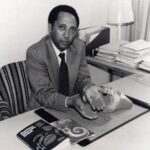
PHOTO CAPTION: Richard Leakey. SOURCE: Alamy
Richard Leakey (December 19, 1944 – January 2, 2022) was a renowned paleoanthropologist, conservationist, and political figure. His groundbreaking research played a crucial role in strengthening the recognition of Africa as the cradle of humankind, providing compelling evidence that the earliest humans lived on the African continent.
Richard Leakey was born on December 19, 1944, in Nairobi, Kenya, into a family deeply rooted in paleoanthropology. He was the son of Louis Leakey and Mary Leakey, both pioneering scientists whose landmark discoveries at Olduvai Gorge in Tanzania transformed the understanding of human evolution. Growing up in such an intellectually rich environment strongly influenced Leakey’s future career.
Although Leakey’s formal education ended at the age of 16, he was an industrious and independent young man. He trapped animals for income and later founded a tourist safari company in an effort to establish himself outside his parents’ shadow. Eventually, however, he returned to paleoanthropology, gaining recognition through extensive fieldwork, research, and the award of several honorary doctorates.
Leakey’s career was multifaceted and impactful. In paleoanthropology, he made several major discoveries, most notably the Turkana Boy, a remarkably complete skeleton of a Homo erectus youth that provided invaluable insights into early human anatomy and development. Beyond science, Leakey served in key roles within the Kenyan government. As Head of the Kenya Wildlife Service, he led aggressive conservation efforts at a time when rampant poaching threatened to wipe out the country’s elephant and rhino populations. He later served as Head of Kenya’s civil service, where he focused on combating official corruption.
Richard Leakey passed away on January 2, 2022, at the age of 77 in Nairobi, Kenya. His death was mourned worldwide, reflecting the profound impact of his work in science, conservation, and public service. He left behind a lasting legacy of scientific discovery and a deep commitment to preserving Kenya’s natural and cultural heritage.
EA EDITORS