Senegal
- 15 Min Read
HISTORICAL INTRODUCTION

PHOTO CAPTION: Map of Senegal.
Senegal is a country in Western Africa. With the Atlantic Ocean to the west, Senegal borders Guinea-Bissau to the south, Guinea to the southeast, Mali to the east, and Mauritania to the north. Internally, the country almost surrounds The Gambia, namely on the north, east and south, excluding Gambia’s short Atlantic coastline which does not border Senegal. Senegal covers an area of 196,712 km².

PHOTO CAPTION: River Senegal. SOURCE: EA Library.
The country of Senegal was named after the Senegal River. The name of the river is believed to be related to the Zenaga (also known as Sanhaja) Berbers, who once occupied the region north of the river.

PHOTO CAPTION: Senegal’s landscape consists mainly of the rolling sandy plains of the western Sahel. SOURCE: Giovanni Hanninen.
Senegal’s landscape consists mainly of the rolling sandy plains of the western Sahel, which rise to foothills in the southeast. The northern border is formed by the Senegal River (1700 km) in the North; other rivers include the Gambia River (750 km) and the Casamance River (300 km) in the South. Senegal contains four terrestrial ecoregions: Guinean forest-savanna mosaic, Sahelian Acacia savanna, West Sudanian savanna, and Guinean mangroves.

PHOTO CAPTION: Senegal endowed with variety of natural resources. SOURCE: EA Library.
Senegal possesses a variety of natural resources, including mineral deposits, agricultural products, and abundant fisheries. Key mineral resources include phosphate, gold, iron ore, and titanium. The agricultural sector is significant, producing peanuts, millet, sorghum, and other crops. Senegal’s extensive coastline and rich waters also support a robust fishing industry.
Senegal is home to several major ethnic groups, each contributing to the country’s rich cultural diversity. There are over 30 ethnic groups present in Senegal which are represented socially and culturally.
EARLY ORIGINS
The history of pre-colonial Senegal is mainly characterized by the existence of kingdoms or states that were gradually broken up. Key early kingdoms and empires in the region include Tekrur, Ghana, and Jolof, with Islam playing a significant role in the area, particularly through the influence of the Almoravids. European contact, notably with the Portuguese, began in the 15th century and eventually led to French colonization in the 19th century.
The First Kingdoms

PHOTO CAPTION: The Kingdom of Namandirou. SOURCE: InlandTown.
Human societies developed and organized themselves little by little until the gradual emergence of the first kingdoms, which can be traced back to the seventh century. The Toucouleur ethnic group is at the origin of the creation of the Kingdom of Namandirou, otherwise called the Kingdom of Tekrour, then the Kingdom of Djolof (affiliated to the Empire of Ghana) which was the largest and most influential territory in the 14th including the Baol, the Fouladou, the Fouta-Toro, the Kingdom of Sine Saloum, the Cayor, the Waalo, the state of Kaabuet and the Bambouk.
The Kingdom of Djolof was founded in the 13th century in the Senegal River region by Ndiadiane Ndiaye, then first bourba (“king”) and united the different populations related to the Wolof ethnic group. It later became the Kingdom of Oualo, coinciding with the death of its last emperor, Lele Fouli Fak, in 1549.
Subsequently, the former Djolof was annexed to the Mali Empire, then, later, in the nineteenth century, it was the last territory (then reduced to the center of the country) to be colonized by the French, with the exile of its king, Alboury Ndiaye.
Islamisation

PHOTO CAPTION: The Islamisation of Senegal. SOURCE: InlandTown.
The history of Senegal is inseparable from the progression of Islam in this part of Africa. This religion was first propagated peacefully, from the eighth to the ninth century, by the trade of the Arab-Berbers with the Toucouleurs ethnic group, who spread Islam in the territory.
Then, in the 10th century, it was by force, by Jihad, that Islamisation was carried out. The Almoravid Berber tribes forced, with the help of the Toucouleurs, the Fulani, Mandingo, Wolof or Serer ethnic groups to convert or leave the Tekrour and migrate.
For several centuries, Islam experienced a constant progression, until the 19th century when it was generalized to the different populations forming today’s Senegal.
The 19th century represents a key period, marked by the fall of the various kingdoms and the gradual colonization of territories. In this context, Islam, through the peaceful intervention of great marabouts, Sheikh Malick Sy of the Tidjaniya brotherhood and Sheikh Ahmadou Bamba of the Mouride brotherhood, became a social and identity bulwark. The main ethnic groups in Senegal include the Wolof, Fula/Peuhl, Serer, Mandinka, Diola/Jola, Lebu, and Soninke.
Wolof People

PHOTO CAPTION: The Wolof. SOURCE: InlandTown.
The largest and most influential ethnic group in Senegal is the Wolof, comprising approximately 38-44% of the population. They are found primarily residing in the western and northern regions of Senegal and are also found in neighbouring West African countries, like The Gambia and Mauritania.
The native language of the Wolof tribe is the Wolof language, which is the most widely spoken language in the Republic of Senegal. The majority of the Wolof tribe practices Islam as the major religion.
Fulani People

PHOTO CAPTION: The Fulani. SOURCE: EA Library.
The Fulani ethnic group is the second largest tribe in Senegal, comprising approximately 30% of the population. They are also known as the Fulbe, Fula, Peul or Peuhle. Their numbers include a cultural subgroup known as the Toucouleur (or Tukuloor) and a linguistic group known as the Haalpulaar’en.
The Fulani people are mainly Muslims and can be found occupying the Futa-Toro region, a semi-desert region towards the Senegal River between Senegal and Mauritania. The Fulani tribe can also be found spread across in the Sahel region of West Africa in countries like Benin Republic, Nigeria, Cameroon, Sierra Leone, and Mauritania.
The major lifestyle of the Fulani people is nomadic in nature, and their main occupation is pastoral farming which is attributed to their nomadic lifestyle. The Fulani people speak the Fula or Fulani or Fulfude language, one of the major languages found across West Africa.
Serer People
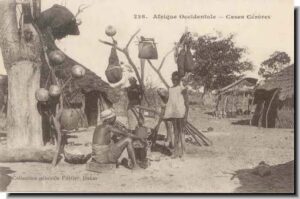
PHOTO CAPTION: The Serer. SOURCE: EA Library.
The Serer ethnic group are the third largest ethnic group in Senegal, covering approximately 13-16% of the population. The Serer people are primarily found in the western part of Senegal, particularly in the Sine-Saloum region. They have a long history and are known for their traditional religious practices, as well as their craftsmanship and artistic expression.
The Serer people have a long and complex history, dating back many centuries. They have their own language, also called Serer, which is part of the Niger-Congo language family. The Serer language has several dialects spoken by different subgroups within the Serer community.
The Serer tribe consists of Muslims and Christians, while others practice the traditional way of worship. Some major occupations of the Serer people include trading, animal husbandry, farming and pastoral farming.
Jola People

PHOTO CAPTION: Futampaf, a traditional Jola Festival. SOURCE: EA Library.
The Jola, also known as the Diola or Joola, inhabit the Casamance region of southern Senegal. The Jola consist of approximately 4-5% of the population. They are believed to have migrated from Egypt into the western parts of Africa.
They are known for their agricultural practices, as well as their unique cultural traditions and festivals. The major occupation of the Jola tribe is farming, producing food and cash crops as well as livestock.
Lebu People
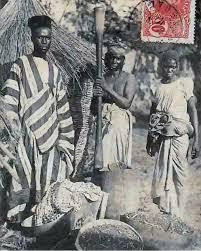
PHOTO CAPTION: The Lebu People.
The Lebu make up approximately one percent of the population.
The Lebu are the most urban ethnic group in Senegal, and their urban culture is one of the defining characteristics of their identity.
The Lebu are concentrated in the urban, coastal Cape Vert Peninsula region of Senegal; however, small numbers of Lebu live along the coasts of Mauritania, The Gambia, and Guinea-Bissau.
Although they do not see themselves as ethnically Wolof, the Lebu speak a dialect of Wolof, and many of their family names and customs are similar to both the Wolof and the Serer. The Lebu believe that they migrated from the north to the Cape Verde Peninsula in 1700, expelling the people who were previously living in the area along the way. Once they arrived in Cape Verde, the Lebu became subsistence farmers and renowned fishermen.
Mandika People

PHOTO CAPTION: A Mandika Warrior. SOURCE: EA Library.
The Mandinka make up about 4% of the Senegalese population. They believe that their ancestors migrated from the Mande regions of central Africa, especially the area that now comprises present-day Mali.
The Mandinka are proud of their role in bringing Islam to southern Senegal. They believe that Mandinka Muslim families, known as the Jakhanke, were instrumental in converting the Jola and other groups to Islam through trade. In Senegal, the Mandinka identity is fluid and inclusive.
Soninke People

PHOTO CAPTION: Soninke People. SOURCE: EA Library.
Soninke, a people located near Bakel on the Sénégal River and in neighbouring areas of West Africa. Subgroups of Soninke include the Maraka, Wangara and Jakhanke. They speak a Mande language of the Niger-Congo family. Some Senegalese Soninke have migrated to Dakar, but the population in the Bakel area remains farmers whose chief crop is millet.
The early written records about Soninke come from early Islamic historians. The Soninke, according to these records, were the founders of the ancient Ghana Empire (not to be confused with modern Ghana), also called the Wagadu Empire. This empire has roots in the 5th century CE and was destroyed by about the 12th century, after the Muslim invasions of this region started in the 10th century.
THE ARRIVAL OF THE EUROPEANS

PHOTO CAPTION: The Portuguese were the first Europeans to make contact with the territory which would later become Senegal. SOURCE: EA Library.
The Portuguese were the first Europeans to make contact with the territory, which would later become Senegal. They were followed by the French, who established a trading station in 1569, and the Dutch. In the later 17th century, the Dutch were pushed out of Senegal, and for the next two centuries, the French, in competition with other European powers, operated slave trading outposts along the Senegal River.
In 1817, France recaptured Senegal from the British. The government tried to establish an agricultural colony that produced cotton and indigo, but the project failed due to taxes and customs of Moorish tribes settled on one bank of the Senegal.
Louis Faidherbe was then sent as governor of the colony. He managed to suppress these customs and rehabilitated several forts along the river (Dagana, Podor,…). But El Hadj Omar Tall stands in his way. Caliph of the Tidjian brotherhood, he fought against the French colonial army until his death in 1864.
Faidherbe then imposed the French protectorate on the river region and tried to build a railway line linking Gorée to Saint-Louis for the transport of peanuts. He clashed with Lat Dior Diop, who died in 1886 during a fight against Faidherbe’s troops. The British managed to keep the Gambia, and the Portuguese exchanged Casamance for land in Guinea-Bissau.
Under the Third Republic, the status of the four communes of Dakar, Saint-Louis, Gorée and Rufisque was strengthened, with the inhabitants becoming French citizens and no longer natives.
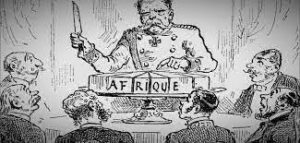
PHOTO CAPTION: The Berlin Conference of 1885. SOURCE: EA Library.
In 1885, the Berlin Conference was held, where the great colonial powers divided up nothing less than Africa, including all the interior territories. It was also on this same date that French West Africa (A.O.F.) was created. In 1902, Dakar became the capital of the A.O.F. after the city of Saint-Louis.

PHOTO CAPTION: Blaise Diagne, the first black man to become a member of parliament in the French parliament. SOURCE: EA Library.
In 1915, the first black man to become a member of parliament was Blaise Diagne. He defends the equality of the races. It was he who was in charge of recruiting Senegalese infantrymen, 30,000 of whom returned to the country. Other infantrymen were sent to the rescue during the Second World War.
In 1946, the National Assembly passed the Lamine Gueye law, which extended French citizenship to the natives of the French colonies. The same year, the Ivorian Félix Houphouët Boigny obtained the abolition of forced labour in the colonies. The French Union replaced the French Empire, and the colonies became “overseas departments and territories”.
Independence movements in the French colonies asserted themselves in the middle of the twentieth century and it was in January 1959 that Senegal merged with French Sudan (now Mali) giving birth to the Federation of Mali, which became independent on June 20, 1960, following the agreements signed with France on April 4, 1960 (the date chosen for Senegal’s independence).
PATH TO INDEPENDENCE
Early Nationalism: In the early 20th century, Senegal became a focal point for African intellectual and political movements. Figures like Blaise Diagne, the first African elected to the French National Assembly in 1914, played a significant role in advocating for greater rights for Africans.
Post-World War II: After World War II, the push for independence across Africa intensified. Senegal formed part of the Mali Federation with French Sudan (now Mali) in 1959. However, the federation dissolved in 1960, and Senegal declared its independence on April 4, 1960, with Léopold Sédar Senghor as its first president.

PHOTO CAPTION: Léopold Senghor (1960-1980), first President of independent Senegal. SOURCE: EA Library.
The first president of independent Senegal, after the dissolution of French West Africa, was an experienced and distinguished politician within the French system. Léopold Senghor has been a socialist deputy for Senegal in the national assembly in Paris since 1946, and has played a part in drafting de Gaulle’s new constitution of 1958.
His policies focused on nation-building, education, and promoting African culture. Senghor also fostered close ties with France and implemented a system of state-led development. In 1963, he provided Senegal with a constitution, modelled to some extent on de Gaulle’s, with executive powers in the hands of the president.
In 1976, Senghor authorized the formation of two opposition parties, and in 1978, the first multiparty elections were held. They have remained the norm in Senegal, though invariably won by the president’s party (the Socialist Party).

PHOTO CAPTION: Abdou Diouf, the first Prime Minister of independent Senegal. SOURCE: EA Library.
Senghor voluntarily stepped down in 1980, a rare move in African politics at the time. His prime minister, Abdou Diouf, succeeded him and continued his policies of gradual political liberalization and economic reform.

PHOTO CAPTION: Abdoulaye Wade. SOURCE: EA Library.
The 1990s saw increased political pluralism and the strengthening of democratic institutions. In 2000, Abdoulaye Wade of the Senegalese Democratic Party won the presidential election, marking the first peaceful transfer of power through democratic elections in Senegal’s history.
Abdoulaye Wade (2000 to 2012): Abdoulaye Wade’s presidency marked a new era in Senegalese politics. His government implemented various infrastructure projects and worked to modernize the economy.
President Abdoulaye Wade was re-elected President of the Republic of Senegal following the presidential elections on February 25, 2007, with a rate of 51.84%. The second tenure of President Abdoulaye presidency was marred by allegations of corruption and concerns over democratic backsliding, especially when he sought a controversial third term in 2012.
On March 25, 2012, he was defeated by Macky Sall, who became the fourth President of the Republic of Senegal with over 65% of the votes.

PHOTO CAPTION: Macky Sall. SOURCE: EA Library.
Macky Sall (2012–24): Macky Sall’s presidency began with a strong focus on good governance, economic reform, and infrastructure development. He reduced presidential terms from seven to five years and pledged to strengthen democratic institutions.
Re-elected for a second term in 2019, he continues to promote a vision of progress and stability for Senegal on the national and international stage. Under his leadership, Senegal maintained relative political stability and became known for its peaceful electoral processes, in stark contrast to several other West African nations.
Sall’s administration faced criticism over press freedom, the jailing of opposition leaders, and attempts to delay elections, sparking protests and raising concerns about democratic erosion. On July 3, 2023, Sall announced that he would not seek a third term. His announcement eased tensions and earned accolades from some, who likened his proclamation to the defusing of a bomb.

PHOTO CAPTION: Bassirou Diomaye Faye. SOURCE: EA Library.
Bassirou Diomaye Faye (2024- Present): Bassirou Diomaye Faye, at 44 years old, was inaugurated as Senegal’s youngest president on April 2, 2024, following a remarkable journey from imprisonment to the presidency. A former tax inspector and secretary-general of the opposition party PASTEF, Faye was released from prison just days before the election under a general amnesty.
His candidacy, launched while still incarcerated, resonated with a populace disillusioned by corruption and economic stagnation, leading to a first-round victory with 54.3% of the vote. Faye’s presidency marks a significant shift in Senegalese politics, emphasizing transparency, youth engagement, and a break from traditional political structures.