
ALLEN, TONY
- 3 Min Read
Tony Oladipo Allen (July 20, 1940 – April 30, 2020) was a pioneering Nigerian drummer, composer, and songwriter widely regarded as one of the principal architects of Afrobeat, a genre that fused traditional African rhythms with jazz, highlife, funk, and soul.
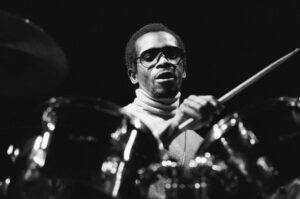
PHOTO CAPTION: Tony Oladipo Allen. SOURCE: EA Library.
Born Anthony Oladipo Allen in Lagos, Nigeria, in 1940, he grew up in a culturally vibrant environment influenced by Yoruba traditions and urban highlife music. Unlike many musicians of his generation, Allen was largely self-taught.
He began playing drums in his late teens, carefully studying American jazz drummers such as Max Roach and Art Blakey, while simultaneously absorbing indigenous African rhythmic structures. This combination of influences would later form the distinctive backbone of Afrobeat.
In the early 1960s, Allen met Fela Kuti, and their partnership became one of the most significant collaborations in African music history. As the drummer and musical director of Fela’s band, first Koola Lobitos and later Africa ’70, Allen played a central role in shaping Afrobeat’s complex polyrhythmic sound.
Unlike conventional drumming styles that emphasised repetitive patterns, Allen developed layered rhythms in which each limb functioned independently, creating a dynamic and fluid groove. Fela himself once remarked that “without Tony Allen, there would be no Afrobeat.”
During the 1970s, Afrobeat became closely associated with political activism, critiquing corruption, military rule, and social injustice in Nigeria. Allen’s drumming provided the steady yet intricate rhythmic foundation for these extended compositions, which often combined music with sharp political commentary. His work contributed not only to artistic innovation but also to the broader cultural resistance movements of post-colonial Africa.
After leaving Fela’s band in the late 1970s, Allen pursued an independent career, collaborating with international artists across genres, including Damon Albarn, Charlotte Gainsbourg, and Hugh Masekela. Relocating to Europe, he became a global ambassador for Afrobeat, influencing generations of musicians in jazz, hip-hop, electronic music, and contemporary African pop. His later albums demonstrated continued experimentation while remaining rooted in African rhythmic traditions.
Tony Allen died on April 30, 2020, in Paris at the age of seventy-nine. Tributes poured in from across the world, acknowledging his revolutionary impact on modern music.
He is remembered not merely as a drummer but as a visionary who expanded the vocabulary of rhythm and elevated African music onto the global stage. His legacy endures in Afrobeat’s continued evolution and in the countless artists who draw inspiration from his groundbreaking work.
EA EDITORS