KEÏTA, MAMADY
- 4 Min Read
Mamady Keïta (1 August 1950 – 21 June 2021), affectionately known as “Nankama” was a master drummer and music educator from West Africa. He is known for playing the djembe, a goblet-shaped hand drum. He is a figure of immense significance in the world of percussion and West African music.
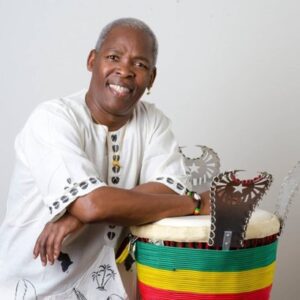
PHOTO CAPTION: Mamady Keïta. SOURCE: Pinterest.
Mamady Keïta was born on August 1 1950, in a small village called Balandougou in Guinea, West Africa. Even before his birth, his mother was told that his name would travel beyond Balandougou, beyond Guinea, and beyond all of Africa. She did not know what that meant until Mamady was born, and before he could even walk, he would turn over anything that looked like a bowl and he would start hitting it like a drum. It was from that point on that his parents knew he was destined to be a djembe player and gave him the nickname nankama, meaning “born for it”.
His real training began at age seven when his mother arranged for him to apprentice with Karinkadjan Kondé a master drummer who would formally initiate him as a djembefola (one who plays the djembe). The holistic education Mamady received from Kondé was a full curriculum, including village traditions and the history of the Mandingue people.
In 1964, at the age of just fourteen Keïta was selected by Guinea’s Minister of Culture to form Le Ballet National Djoliba created as part of Sekou Touré’s revival of the performing arts and intended as a showcase for the newly independent Guinea. He was one of 50 percussionists who auditioned during 9 months of training and in the end was one of the final 5 who made it into the Ballet. At only 14 years of age, Mamady was by far the youngest member of the National Ballet. That same year he starred in the Harry Belafonte film, Africa Dance.
In 1965, he became the main solo drummer for Ballet Djoliba. Later, in 1979, he became its artistic director, guiding the group’s performances. He stayed with Ballet Djoliba until 1986. In 1988, Mamady Keïta moved to Belgium, forming his own group Sewa Kan, he recorded his debut album Wassolon and would continue to lead lineups of Sewa Kan (from the Malinké for ‘joyful noise’) throughout his career as a performer and recording artist.
To this purpose, in 1992 Keïta opened his school, Tam Tam Mandingue Djembe Academy in Brussels to teach the culture of the djembe to visiting students.
Known for his warmth and patience as a teacher, Mamady created the first formal qualifications for Manding music, awarding the Tam Tam Mandingue Certificate and the Tam Tam Mandingue Diploma of Proficiency. Diploma students were personally tested by Mamady not only on the repertoire of the djembe and dundun (the set of three bass drums that accompany djembe arrangements) but also for their knowledge of Malinké culture.
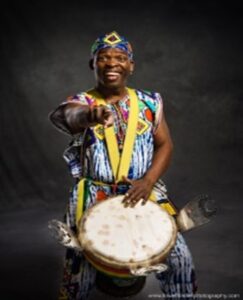
PHOTO CAPTION: Mamady Keïta. SOURCE: Pinterest.
Over the course of his career, Mamady had produced several documentary films (including internationally acclaimed Djembefola, by Laurent Chevalier), and the book, Mamady Keita: A Life For the Djembe. Co-written with Uschi Billimeier, the book is not only practical, with 60 rhythms notated and an instructional CD with 21 rhythms included, but it also gives historical and cultural information on the instruments and the rhythms themselves.
Mamady died on 21 June 2021 of heart failure in Brussels, Belgium. Mamady Keïta’s legacy is not just about his mastery over the djembe but also his relentless dedication to preserving, promoting, and innovating within the rich tapestry of West African musical traditions.
EA EDITORS