WOREDE, MELAKU
- 5 Min Read
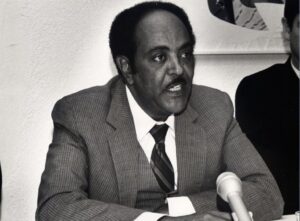
PHOTOCAPTION: Melaku Worede.
Melaku Worede (1936–2023) was a pioneering Ethiopian agronomist and geneticist renowned for his work in establishing Africa’s first genebank and leading the Plant Genetic Resources Centre (PGRC) in Ethiopia, for which he received a Right Livelihood Award in 1989.
Melaku Worede was born in Shewa Province, Ethiopia, in 1936, during the Italian invasion of Ethiopia. His father was Qeñazmach Worede Gebrekidan, an Ethiopian Shewan governor, army commander, and aristocrat from Bulga, and his mother was Woizero Amsale Wodajeneh, an Ethiopian noblewoman. The invasion prompted his family to leave Addis Ababa. Five years after their return, he began his elementary school education and then attended Ambo Agricultural School. At Ambo Agricultural School, he developed an interest in agricultural science.
From there, he attended the Alemaya Agricultural College of Ethiopia in Harar (now Haramaya University), where he studied agronomy. After graduating from Haramaya, he returned to his alma mater, Ambo Agricultural School, where he taught chemistry and soil science.
With a keen interest in genetics and plant breeding, he pursued graduate studies in the United States and later obtained his PhD in Agronomy with a specialisation in Genetics and Breeding from the University of Nebraska-Lincoln in the 1960s. He returned home and got involved in the planning and establishment of the national Plant Genetic Resources Centre, of which he became director in 1979.
Melaku Worede was at the heart of efforts to secure Ethiopia’s heritage of crop diversity and to ensure that farmers benefited. From 1979 to 1993, he led one of the premier crop gene banks in the world, the Plant Genetic Resources Center in Addis Ababa (now the Ethiopian Biodiversity Institute).
Under his leadership, Ethiopia developed one of Africa’s largest and most advanced seed banks, housing over 10,000 varieties of indigenous crops. His innovative philosophy of “conservation through use” integrated farmers’ traditional knowledge with modern science, ensuring that biodiversity was preserved not only in storage but also in fields.
Melaku’s work went beyond Ethiopia. He represented his country in global organisations such as the Food and Agriculture Organisation’s (FAO) Commission on Plant Genetic Resources, visited several countries to promote genetic conservation, and co-founded initiatives like the “Seeds of Survival Programme” in Ethiopia, which helped restore crop diversity after the devastating 1984 famine in the country. Through participatory plant breeding, he empowered farmers to remain custodians of their seeds, bridging the gap between science and rural livelihoods.
Melaku fought globally for the acknowledgement of farmers’ contributions towards the conservation of plant genetic resources. He advocated for farmers’ rights to be recognised by international bodies such as the Food and Agriculture Organisation of the United Nations (FAO). After 20 years of campaigning for the protection of traditional knowledge and recognition of farmers’ rights to benefit from plant genetic resources and to be included in decision-making about conservation and use of these resources, it was recognized and enshrined in the FAO’s International Treaty on Plant Genetic Resources for Food and Agriculture in 2004.
The centre also trained agricultural officers and policymakers, shifting attitudes to development policy and strategy towards a greater emphasis on using local crop plant diversity for production and improvement.
After his retirement in 1993, he continued to develop his work on farming-based native seed conservation, enhancement, and utilisation at the Seeds of Survival Programme of Ethiopia, which he founded. In addition to Ethiopia, Worede promoted this to other developing regions of Africa and Asia as a key promoter and scientific adviser of the Seeds of Survival programme. In this connection, he was active in training several gene bank curators and many other young scientists.
Ethiopian president, Girma Wolde-Giorgis, gave Worede the Outstanding International Contribution Award.
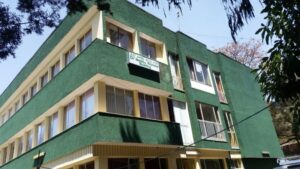
PHOTO CAPTION: A building at the Ethiopian Biodiversity Institute named after the late Dr. Melaku Werede (Photo: Bayush Tsegaye (PhD).
His efforts significantly influenced agricultural biodiversity policies worldwide, while also providing practical solutions for Ethiopian farmers during times of crisis.
Melaku Worede passed away on July 31, 2023 at the age of 87. He died in Addis Ababa, Ethiopia, after a short illness. His legacy lives on in Ethiopia’s community seed banks, the gene bank he helped establish, and the many scientists and farmers he mentored.
Internationally, he is remembered as a champion of farmers’ rights, biodiversity conservation, and sustainable agriculture, having received numerous awards, including the Right Livelihood Award (1989), often referred to as the “Alternative Nobel Prize.” His vision that farmers remain at the center of food security continues to inspire agricultural and biodiversity movements across the globe.
Worede’s work stands as a testament to innovation and commitment. His pioneering efforts in farming-based native seed conservation, enhancement, and utilisation are now models for developing regions in Africa and Asia. Under his guidance, locally adapted native seeds, devoid of commercial fertilisers or chemicals, outperformed their high-input counterparts in yield, showcasing the tremendous potential of traditional farming wisdom.
Worede’s vision was not confined to the laboratories or gene banks; it extended to the fields and the farmers who were the true custodians of genetic diversity. His collaboration with farmers, agricultural extension agents, and breeders created a symphony of understanding, mutual respect, and preservation of genetic heritage.
EA EDITORS