NETO, AGOSTINHO
- 7 Min Read
Agostinho Neto (17 September 1922—10 September 1979), was an African liberation revolutionary, poet, physician, and politician who served as the first president (1975–1979) of the People’s Republic of Angola. He led the country to independence on 11 November 1975 and embraced a Pan-Africanist vision, advocating to “face the challenges of other peoples as our own.” Neto was a prominent figure in the broader Pan-African and anti-colonial liberation movements of the twentieth century, earning respect across Africa for his unwavering commitment to the total liberation of African peoples.

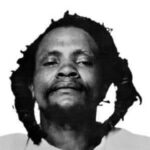
PHOTO CAPTION: Agostinho Neto. SOURCE: EA Library.
Agostinho Neto was born on September 17, 1922, at Icolo e Bengo, Angola (then a Portuguese colony) to Agostinho Neto a Methodist minister, and his wife, Maria da Silva was a school teacher. Neto (who used his middle name, Agostinho), attended the prestigious Liceu Salvador Correia secondary school in Luanda, the capital of Angola. In 1947 Neto was awarded a scholarship by the Methodist Church of the United States to study medicine at the University of Lisbon in Portugal.
Once there, Neto became active in several cultural organisations comprised of students from Portuguese African colonies that advocated the rediscovering of African culture and history. Together with other young nationalists from African Portuguese-speaking colonies (such as Amilcar Cabral from Guinea-Bissau-Cape Verde, Marcelino dos Santos from Mozambique, and others), Neto formed the Anti-Colonial Movement with the aim of building a movement of people in the colonies opposed to colonial rule and also opposed the entrenched dictatorship of António de Oliveira Salazar in Portugal.
In 1948, Neto began publishing his poetry and became increasingly involved in anti-colonial activism, which led to his first arrest. A series of subsequent arrests and periods of detention interrupted his studies. Despite these setbacks, he was eventually released and completed his medical degree in 1958.
Neto returned home as a doctor in 1959 where he set up a private medical practice. On 6 June 1960, Agostinho Neto was arrested at his clinic as a result of his campaigning against the Portuguese colonial administration of Angola. When his patients and supporters protested his arrest, the police opened fire, killing 30 and wounding 200 people in what became known as the Massacre of Ícolo e Bengo.
After his arrest in 1960, Neto was initially exiled to Cape Verde and later imprisoned in Lisbon by the Portuguese authorities. Following international protests calling for his release, he was placed under house arrest for a period. In 1962, he escaped to Morocco and subsequently travelled to Kinshasa in Zaire (now the Democratic Republic of the Congo), where he became actively involved with Angolan exiles advocating for the country’s independence.
By 1956, the movement for the overthrow of colonial rule was in full swing and the need for an over-arching organisation to take the struggle further became more self-evident. In that year, the Movimento Popular da Libertação de Angola (MPLA, People’s Movement for the Liberation of Angola) was established by various Angolan patriotic organisations. The armed struggle was launched on February 4, 1961. At the end of 1962, Neto was elected as the President of the MPLA.
Under the leadership of Neto, the MPLA launched an armed struggle as part of the strategy to achieve national liberation. In January 1967, during a press conference, Agostinho Neto launched the slogan “The struggle continues, victory is certain”, an expression that established itself as the political driving force of the MPLA for the armed struggle for national liberation and is used to this day.
The MPLA’s strategy included guerrilla operations from bases outside Angola, while the Front for the Liberation of Angola (FNLA) conducted largely independent operations. In 1966, Uniäo Nacional para a Independência Total de Angola (UNITA) was founded to join the anti-colonial struggle. Leaders of these movements, including Neto, sought assistance from African countries and Communist nations to secure funding, arms, and international support. Neto travelled to the Soviet Union in 1964 and later to Cuba to seek assistance from Fidel Castro’s government.
By the early 1970s, Portugal’s determination to hold onto Angola and other overseas provinces was forcing some 40 percent of its meager national budget into military expenditures. Widespread dissatisfaction inside Portugal itself finally helped end the Angolan war for independence, when a 1974 military coup in Lisbon brought down the dictatorship, and the new government declared a truce with the Angolan rebel groups.
At the dawn of 11 November 1975, António Agostinho Neto solemnly proclaimed, on behalf of the Angolan People, to Africa and the World, the National Independence. A new country was born, and the hope of a whole nation was enshrined. António Agostinho Neto served as the first president of Angola. The country was effectively held under the rule of three independence movements, with the MPLA holding the central section and the capital.
The Independence Day of Angola, celebrated on November 11, marks the nation’s struggle for self-determination and sovereignty. The day underscores that Angola’s commitment to democracy, unity, and development was achieved through the valour and sacrifice of the people.
In this capacity as Angola’s first president, Neto established the groundwork for the newly independent state, managing the intricacies of postcolonial nation-building and the beginning of a long-running civil conflict. His goal for Angola included not only political independence but also social fairness and economic growth.
Agostinho Neto later participated in activities and meetings of the Organisation of African Unity (now the African Union) after Angola attained independence in 1975. He also represented Angola at various international gatherings and diplomatic forums in cities such as Paris and Geneva, as well as at global peace conferences and meetings associated with organisations like the International Labour Organisation.
Neto’s four years in the presidency were turbulent. Rival movements, including UNITA and FNLA, challenged his authority, with support from South Africa and Zaïre, and limited covert backing from the United States. In 1977, a coup attempt led by Nito Alves and his followers was violently suppressed by Neto’s government, resulting in thousands of deaths and arrests.
Neto pursued a policy of non-alignment in principle, though in practice his government maintained strong ties with the Soviet Union and Cuba. He emphasised national unity, working to bridge ethnic and regional divisions within Angola. Neto also implemented social and economic reforms, including land redistribution, nationalization of key industries, and the expansion of education and healthcare. His life and work reflect the struggles and aspirations of a nation striving for liberation and sovereignty.
Besides serving as President of Angola, Neto had a distinguished career as a physician, political thinker, poet, and liberation leader. His anti-colonial commitment, incisive and inspirational writings, and dedication to freedom left a lasting mark on Angola’s liberation history and contributed to the broader African struggle for self-determination. He is widely regarded as one of Africa’s prominent leaders in the fight for independence and national sovereignty.
Agostinho Neto died on 10 September 1979 in Moscow while undergoing treatment for pancreatic cancer at the age of 56. He is widely regarded as a symbol of Angola’s struggle for independence. In his honour, 17 September, his birthday, is observed as National Heroes Day in Angola. This public holiday marks Neto’s significant role in shaping the national identity of Angola.
The Agostinho Neto Mausoleum was constructed in honour of Angola’s first president and serves as his final resting place. Located in Luanda, it forms part of the Agostinho Neto Cultural Centre. The monument is a prominent architectural landmark in the capital, symbolically inspired by themes from Neto’s poetry, including “The Path of Stars.”
EA EDITORS