DURA I
- 3 Min Read
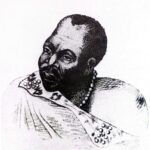
Alimamy Dura I (later 19th century-September 14, 1946) was paramount chief of Safroko Limba, a former chiefdom under the Biriwa Limba in northern Sierra Leone. Ruling from 1916-46, he overcame disaffection at the outset of his rule, after which he encouraged education and agriculture.
When Suluku of Biriwa Limba died in 1906, Safroko, which had been under the influence of this powerful ruler, became an autonomous chiefdom. Dura’s father, Alimamy Omaru, was appointed its first paramount chief in 1907. Though there was some unrest during Omaru’s rule, it was not as serious as the disaffection which erupted when Dura was appointed to succeed his father on a year’s probation in 1916.
Three important people in Safroko Limba were implacably opposed to Dura’s election. One of these was a former court messenger named Sorie Limba, who claimed the chiefship on the ground that he had played a significant role in securing autonomy for the chiefdom. The second, Lamina Suntu, said that Omaru had promised him the chiefship on his death bed, and threatened to put the chiefdom under a potent curse if he did not receive it. The third man, Diko, was the chief of a section called Kamasele.
Although the colonial administration confirmed Dura’s appointment, the malcontents did not abandon their opposition. Section chief Diko refused to pay his tax, and gave up his resistance only after he was put under arrest. Sorie Limba, by means of a powerful “swear,” put the chiefdom under a heavy curse, and only refrained from further hostile acts when he was sentenced to six months’ imprisonment.
But Lamina Suntu’s opposition was the most determined, and continued long after Dura’s confirmation. At one stage, in December 1917, he marched on Kabinkolo, the chiefdom’s headquarters, with about 100 followers armed with sticks. For this act, he was banished to Makeni, a short distance to the southwest of Kabinkolo. Despite these circumstances, Dura showed remarkable forbearance, although he reported every incident of insubordination in scrupulous detail to the colonial authorities. The colonial administration gave him moral support, while neighbouring paramount chiefs, such as Pompoli of Biriwa Limba, offered friendly advice.
But external forces increased Dura’s troubles. In January 1918, Bayo Yembe, the paramount chief of Kalantuba chiefdom, to the northeast, invaded Safroko Limba in an attempt to secure control of two sections of Dura’s chiefdom. He was accompanied by an “army” of about 400 men, many of them carrying guns. Despite this extreme provocation, Dura remained calm.
The colonial authorities instituted an enquiry into Bayo Yembe’s conduct. Though banishing him was considered, it was eventually decided-on account of his old age and his record of proven loyalty to the administration that he should only be ordered to make financial amends to Dura. It also transpired that the old chief had been the tool of two disaffected Safroko section chiefs, who were each given short prison terms.
Having triumphed over his antagonists, Dura urged his people to rebuild roads and cultivate rice. He also encouraged them to seek education in the local schools established by the American Wesleyan Mission. As a result of his encouragement, many farmers began to cultivate oil palm in addition to rice.
He died in 1946, and was succeeded the following year by his son, Alimamy Dura II.
E. AMADU TURAY