BARCLAY, ARTHUR
- 3 Min Read
At the time when the partitioning of Africa was being completed Arthur Barclay was president of Liberia. The Berlin Conference of 1884-1885, to which Liberia was not invited, had prescribed certain rules for the effective occupation of African lands that were claimed and owned outright by the contending European powers.

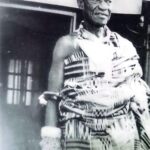
PHOTO CAPTION: Arthur Barclay. SOURCE: EA Library
Liberia too was expected to abide by the rules and orders of the Berlin Conference and show tangible signs of possession of her territories. Up to 1904 Liberia had not complied with the Berlin mandate. Arthur Barclay seeing the borders of Liberia gradually being nibbled away by the French and British decided to act quickly if there was to be any territory left for Liberia.
In 1908, as the fourteenth President of Liberia, he inaugurated the first plan for the effective administration of the interior lands of Liberia. In practice, the system took the form of an amalgamation of the three existing forms of colonialism in Africa. There were discernable features from the British, French and Portuguese systems. What has emerged however is something distinctly Liberian, and in a hallmark and contribution to African Unification.
The interior was divided into Districts and provinces governed by District Commissioners and provincial commissioners. Their rule was superimposed on native law and customs affecting many cases in order to preserve law and order and obedience to the Liberian Government. The Commissioners were responsible to the President of the Republic and to the Secretary of the Interior.
Under the Tubman government, the status of the Districts and provinces have been changed to counties, and the Department of Interior has become the Department of Internal Affairs. In 1964 four new counties were added to the existing five old counties namely, Bong, Gedeh, Loffa and Nimba Counties. The old counties were Grand Cape Mount, Montserrado, Grand Bassa, and Maryland. (There are in addition to the counties three territories too small to attain countyhood).
After the retirement of Arthur Barclay, he further served as Chairman of the Liberian delegation when the League of Nations Investigations Committee arrived in Liberia in 1930 to ascertain charges of slavery brought against Liberia by a local opposition party. Arthur Barclay was popularly known as the grand old man of Liberian politics. The story and progress of Liberian unification would be incomplete without taking into account the first positive steps he took for the realisation of this national idea under the Tubman government.
ABEODU B. JONES