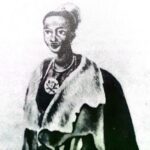
QUEEN NEFERTITI
- 3 Min Read
Queen Nefertiti (c. 1370 BCE – c. 1330 BCE) was one of the most influential and enigmatic royal women of ancient Egypt. Best known as the Great Royal Wife of Pharaoh Akhenaten of the Eighteenth Dynasty, she played a central role in one of the most dramatic religious and political transformations in Egyptian history.
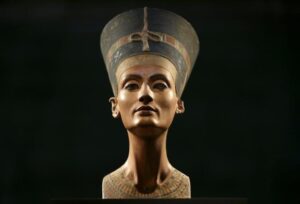
PHOTO CAPTION: Queen Nefertiti.
Nefertiti’s name, which translates as “The Beautiful One Has Come,” reflects both her celebrated appearance and her elevated status at court. Although her exact origins remain a subject of scholarly debate, she is believed to have been born around 1370 BCE, possibly into a noble family connected to the royal household.
Some historians suggest she may have been related to Ay, a high-ranking court official who later became pharaoh. From an early age, she was immersed in the traditions, education, and ceremonial life of Egypt’s elite.
She rose to prominence through her marriage to Amenhotep IV, later known as Akhenaten. As queen, Nefertiti broke with long-standing conventions by appearing alongside the king in state ceremonies, religious rituals, and diplomatic representations roles traditionally reserved for male rulers. Artistic depictions from the Amarna Period portray her performing acts of worship, smiting enemies, and participating fully in governance, indicating an unprecedented level of authority for a queen consort.
During Akhenaten’s reign, Egypt underwent a radical religious transformation centred on the worship of the Aten, the solar disk. Nefertiti was a key supporter and promoter of this monotheistic reform, which challenged the long-established priesthood of Amun and reshaped Egypt’s spiritual life.
Together, the royal couple founded a new capital city, Akhetaten (modern-day Amarna), which became the centre of religious, political, and artistic innovation. Nefertiti was portrayed as an intermediary between the Aten and the people, reinforcing her sacred and political significance.
In addition to her religious role, Nefertiti was a powerful symbol of cultural change. The art of the Amarna Period departed from rigid classical forms, embracing realism and intimacy. The famous painted limestone bust of Nefertiti, discovered in 1912, epitomises this artistic revolution and has become one of the most recognisable images of ancient Egypt, symbolising grace, authority, and timeless beauty.
Toward the later years of Akhenaten’s reign, Nefertiti’s public presence diminished, leading to speculation about her fate. Some scholars suggest she may have died, while others propose that she ruled briefly as co-regent or even as pharaoh under a different name. Despite the uncertainty surrounding her final years and date of death estimated around 1330 BCE her influence on Egyptian history is indisputable.
Queen Nefertiti’s legacy endures as that of a trailblazing royal woman who exercised political influence, religious authority, and cultural leadership at the highest level of power. She is remembered not only for her beauty but for her intellect, visibility, and strength in an era dominated by male rulers.
As one of ancient Egypt’s most iconic heroines, Nefertiti continues to inspire global fascination and stands as a lasting testament to women’s leadership in world history.
EA EDITORS