QUEEN RANAVALONA I
- 3 Min Read
Queen Ranavalona I (c. 1788 – 16 August 1861) was one of the most powerful and controversial monarchs in African history. Reigning as Queen of the Kingdom of Madagascar from 1828 to 1861, she is best remembered for her uncompromising defence of Malagasy sovereignty against European political, religious, and economic encroachment. During a reign spanning more than three decades, Ranavalona I pursued policies of isolation, cultural preservation, and resistance to foreign domination, shaping the course of Madagascar’s nineteenth-century history.
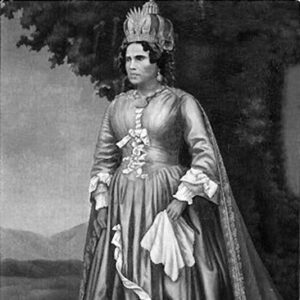
PHOTO CAPTION: Queen Ranavalona I. SOURCE: EA Library.
Ranavalona was born around 1788 and she was originally named Ramavo, the daughter of a commoner from the Merina ethnic group. Her early life changed dramatically when her father uncovered a plot against King Andrianampoinimerina and warned the monarch, an act that secured the family royal protection. Raised within the Merina court, Ramavo was exposed to court politics, traditions, and governance, gaining an understanding of power and authority that would later prove decisive.
She rose to prominence through her marriage to Prince Radama, who ascended the throne as King Radama I in 1810. Radama’s reign was marked by openness to European influence, including treaties with Britain and the introduction of Western education and Christianity. Upon Radama’s death in 1828, Ramavo outmanoeuvred rival claimants and seized power, adopting the royal name Ranavalona I, in accordance with Merina tradition.
As queen, Ranavalona I swiftly reversed many of her predecessor’s pro-European policies. She expelled foreign missionaries, restricted European trade, and sought to restore traditional Malagasy religion, customs, and authority. Viewing Christianity and foreign influence as threats to national sovereignty, she enforced strict laws against conversion and religious dissent. Her reign was characterised by the extensive use of fanompoana (forced labour) and traditional judicial practices, including the tangena ordeal, which have made her rule a subject of intense historical debate.
Despite her harsh methods, Ranavalona I pursued a clear political objective: the preservation of Madagascar’s independence in an era of aggressive European imperial expansion. Through military strength, strategic isolation, and centralised authority, she successfully prevented colonisation throughout her lifetime. Under her rule, Madagascar remained one of the few African states to maintain sovereignty during the nineteenth century.
Ranavalona I ruled until her death on 16 August 1861 at approximately seventy-three years of age. By the end of her reign, Madagascar had retained its political autonomy, though at significant human and economic cost. Her death marked the conclusion of an era defined by resistance, authoritarian rule, and cultural conservatism.
Queen Ranavalona I’s legacy remains complex and contested. She is remembered both as a ruthless despot and as a determined defender of African independence. In Malagasy history, she stands as a powerful symbol of resistance to foreign domination and the assertion of indigenous authority. Her reign continues to provoke debate, reflecting the difficult choices faced by African leaders confronting colonial pressure in the nineteenth century.
EA EDITORS