
ITOTE, WARUHIU
- 3 Min Read
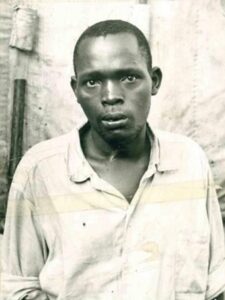
PHOTO CAPTION: Waruhiu Itote. SOURCE: EA Library.
Waruhiu Itote (1922 – 30 April 1993, aged 70-71), was one of the key leaders of the Mau Mau Uprising (1952–1960) in British Kenya alongside Dedan Kimathi, Stanley Mathenge, Kurito ole Kisio, Musa Mwariama and Muthoni Kirima. He was known for his ability to evade capture and conduct successful raids on British installations.
His leadership skills and strategic acumen were instrumental in organising resistance against colonial authorities. After Kenya gained independence in 1963, Itote continued his involvement in politics. He joined the Kenya African National Union (KANU) and held various government positions, contributing to the nation-building process.
Waruhiu Itote, also known as General China, was born in Maragoli, Western Kenya. Like many Kenyans of his generation, Itote had limited access to formal education due to various socio-economic factors prevalent during that time.
Instead of pursuing formal education, Itote became involved in activism and resistance against British colonial rule from a relatively young age. He played a significant role in the Mau Mau Uprising, where he emerged as a prominent leader within the movement.
Itote’s early working life revolved around his participation in the Mau Mau rebellion. He was known for his military prowess and leadership within the movement, leading guerrilla operations against British colonial forces in Kenya.
Following Kenya’s independence in 1963, Itote continued to be involved in politics and public service.
General China primarily operated within the context of the Mau Mau Uprising against British colonial rule in Kenya. His activities during this period were primarily focused on organising resistance against colonial authorities and leading guerrilla operations.
The Mau Mau Uprising, which lasted from the early 1950s until the late 1950s, involved a range of activities aimed at challenging British rule and demanding Kenyan independence. Itote played a significant role in coordinating attacks on British installations, conducting raids, and mobilising Mau Mau fighters.
Itote’s rise to prominence began during the Mau Mau Uprising, where he emerged as a key leader within the movement. He demonstrated exceptional military leadership and organisational skills, leading guerrilla operations against British colonial forces. His role in the Mau Mau struggle contributed to the eventual independence of Kenya. After Kenya gained independence in 1963, Itote transitioned into politics.
He joined the Kenya African National Union (KANU), the dominant political party led by Jomo Kenyatta. Itote held various government positions, including serving as a Member of Parliament, Assistant Director of the National Youth Service and holding ministerial positions. Itote remained a vocal advocate for the rights and recognition of Mau Mau veterans. He fought for their inclusion in the political and social fabric of independent Kenya, ensuring that their sacrifices during the struggle for independence were acknowledged and honoured.
General Waruhiu Itote, also known as General China, died on April 30, 1993 in Nairobi, Kenya. He died of a stroke in 1993 at the age of 71. At the time of his death he was running a farm near Ol Kalou in Kenya.
Itote’s legacy extends beyond his political and military achievements. He remains a prominent figure in Kenyan culture, with his story being celebrated in literature, art, and popular culture as a testament to the country’s struggle for freedom and self-determination.
General Waruhiu Itote’s legacy is one of courage, resilience, and dedication to the ideals of freedom and independence. He played a significant role in shaping Kenya’s history and continues to be remembered as a national hero.
EA EDITORS