Malawi
- 13 Min Read
HISTORICAL INTRODUCTION
 Malawi is a landlocked country in southeastern Africa. It is bordered by Zambia to the west, Tanzania to the north and northeast, and Mozambique to the east, south, and southwest. Over half of its eastern boundary falls within Lake Malawi.
The name “Malawi” was adopted when the country gained independence from British rule in 1964. Prior to 1964, the region was known as British Nyasaland. “Malawi” was derived from the “Maravi,” the old name for the Chewa people who migrated to the region hundreds of years before, and it means “flames” or “tongues of fire” in Chichewa and Chitumbuka languages.
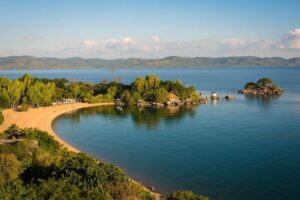
PHOTO CAPTION: Lake Malawi. SOURCE: timbuktutravel.
Known as the “Warm Heart of Africa”, Malawi is characterized by diverse natural landscapes, including the Great Rift Valley and the large Lake Malawi. The Rift Valley, which stretches from north to south, is a dominant feature, housing Lake Malawi and the Shire River valley.

PHOTO CAPTION: Malawi’s plateaus are dotted with rivers and streams. SOURCE: afrodiscovery.
Malawi’s plateaus are dotted with rivers and streams, and its lush valleys offer fertile land for agriculture. The diverse geography provides a habitat for a wide range of flora and fauna. It has a varied climate, ranging from hot and humid in the Lower Shire Valley and along much of the low-lying lakeshore to relatively cold and wet in highland areas.
The country is endowed with spectacular highlands and extensive lakes. It occupies a narrow, curving strip of land along the East African Rift Valley. Lake Nyasa, known in Malawi as Lake Malawi, accounts for more than one-fifth of the country’s total area.
Malawi possesses a wealth of natural resources, including arable land, water, fish, wildlife, and forests, which are crucial for the country’s sustainable development. Additionally, Malawi has known deposits of various minerals, such as bauxite, kaolinite, coal, kyanite, limestones, rare earths, graphite, sulphides, titanium minerals, and vermiculite. The country also has a variety of precious and semiprecious stones, like agate, aquamarine, and rubies.
Malawi’s people have tended to live in villages relying on dryland subsistence farming, supplemented by year-round river- or streamside cultivation. In the 18th and 19th centuries however better and more productive agricultural practices were adopted.
In some parts of the Malawi region, shifting cultivation of indigenous varieties of millet and sorghum began to give way to more intensive cultivation of crops with a higher carbohydrate content, such as corn (maize), cassava (manioc), and rice.
Malawi is home to several ethnic groups, with the Chewa being the largest. Other significant groups include the Yao, Tumbuka, Lomwe, Nyanja, and Sena. These groups, along with others like the Ngoni and Ngonde, have contributed to Malawi’s rich cultural tapestry through their diverse traditions, languages, and customs.
Early Origins
Before colonial contact, Malawi was not isolated. The region engaged in trade with neighbouring areas and coastal traders, particularly the Swahili-Arab traders along the Indian Ocean. This trade network facilitated the exchange of goods such as gold, ivory, and later slaves, as well as the introduction of new crops and technologies.
Based on the examination of the earliest human remains and Stone Age tools, people known as Abathwa, Akafula, or Mwandionerakuti have lived in Malawi since around 8000 BC. During the 9th century AD, a group of people known as Pule, Lenda, or Katanga, from the shores of Lake Tanganyika, settled in Malawi.
Between the 13th and 16th centuries AD, Bantu speakers referred to as Maravi moved into central and southern Malawi. Those who eventually settled in central Malawi are known as the Chewa, while those who settled in southern Malawi are called Mang’anja or Nyanja.
During the 15th or 16th century, two groups migrated south into the Shire River valley, and others moved into territories in Zambia and Mozambique. The Maravi Empire reached its peak in the 17th century, administering a large area that stretched north of the Zambezi River to the Dwangwa River, west to the Luangwa River, and east to the Mozambique coast. It was ruled by a karonga (king), whose authority was passed down through the leaders of each clan within the confederacy. The main portion of this empire was settled southwest of Lake Nyasa (Lake Malawi).
Its decline began when clan leaders, who traded with the Portuguese and Arabs in ivory, slaves, and iron, became increasingly independent of the central authority of the Karonga. By 1720, the confederacy had broken into several autonomous factions. The Chewa and Nyanja peoples of modern-day Malawi are descendants of the original Maravi clans.
Malawi has many ethnic groups that overlap in the areas they live, but individual tribes tend to gather in certain parts of the country. Among the major ethnic groups of Malawi are Chewa, Nyanja, Tumbuko, Yao, Lomwe, Sena, Tonga, Ngoni, Ngonde, Asians, Mang’anja, Lambya, and Sukwa. The languages spoken by these tribes are all Bantu languages, as are most African languages.
Chewa
The Chewa are the largest ethnic group in Malawi, representing a significant portion of the population. The Chewa people migrated into Malawi from Zaire now the Democratic Republic of the Congo in the 16th Century.
Their language, Chichewa, is also Malawi’s national language. The Chewa, often referred to as Nyanja, are Bantu-speaking people with a matrilineal social structure where women hold a special place in lineage and society.
“The Chewa people have been nomadic throughout history. Chewa tradition holds that the first Chewa kingdom was established in the late 1400s, with later contact occurring between the Chewa and Portuguese traders.

PHOTO CAPTION: The Chewa people. SOURCE: kwekudee.
Chewa is a matrilineal society with women holding a special place as those who reproduce the lineage. In the past, those of the Chewa tribe were also given special tattoos symbolising their membership and place in the tribe.
There are two large Chewa clans, the Phiri and the Banda. The Phiri are associated with the kings and aristocracy, the Banda with healers and mystics.
Yao
The Yao people are a Bantu ethnic group primarily located in the southern part of Lake Malawi, spanning across Malawi, Mozambique, and Tanzania. They are a predominantly Muslim group with a strong cultural identity and a history of trade and influence in the region. The Yao people are a primarily Muslim tribe who live around the southern end of Lake Malawi. They live not only in Malawi but also in Mozambique and Tanzania.

PHOTO CAPTION: The Yao people. SOURCE: travelnoire.
The Yao people are primarily fishermen, farmers, and traders, having settled in Malawi in the late 1800s. After converting the entire Yao people to Islam in 1870, the Yao became one of the first tribes in the area to be literate and have working scribes who translated Islamic literature into the native Yao language.
Tumbuka

PHOTO CAPTION: Tumbuka Vimbuza Dancer. SOURCE: qiraatafrican.
Having migrated to Malawi from what is now the Democratic Republic of Congo, the Tumbuka people were driven out of the Luba area by a warrior tribe in the 1400s, resulting in their settlement in other areas of southeastern Africa.
Sena

PHOTO CAPTION: The Sena people. SOURCE: betaesraelkingdom.
The Sena tribe has over 2 million members, with the majority residing in Mozambique and the minority living in Malawi. Having arrived there in the early 1900s as migrant labourers and heavily influenced by the Portuguese, the Sena people are primarily Catholic, though some retain their traditional religious beliefs.
The Arrival of the Europeans

PHOTO CAPTION: David Livingstone. SOURCE: Bite.
The first Europeans to settle permanently in the region were Scots Presbyterian missionaries inspired by David Livingstone’s perambulations through the area in the 1850s. Moved by the need to stamp out the slave trade through the advancement of “legitimate trade” and a desire to spread Christianity, the Free Church of Scotland sent missionaries to the area in 1875. The Livingstonia Mission separated its evangelical work from its commercial activities in 1878 to form the Livingstonia Central Africa Company, which later became the African Lakes Corporation (ALC).
Other missions followed, including the Established Church of Scotland (1876), the Dutch Reformed Church (1889), the Anglican Universities’ Mission to Central Africa (1895), and the Zambezi Industrial Mission and the Nyasa Baptist Industrial Mission (1892). Others, including Catholic missions, followed in the early 20th century.
Europeans soon learned that low-lying areas, with their abundant mosquito populations, were insalubrious environments for those with no resistance to malaria and therefore established permanent settlements in the highland plateaus in the north at Khondowe and in the south in the Shire Highlands.
British Colonisation
Malawi’s history of colonisation began in the late 19th century when it became part of the British Empire. The British established control over the area as part of their expanding empire. During this time, the country was also incorporated into the Federation of Rhodesia and Nyasaland, which lasted from 1953 to 1963.
The country known as Nyasaland was governed as a British protectorate. During this period, the British introduced cash crops like tea and tobacco, and forced labour was used to build infrastructure like roads and railways.

PHOTO CAPTION: Captives being escorted by slave traders in East Africa in 1859. SOURCE: Everett Collection.
While Malawi did not experience the transatlantic slave trade as extensively as some West African countries, the people did face various forms of exploitation and harsh treatment. Before formal British colonisation, the region suffered from the East African slave trade, with Arab and Swahili traders capturing and selling local populations into slavery.
Under British rule, the people of Malawi were subjected to forced labour and exploitation through systems like the Thangata system, which required tenants on European-owned estates to provide labour as rent.
Workers on plantations and construction projects often endured long hours, minimal wages, and poor living conditions, leading to high rates of illness and mortality. The treatment of Malawians under British colonial rule was characterised by significant social and economic inequalities. The colonial administration and European settlers enjoyed privileges and rights denied to the indigenous population. Large tracts of fertile land were appropriated by European settlers, displacing local communities and limiting their access to resources.
Malawians had little to no political representation or influence over the governance of their own country. Additionally, colonial authorities often undermined local customs, traditions, and governance structures, imposing Western education and religious practices.
Road to Independence & Political History

PHOTO CAPTION: John Chilembwe, a pioneer and a symbol of resistance against colonial rule. SOURCE: Lynchburgmuseum.
In 1915, John Chilembwe led a violent uprising in the British Protectorate of Nyasaland, and even though the uprising was suppressed, John Chilembwe is remembered as a pioneer and a symbol of resistance against colonial rule, which inspired future generations to fight for self-determination.
Thus, while Malawi achieved independence in 1964, Chilembwe’s early rebellion is widely recognized as a foundational moment in the struggle for freedom.

PHOTO CAPTION: Hastings Kamuzu Banda, First President of Malawi (1964-1994). SOURCE: malawi24.
Malawi achieved independence in 1964, its national movement spearheaded by the Malawi Congress Party (MCP), originally known as the Nyasaland African Congress, under the leadership of Hastings Kamuzu Banda, achieved independence for the country. On July 6, 1966, it became a republic, with the MCP as the sole party and Banda as President. In 1971, Banda was voted ‘Life President’ of the country.
Malawi retained the institution of Parliament during this period, although from independence up to 1979, no parliamentary elections were held, and the single party nominated Members of Parliament. In the 1979, 1983, 1987, and 1992 elections, several individuals (all members of the MCP) were allowed to stand for each constituency, though candidates were not allowed to campaign.
Until the 1990s, open criticism of the Government came from exiled opposition groups, such as the Malawi Freedom Movement, the Socialist League of Malawi, and the Malawi Democratic Union. By 1991, however, there was a small but growing opposition within the country. Organisations such as Amnesty International and Africa Watch expressed concern about human rights violations.
The exiled opposition formed new groupings in the early 1990s, such as the Interim Committee for a Democratic Alliance, which was formed in March 1992 in Lusaka and led by a prominent trade unionist, Chakufwa Chihana. In mid-1991, the Malawi Freedom Movement, the Socialist League of Malawi, and the Malawi Democratic Union merged to form the United Front for Multi-Party Democracy (UFMD), based in Lusaka.
In response to growing opposition and criticism, on 14th June 1993, a National Referendum was conducted, which resulted in Malawi becoming a multiparty state. Bakili Muluzi, leader of the United Democratic Front (UDF), was elected President in 1994. The UDF won 82 of the 177 seats in the National Assembly. Accelerated economic liberalisation and structural reform accompanied the political transition.

PHOTO CAPTION: Bakili Muluzi, leader of the United Democratic Front (UDF). SOURCE: allafrica.
When Malawi held its second democratic elections on June 15, 1999, Muluzi was re-elected to serve a second 5-year term as President and was succeeded by Bingu wa Mutharika in 2004. Mutharika was re-elected in 2009 but died in office in 2012.
Malawi underwent its first transition between democratically elected presidents in May 2004, when the UDF’s presidential candidate Bingu wa Mutharika defeated MCP candidate John Tembo and Gwanda Chakuamba, who was backed by a grouping of opposition parties.
The UDF did not win a majority of seats in parliament, as it had done in the 1994 and 1999 elections. Through the successful maneuvering of party chairperson and former President Bakili Muluzi, the party secured a majority by forming a “government of national unity” with several opposition parties.
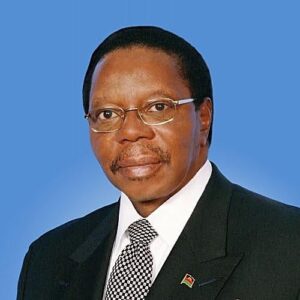
PHOTO CAPTION: Bingu wa Mutharika (2004 – 2012).
President Bingu wa Mutharika left the UDF on February 5, 2005, citing differences with the party leadership, particularly over his anti-corruption campaign. He formed the Democratic Progressive Party (DPP) shortly thereafter, attracting some UDF and independent members of parliament (MPs) to his new party.
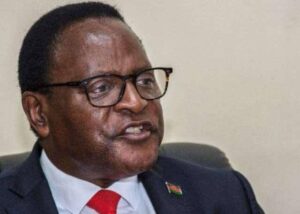
PHOTO CAPTION: Lazarus Chakwera, president of Malawi. SOURCE: malawi.gov.
In June 2020 Dr. Lazarus Chakwera, defeated the incumbent president in a re-run of the 2019 presidential election.
His rise to power was hailed as a win for democracy in Africa, as it marked the first time a court-overturned election led to the peaceful removal of an incumbent president in Malawi.