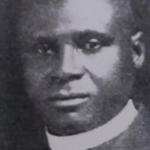
MORO NABA SAAGA II (KOOM II)
- 2 Min Read

PHOTO CAPTION: Moro Naba Saaga II. SOURCE: EA Library.
Moro Naba Saaga II (Koom II) (c. 1889 – 12 March 1942) was the Mogho Naba (emperor) of the Mossi state of Wogodogo, in French West Africa (present-day Burkina Faso). He reigned from 1905 until his death, becoming ruler at a young age, eleven days after the death of his father, Naaba Sigiri, in 1905. He was the 34th sovereign in the dynastic line of Wogodogo, the central Mossi kingdom centred in Ouagadougou.
Born in 1889, Naba Koom II was the son of Naaba Sigiri, a member of the royal lineage tracing its authority to Naaba Ouedraogo, the 15th-century founder of the Mossi state. Succession to the throne of Wogodogo followed a patrilineal system, through which the title of Mogho Naba was transmitted within the ruling dynasty.
Naba Koom II ruled during a critical period marked by the consolidation of French colonial administration in Upper Volta. His reign was characterised by pragmatic accommodation to colonial authority while maintaining core Mossi political and cultural institutions.
During World War I, he demonstrated loyalty to the French by allowing and indeed encouraging the enlistment of Mossi subjects, including his heir, into colonial military service. This strategy helped preserve the monarchy’s position within the colonial order.
In 1921, Naba Koom II granted land to Catholic missionaries, facilitating the establishment of a mission at Gounghin (now part of Ouagadougou). This act represented an early instance of religious accommodation within Mossi territory and reflected a broader policy of cautious engagement with European institutions.
His reign lasted approximately thirty-seven years, spanning the transition from late pre-colonial sovereignty to entrenched colonial rule. Upon his death in March 1942 in Ouagadougou, at the age of 52, he was succeeded by his eldest son, Naaba Saaga II, who continued the monarchy’s engagement with French colonial structures.
Naba Koom II died during the period of Vichy French administration in Upper Volta, a time marked by political uncertainty and divided colonial loyalties during the Second World War. His legacy lies in having steered the Mossi monarchy through the pressures of colonial domination while ensuring its institutional continuity.
EA EDITORS