SOYINKA, GRACE ENIOLA
- 2 Min Read
Grace Eniola Soyinka (1908–1983) was a Nigerian shopkeeper, women’s rights activist, and prominent member of the influential Ransome-Kuti family of Abeokuta.
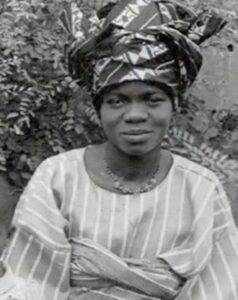
PHOTO CAPTION: Grace Eniola Soyinka.
She was born Grace Eniola Jenkins-Harrison in Abeokuta, present-day Ogun State. She was the granddaughter of the distinguished clergyman, educator, and composer Josiah Ransome-Kuti and first daughter to her mother, Anne Lape Iyabode Ransome-Kuti.
As a child, Grace was raised within her grandfather’s household, where she was exposed to Christian discipline, literacy, and civic consciousness. This upbringing within the prominent Ransome-Kuti family, known for its reformist and educational advocacy, significantly shaped her moral outlook and later activism.
In the 1940s, Soyinka joined her aunt-in-law, Funmilayo Ransome-Kuti, in co-founding the Abeokuta Women’s Union. The organisation mobilised thousands of market women to protest excessive taxation and political marginalisation under colonial administration.
Through petitions, public demonstrations, boycotts, and sustained civil resistance, the union successfully pressured the Alake of Abeokuta to abdicate in 1949. The movement later expanded into the Nigerian Women’s Union, extending its advocacy for women’s political participation and social rights nationwide.
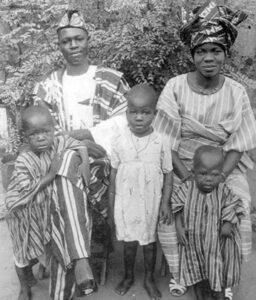
PHOTO CAPTION: Grace Eniola Soyinka and family. SOURCE: felakuti.
Alongside her activism, Soyinka managed her own trading business and maintained a deeply committed Anglican faith. She married the Reverend Samuel Ayodele Soyinka, an Anglican minister, and together they raised seven children, including Wole Soyinka, the first African recipient of the Nobel Prize in Literature (1986).
Grace Eniola Soyinka died in 1983 at the age of 75. Her legacy endures both in Nigeria’s history of women’s political mobilisation and in the intellectual formation of her son, Wole Soyinka.
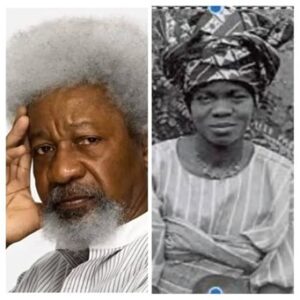
PHOTO CAPTION: Wole Soyinka & Grace Eniola Soyinka. SOURCE: EA Library.
In his memoir Aké: The Years of Childhood (1981), Wole Soyinka portrayed her under the affectionate nickname “Wild Christian,” highlighting her devout religiosity, moral firmness, entrepreneurial spirit, and disciplined strength. Through her activism and principled leadership within her family and community, Grace Soyinka remains an important figure in Nigeria’s anti-colonial and women’s rights history.
EA EDITORS