THE MALI EMPIRE (c. 1235–1600 CE)
- 29 Min Read
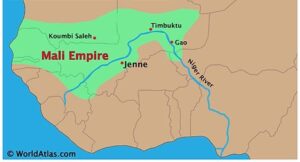
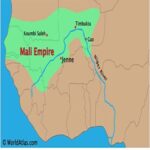
PHOTO CAPTION: Map of the Mali Empire. SOURCE: WorldAlas.com
Overview
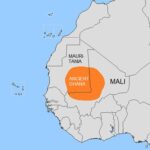
The Mali Empire was one of the greatest empires in West African history. It emerged in the 13th century following the decline of the Ghana Empire (which should not be confused with the modern Republic of Ghana) and remained a dominant political and economic power for approximately 300 years, until the 16th century.
The Mali Empire emerged in the Upper Niger River region through the consolidation of several Mandinka (Malinké) kingdoms and communities under the leadership of Sundiata Keita. His decisive victory over the Sosso ruler Sumanguru Kanté at the Battle of Kirina in about 1235 CE is widely regarded as a turning point in the establishment and expansion of the Mali Empire. From its relatively modest beginnings, Mali grew into one of the most powerful and prosperous empires in medieval West Africa.
The Mali Empire was renowned for its extensive trans-Saharan trade networks, thriving centers of learning, abundant gold and salt resources, and its significant role in promoting Islam and Islamic scholarship throughout West Africa. Under rulers such as Mansa Musa, cities like Timbuktu and Djenné became internationally recognized centers of commerce, education, and culture.
The empire was located primarily in the Sahel region of West Africa, stretching from the southern edge of the Sahara Desert in the north to the savanna and forest zones in the south. At its height, it encompassed much of present-day Mali, Guinea, Senegal, Mauritania, the Gambia, and Burkina Faso, as well as parts of Niger, Côte d’Ivoire, and southern Algeria.
Its strategic location along the Niger River and major trans-Saharan trade routes promoted economic growth and cultural exchange. The region’s fertile lands supported agriculture, while access to the rich goldfields of Bambuk and Bure helped sustain the empire’s immense wealth.
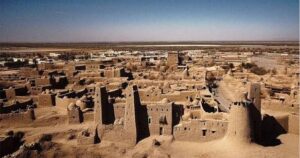
PHOTO CAPTION: Unique architectural style that dominated the Mali Empire’s city skyline. SOURCE: Dogon.
Origins and Early History
The origins of the Mali Empire can be traced to the decline of the Ghana (Wagadu) Empire during the 12th century. Both Mande oral traditions and the writings of medieval Arab historians indicate that as Ghana’s political authority weakened, the western Sudan experienced a period of political fragmentation. Smaller kingdoms and chiefdoms competed for control of territory, trade routes, and the rich gold-producing regions of West Africa. Among the most important of these emerging states were the Sosso Kingdom, centred at Kaniaga, and the Manding (Mali) Kingdom, which gradually rose to prominence in the Upper Niger region.
The weakening of the Ghana Empire created favourable conditions for new political powers to emerge. As Ghana lost control of the trans-Saharan trade routes and its influence declined, the Manding people strengthened their political organization and expanded their authority over neighbouring communities. Their strategic location near fertile agricultural lands and important commercial routes enabled them to accumulate wealth and military strength, preparing the way for the rise of a new empire.
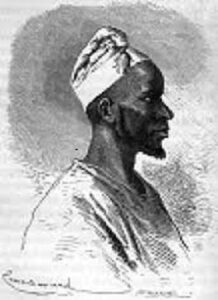
PHOTO CAPTION: Sundiata Keita. SOURCE: aaregistry.
The best-known account of the foundation of the Mali Empire is preserved in the Epic of Sundiata (Sunjata Epic), one of Africa’s greatest oral traditions. Passed down for centuries by griots (traditional oral historians), the epic tells the story of Sundiata Keita, who is celebrated as the founder of the Mali Empire. According to the tradition, Sundiata was born into the Keita royal family but spent much of his childhood overcoming physical disability and political persecution. Forced into exile after the death of his father, he later returned to his homeland to reclaim his rightful position.
At the time of Sundiata’s return, the Manding people were under the domination of the powerful Sosso ruler, Sumanguru Kanté, who had conquered many neighbouring states after the collapse of Ghana. Sumanguru was regarded as a formidable military leader whose growing power threatened the independence of the Manding kingdoms. Recognizing the need for unity, Sundiata rallied the divided Mande clans and forged alliances with neighbouring rulers to resist Sosso domination.
The decisive turning point came with the Battle of Kirina, traditionally dated to around 1235. In this historic battle, Sundiata Keita defeated Sumanguru Kanté, ending the dominance of the Sosso Kingdom and establishing the foundation of the Mali Empire. His victory united the Manding states under a single ruler and marked the beginning of one of the greatest empires in African history.
Following his victory, Sundiata consolidated his authority by bringing numerous Manding communities and neighbouring territories under his control. He established a strong and stable political system that combined centralized royal authority with considerable local autonomy for provincial rulers. This administrative arrangement encouraged loyalty among conquered peoples while allowing local leaders to retain some traditional authority. The political structure he created proved durable and became the basis for the empire’s future expansion.
Sundiata also reorganized the empire’s military by maintaining a disciplined army capable of defending the kingdom and expanding its frontiers. Through military strength, diplomatic alliances, and effective leadership, he secured control over important trade routes and the gold-producing regions of Bambuk and Bure. These resources generated enormous wealth and transformed Mali into one of the most prosperous states in West Africa.
The prosperity of the early Mali Empire was closely linked to its control of the trans-Saharan trade. Merchants travelling between West Africa and North Africa passed through Mali, transporting gold, salt, ivory, kola nuts, leather goods, and other valuable commodities. By taxing this trade and protecting commercial routes, the empire accumulated considerable wealth that strengthened its government and military.
After Sundiata’s death, his adopted son Mansa Wali succeeded him and continued the work of expanding and consolidating the empire. Mansa Wali extended Mali’s borders and strengthened its political institutions. He was also the first ruler of Mali to undertake the Hajj (pilgrimage to Mecca), an event that strengthened diplomatic and commercial relations with North African Muslim rulers and further encouraged the spread of Islam within the empire.
Although Mansa Wali’s death was followed by a bitter succession struggle and civil war, the Mali Empire survived these challenges. Unlike many contemporary states, Mali possessed a highly decentralized system of government. Provincial governors, local chiefs, and regional administrators enjoyed considerable authority in managing local affairs while remaining loyal to the Mansa. This decentralized administrative structure enabled the empire to continue functioning even during periods of weak leadership or disputes within the royal family.
The Mali Empire reached its greatest height during the reign of Mansa Musa I, who ruled in the first half of the fourteenth century (c. 1312–1337). Widely regarded as one of the wealthiest rulers in history, Mansa Musa not only preserved the empire inherited from his predecessors but expanded it into the largest empire in West Africa. Supported by an army reportedly numbering about 100,000 soldiers, including an elite cavalry force of 10,000 horsemen, and assisted by the distinguished general Saran Mandian, he greatly extended Mali’s territorial boundaries.
Under Mansa Musa, the empire stretched from the Gambia and lower Senegal in the west, across the Western Sahara in the north, to Gao on the Niger River in the east, and southward into the Bure goldfields and the forest regions later known as the Gold Coast (present-day Ghana). This vast territory brought together numerous ethnic groups, languages, cultures, and religious communities under a single imperial administration.
Mansa Musa’s reign also marked the golden age of Mali’s economic and cultural development. The empire’s authority rested not only on military conquest but also on its control of the trans-Saharan trade routes that linked the goldfields of West Africa with the markets of North Africa and the Mediterranean world. Revenue from trade enabled the government to finance public works, maintain a strong military, and support centres of learning.
The cities of Timbuktu and Djenné flourished during this period as major centres of commerce, Islamic scholarship, and culture. Scholars, merchants, and travellers from across Africa, North Africa, and the Middle East visited these cities, contributing to Mali’s reputation as one of the world’s leading centres of trade and learning.
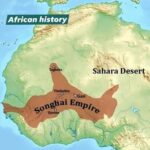
However, the empire’s political power began to weaken during the late fourteenth century and declined more rapidly in the fifteenth century. Succession disputes, internal political rivalries, and the gradual loss of important provinces weakened the authority of the Mansa. At the same time, the rapidly expanding Songhai Empire challenged Mali’s dominance of the Niger River valley and gradually seized important commercial centres, including Gao and Timbuktu.
Despite these setbacks, the decline of the Mali Empire was gradual rather than sudden. Although it lost much of its former territory, a reduced Malian state continued to exist for many years. The prestige of the Keita dynasty, the administrative traditions established by Sundiata, and the cultural influence of the Manding people remained strong throughout West Africa.
 Economic System
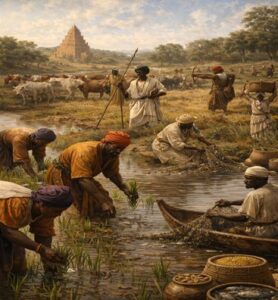
The base of Mali’s economy was undoubtedly agrarian, with the majority of the population involved in agriculture, cattle-rearing, fishing, hunting, and/or gathering.
By the beginning of the 14th century, Mali’s expansion into the Inland Delta, Gao, and the eastern Songhay provinces greatly expanded Mali’s farming, grazing, hunting, and fishing resources. The new territories also provided additional sources of slaves for trade, military service, and farm and kolanut production.
Tribute (a payment that a lesser ruler sent to a greater ruler) from kings and chiefs within Mali’s territory, along with taxes from newly controlled trade routes, enriched the government treasury. By the mid-14th century, when Mali was at its peak of imperial dominance, the Trans-Saharan trade had greatly increased.
Because of Mansa Musa’s fabulous pilgrimage and the resulting publicity in Cairo, Mali became better known in North Africa and the Middle East, and even in Europe. Stories of Mali’s wealth drew increasing numbers of North Africans to trading deals across the Sahara.
The people who lived in Mali’s commercial centers, such as Walata, were dressing in clothes imported from Egypt. Mansa Musa sent diplomats and opened an embassy in Morocco, which stimulated trade with the Maghrib (northwest Africa). Ivory, slaves, salt, copper, and animal hides became important in the trans-Saharan trade. But gold was the most important item. There were three principal goldfields below the Sahara. Mali drew on these goldfields for the trans-Saharan trade in precious metals. Merchants from North Africa, the Middle East, and Europe competed for this Mali gold.
The Empire’s prosperity was built upon its rich natural resources. Among its holdings were extensive copper mines, many of which were operated by large groups of enslaved labourers. This mineral wealth contributed significantly to Mali’s emergence as a major trading hub in West Africa.
Equally important was Mali’s abundant supply of salt. In the African context, particularly in desert regions, salt was a highly prized commodity. It served not only as a seasoning but also as a vital preservative, allowing food to be stored safely in hot climates and transported over long distances. Because salt was scarce in many parts of Africa, its value was immense. Merchants of Mali capitalised on this demand, amassing great fortunes through the salt trade.
These resources enabled the empire to flourish as a center of commerce and cultural exchange.
Political Organization and Governance
The Mali Empire was organised as the Manden Kurufa, a federation of states led by the mansa (emperor), whose authority was hereditary but exercised in partnership with provincial rulers and traditional institutions rather than as an absolute monarchy.
The Political organisation of the empire was composed of different ‘lands’ or ‘vassal kingdoms’ that retained considerable autonomy, with control becoming more nominal and less real as the distance from the core increased, and no assumption of ethnic, cultural, or political homogeneity.
At the centre of the structure was the emperor or mansa and his court, which was composed of the griot or jeli: spokesman, master of ceremonies, counsellor, princes’ tutor and director of court musicians. The farariya (commanders of the cavalry) and the mansa’s personal guard represented the military in court.
Also important were the qasa (the mansa’s first wife), the santigi, or finance minister, master of the treasury and guardian of royal granaries and valuable deposits, and the kangoro-sigi or viceroy. Finally, Muslim officials were also valued and influential, often becoming royal confidants and advisers. Although the writing skills and northern connections of the latter were highly valued, administrative procedures remained mainly verbal.
Three types of government existed: autonomous provinces supervised by a local representative of the mansa, with local dynasties largely retaining their autonomy (applied to allies and kingdoms that had not offered resistance to conquest); provinces directly administered by a faren or farba (centrally appointed governor in charge of justice, security and taxes), for initially hostile regions (eg. Sosso) or regions of key economic importance (eg. Walata); and the Malinké heartland, directly controlled by the mansa or a kinsman/ally of his.
The representatives of the mansa met once a year at the royal court. All problems and projects were put forward and debated, and the mansa indicated the measures to be taken. After the council, the governors were not summoned until the following year, unless they disobeyed the mansa’s guidelines
The Mansa also had direct relationships with various family heads in the kingdom; the family and clan system provided the basis for the development of power networks, from the local to the regional, and up to the imperial level. Thus, the mansa’s office grew out of the family headman and the village head, and in the case of Mali.
The Mali Empire, like many African kingdoms, operated under a dual system of local customs and Islamic law. This blend of legal frameworks provided a robust method for resolving disputes and maintaining public order.
Social Structure and Daily Life
The Mali Empire developed a complex and hierarchical society that reflected the scale of its political organisation, economic prosperity and cultural diversity. Social position was influenced by lineage, political authority, occupation, wealth, military status and, in some cases, hereditary social roles. At the same time, Mali’s society was not completely rigid. Individuals could gain wealth, influence or prestige through commerce, scholarship, military service and political achievement.
The empire encompassed numerous communities and ethnic groups, including Mande-speaking peoples, Soninke, Fulani, Tuareg and others. Consequently, social organisation varied from one locality to another. Nevertheless, certain broad social patterns characterised life within the empire.
The Mansa and the Royal Court
At the summit of Mali’s political hierarchy stood the Mansa, the emperor and supreme political authority. The Mansa exercised considerable power over the administration of the empire, the military, taxation, diplomacy and the appointment of officials. His authority was reinforced by the prestige of the Keita dynasty and by the political traditions associated with the founding of Mali under Sundiata Keita.
The Mansa was surrounded by members of the royal family, nobles, advisers, military commanders, officials and court specialists. The royal court served as the administrative centre of the empire and was also an important institution of ceremony and political communication.
The ruler’s position brought enormous wealth and prestige. The imperial court received tribute from subordinate territories and benefited from taxation on commerce. Royal wealth was displayed through elaborate ceremonies, clothing, gifts and patronage, particularly during the reign of powerful rulers such as Mansa Musa.
Although Islam became increasingly important among Mali’s ruling elite, particularly from the reign of Mansa Musa onwards, political authority remained connected to older Mande traditions of kingship. The Mansa’s legitimacy therefore rested upon a combination of dynastic descent, political authority, military power and established cultural traditions.
Nobility and Provincial Rulers
Immediately below the Mansa were members of the royal lineage and political aristocracy. Important nobles occupied senior administrative and military positions and could exercise authority over provinces, towns and subordinate communities.
Mali’s enormous territory could not be governed directly from the imperial capital. The Mansa therefore relied on provincial governors and subordinate rulers to administer different regions. Some territories retained considerable local autonomy provided that their rulers recognised the authority of the Mansa, paid tribute and supplied soldiers when required.
These local rulers could possess considerable wealth and influence. Their position depended upon their relationship with the imperial government, but their authority was also rooted in local traditions and established political institutions.
Military Elites
The military occupied an important position in Mali’s society because the empire’s expansion and survival depended heavily upon its ability to defend its territory and maintain political control.
Military commanders and members of the warrior elite enjoyed status, wealth and political influence. Successful military leaders could acquire land, captives, wealth and appointments from the ruler. Military service could therefore provide opportunities for individuals from outside the highest hereditary aristocracy to improve their social and political position.
The army consisted of different groups, including professional soldiers, cavalry and forces supplied by subordinate territories. Cavalry was particularly important in areas where horses could be maintained effectively, while infantry played a major role across much of the empire.
Merchants and the Commercial Class
Merchants occupied an influential position in Mali’s society because long-distance commerce was central to the empire’s prosperity. Mali controlled or influenced important areas associated with the production and movement of gold, while its location along trans-Saharan routes connected West Africa with North Africa and the wider Islamic world.
Merchants traded in gold, salt, textiles, leather goods, kola nuts and other commodities. Major commercial centres such as Timbuktu, Djenné and Gao attracted traders from different parts of West Africa and North Africa.
Successful merchants could accumulate considerable wealth and establish influential relationships with political authorities. Muslim merchants in particular benefited from extensive commercial networks that extended across the Sahara. Their connections also facilitated the movement of Islamic scholarship, Arabic literacy, religious ideas and cultural practices.
Artisans and Skilled Specialists
Artisans formed another important component of Mali’s urban and rural economies. These included blacksmiths, goldsmiths, leatherworkers, weavers, potters, carpenters, builders and other craft specialists.
Blacksmiths were particularly respected because metalworking was essential to agriculture, warfare and everyday life. They produced farming tools, weapons, household implements and other objects. In Mande societies, blacksmithing was also associated with specialised bodies of knowledge and distinctive social traditions.
Weavers and leatherworkers produced clothing, bags, footwear, saddles and other goods, while potters manufactured vessels for cooking, storage and domestic use. Many crafts were transmitted through apprenticeship and hereditary occupational traditions, allowing technical knowledge to be preserved across generations.
Farmers and Pastoralists
The majority of Mali’s population consisted of farmers, pastoralists and other rural producers. Although merchants and the royal court often receive greater attention in historical accounts, agricultural communities formed the economic foundation upon which the empire depended.
Farmers cultivated crops suited to their local environments, including millet, sorghum, rice and other grains, while communities in suitable regions also cultivated vegetables and other food crops. In the fertile inland Niger Delta, rice cultivation and fishing were particularly important.
Pastoral communities raised cattle, sheep, goats and other livestock. Pastoralists moved seasonally in search of water and grazing land, and their livestock provided meat, milk, hides and other products. Relations between farmers and pastoralists were economically important but could also generate competition over land and water.
Enslaved People and Systems of Servitude
Enslavement was an established institution within the Mali Empire, as it was in many societies of medieval West Africa and the wider Islamic world. Enslaved people could be acquired through warfare, raiding, trade and other processes. Their experiences varied considerably depending upon their circumstances and the roles assigned to them.
Some enslaved people worked in agriculture, domestic service, mining, transportation or craft production, while others could serve in military or administrative capacities. Some individuals and their descendants could rise to positions of influence, particularly where rulers employed enslaved soldiers or officials.
It is important, however, not to portray this as evidence that slavery was socially benign. Enslaved people were subject to coercion, loss of freedom and exploitation, and their experiences differed significantly from those of free members of society. The institution formed part of the economic and political structures of the empire.
Family and Community Life
For most people, everyday life revolved around family, community, agriculture, trade, religious observance and local social networks. Extended families and wider kinship relationships were important in organising labour, inheritance, marriage and social responsibilities.
Households commonly involved several generations and could include relatives and, in some circumstances, dependants or enslaved persons. Children learned practical skills and cultural traditions from parents, relatives and other members of the community.
Marriage served not only as a personal relationship but also as an important social and economic institution. Marriages could strengthen relationships between families, lineages and political communities.
The Role of Women
Women played essential roles in the economic, domestic and social life of the empire. Their responsibilities varied according to their community, social position and occupation. Women participated in agriculture, food processing, pottery, textile production, trade and household management.
Women in elite families could exercise considerable influence through kinship, marriage and access to political networks. Royal women and female members of ruling families could possess property and influence political relationships, although the extent of their formal political authority varied.
Women also contributed significantly to the transmission of cultural knowledge. Through childcare, storytelling, food production, craft traditions and community activities, they helped preserve and reproduce the cultural practices of their societies.
Urban Life
Mali’s major towns provided a very different environment from rural villages. Cities such as Timbuktu and Djenné became centres of commerce, scholarship, religion and craft production.
Urban markets brought together people from different regions and backgrounds. A visitor might encounter gold and salt traders, farmers, pastoralists, scholars, religious teachers, artisans and government officials within the same commercial environment.
Urban life also encouraged cultural exchange. Languages, customs, fashions, religious ideas and commercial practices circulated through these centres. Timbuktu in particular eventually became renowned for Islamic scholarship and manuscript culture, especially under Mali and later Songhai.
Education and the Transmission of Knowledge
Education in Mali operated through both indigenous systems of knowledge transmission and Islamic scholarship. Much practical knowledge was transmitted orally through families, communities, apprenticeships and specialist groups.
Islamic education expanded particularly in urban centres. Students could study the Qur’an, Islamic law, theology, Arabic language and related fields under learned teachers. This intellectual tradition became especially prominent in Timbuktu and Djenné.
However, formal Islamic scholarship represented only one part of the empire’s knowledge system. Indigenous communities possessed extensive knowledge of agriculture, environmental management, medicine, metallurgy, navigation, architecture and oral history, much of which was preserved outside written institutions.
Religion and Beliefs
The religious life of the Mali Empire was characterised by the interaction between long-established indigenous Mande religious traditions and the growing influence of Islam. Islam did not arrive in Mali as a completely new phenomenon during the empire’s formation. Muslim merchants, scholars and travellers had been visiting and settling in parts of West Africa for centuries before the rise of Mali, particularly through the expanding trans-Saharan trade networks. The emergence of Mali as a major commercial power from the thirteenth century onwards therefore provided favourable conditions for the further expansion of Islam.
The resulting religious landscape was complex. Islam became increasingly influential among the rulers, court officials, merchants, scholars and urban populations, while indigenous beliefs and practices continued to be important among large sections of the population. Rather than replacing one system immediately, the two traditions existed alongside one another and, in some circumstances, interacted and adapted to local social and cultural conditions.
Indigenous Religious Traditions
Before the widespread adoption of Islam, the peoples of the Mande region followed diverse indigenous African religious traditions. These traditions recognised a supreme creator as well as spiritual beings associated with ancestors, nature, communities and particular sacred places. Religious practices varied among different communities and should not be treated as a single uniform system throughout the empire.
Ancestors occupied an important place in many communities. They were regarded as having continuing relationships with the living and were associated with family identity, social order and communal well-being. Ritual specialists and elders played important roles in maintaining religious traditions, interpreting spiritual matters and conducting ceremonies.
Indigenous religious beliefs were also closely connected with everyday life. Agricultural activities, rainfall, fertility, health, warfare and political authority could all have religious dimensions. Consequently, religion was not necessarily separated from economic, political and social life in the way that modern categories sometimes imply.
The Early Presence of Islam
The statement that the “first Arab travellers” arrived in West Africa in the eighth century requires some qualification. Contacts between North Africa and West Africa developed progressively, particularly following the expansion of Islam across North Africa during the seventh and eighth centuries. By the eighth and ninth centuries, trans-Saharan commercial networks were becoming increasingly important channels for interaction between Muslim North Africa and the western Sudan.
Muslim merchants were attracted to West Africa primarily by its valuable commodities, especially gold. In return, they brought salt, textiles, metals, manufactured goods and other products. Alongside these commodities came Arabic literacy, Islamic religious ideas, commercial practices and connections with the wider Muslim world.
Islam consequently spread gradually through trade, settlement, scholarship, marriage, political relationships and personal conversion, rather than through a single military conquest of the region.
Islam and the Mali State
Islam became increasingly significant during the development of the Mali Empire. The rulers of Mali recognised the political, commercial and diplomatic advantages of maintaining relationships with the wider Islamic world. Muslim merchants and scholars could provide valuable services as scribes, diplomats, teachers, judges and advisers.
The adoption of Islam by members of the ruling elite also strengthened Mali’s connections with North Africa and the Middle East. Muslim rulers could correspond with other Muslim states and scholars, participate in Islamic diplomatic networks and undertake the pilgrimage to Mecca.
Nevertheless, the Islamisation of Mali was gradual and uneven. Conversion among the political elite and urban communities did not necessarily mean that the rural population immediately abandoned indigenous religious traditions. Indigenous beliefs continued to influence everyday life, social institutions and political culture.
Mansa Musa and the Hajj
The most famous expression of Mali’s connection with the Islamic world was the pilgrimage of Mansa Musa to Mecca in 1324–1325. As a Muslim ruler, Mansa Musa undertook the hajj, one of the five pillars of Islam.
The pilgrimage became one of the most famous journeys in medieval African history. Mansa Musa travelled with a large entourage and reportedly distributed substantial quantities of gold along his route. Accounts by contemporary and later writers helped spread knowledge of Mali’s immense wealth throughout North Africa and the wider Islamic world.
The pilgrimage had consequences beyond its religious significance. It strengthened Mali’s diplomatic, commercial and intellectual relationships with Muslim societies in North Africa and the Middle East. Mansa Musa’s journey also enhanced the international reputation of Mali and its ruler.
Mansa Musa’s Promotion of Islam
Following his return, Mansa Musa gave considerable support to Islamic religious and educational institutions. He encouraged Muslim scholars, architects and teachers to visit Mali and supported the construction and development of mosques and centres of learning.
One of the most celebrated examples was the development of Timbuktu as an important centre of Islamic scholarship. Mansa Musa is traditionally associated with commissioning the construction of the Djinguereber Mosque, reportedly with the involvement of the Andalusian architect and scholar Abu Ishaq al-Sahili.
It is important, however, to avoid suggesting that Mansa Musa single-handedly transformed Timbuktu into a major intellectual centre. Timbuktu’s development resulted from long-term commercial, political and scholarly processes, and its reputation as a major centre of learning continued to grow under both Mali and later Songhai rule.
Timbuktu and Islamic Scholarship
Under Mali’s influence, Timbuktu developed into an increasingly important centre of Islamic culture and scholarship. Its strategic location near the Niger River and the Sahara made it an important commercial meeting point, while its growing Muslim population created favourable conditions for religious education.
Scholars studied subjects including Qur’anic interpretation, Islamic jurisprudence, theology, Arabic language and literature, as well as mathematics, astronomy and other fields of knowledge within the intellectual traditions of the medieval Islamic world.
The great scholarly reputation associated with Timbuktu reached its fullest development in later centuries, particularly under the Songhai Empire. Nevertheless, Mali’s political stability, commercial prosperity and patronage of Islamic institutions helped establish the foundations upon which Timbuktu’s later intellectual prominence was built.
Mosques, Madrasas and Islamic Education
Mosques became important institutions in the growing Muslim communities of Mali. They served not only as places of worship but also as centres for teaching, preaching, community gatherings and intellectual exchange.
Islamic education was provided through Qur’anic schools and scholarly circles, while more advanced learning developed around prominent teachers and mosques. The term madrasa refers to an institution of Islamic learning, although the organisation and structure of medieval West African education should not simply be assumed to resemble modern universities or later formal madrasas elsewhere in the Islamic world.
Through these educational networks, Arabic literacy and Islamic scholarship became increasingly established in Mali’s urban centres.
Islam and Political Legitimacy
Islam also contributed to the political legitimacy and diplomatic identity of Mali’s rulers. Muslim rulers could present themselves as members of the wider Islamic political and cultural community, strengthening their relationships with rulers and scholars beyond West Africa.
However, Mali’s political system did not become exclusively Islamic. The authority of the Mansa continued to be rooted in Mande political traditions, dynastic legitimacy and indigenous institutions. Islamic practices were incorporated into the existing political order rather than simply replacing it.
This combination of traditions was particularly evident in the royal court, where Islamic scholars and officials could operate alongside institutions and customs derived from older Mande political culture.
Religious Coexistence and Adaptation
The religious history of Mali is best understood as one of coexistence, adaptation and gradual Islamisation. Islam was particularly influential among merchants, urban residents, scholars and sections of the ruling elite, while indigenous religious practices remained widespread among other communities.
The boundaries between the two traditions were not always absolute. Individuals and communities could adopt Islamic practices while retaining elements of older cultural traditions. Religious change therefore occurred within existing social structures rather than in complete isolation from them.
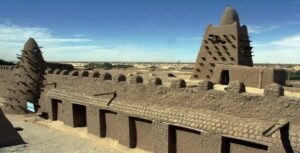
PHOTO CAPTION: Timbuktu University. SOURCE: Think Africa.
Culture and Intellectual Life
The Mali Empire became a center of intellectual and cultural activity, particularly in Timbuktu. Sankore University in Timbuktu attracted scholars from across the Islamic regions. Manuscripts covering law, science, literature, and theology were produced and preserved through trade, Madrassas, and education.
Cultural life also thrived through music, storytelling, and artistic expression, with griots (revered hereditary custodians) serving as custodians of historical knowledge.
The Mali Empire’s fortuitous combination of technological skills, cultural control, and ecological circumstances came to an end circa the 14th and 15th centuries, but the legacy of the Mali Empire would be felt far and wide for centuries.
Mande words that survive in the languages of forest regions are evidence of the empire’s widespread linguistic influence and of the prestige associated with using the language of the elite trading culture. In Hausa, the language spoken in northern Nigeria, for example, the word for “Muslim” is Imale, which suggests that the Mali Empire may also be credited with the diffusion of Islam after the mid–fourteenth century.
Through contact with Mande traders, items of technology were dispersed throughout the empire and southward into the West African forest towns and states.
Decline and fall
After reaching its greatest height during the reign of Mansa Musa and his immediate successors, the Mali Empire gradually entered a period of decline in the late fourteenth century. Although it remained an important kingdom for many years, a combination of internal weaknesses and external pressures steadily reduced its power and influence.
One of the main causes of Mali’s decline was political instability. After the death of strong rulers such as Mansa Musa, disputes over succession became frequent. Rival claimants fought for the throne, leading to civil conflicts that weakened the authority of the central government. As royal power declined, provincial governors and local chiefs became increasingly independent and often refused to obey the emperor or pay tribute.
Economic challenges also contributed to the empire’s fall. Mali’s wealth depended heavily on controlling the trans-Saharan trade in gold, salt and other valuable goods. However, as the central government weakened, it lost control over important trade routes and commercial centres such as Timbuktu and Gao. This reduced state revenue and weakened the empire’s ability to maintain its army and administration.
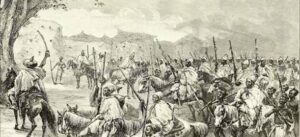
External attacks further accelerated the empire’s decline. The Tuareg captured Timbuktu in the early fifteenth century, while the Mossi kingdoms frequently raided Mali’s southern territories. At the same time, neighbouring states took advantage of Mali’s weakness to seize its lands and challenge its authority.
The greatest blow came from the rise of the Songhai Empire. Under powerful rulers such as Sunni Ali and Askia Muhammad, Songhai conquered many of Mali’s former territories and gained control of the major trade centres along the Niger River. By the late fifteenth and early sixteenth centuries, Songhai had replaced Mali as the dominant power in West Africa.
 Conclusion
The decline and fall of the Mali Empire resulted from a combination of internal and external pressures rather than a single military defeat. Dynastic instability weakened the central government, while provincial and tributary states increasingly asserted their independence. The loss of important commercial centres such as Timbuktu and Walata reduced Mali’s economic influence, while the expansion of Songhai under Sunni Ali and his successors transformed the political balance of the western Sudan.
By the late fifteenth century, Mali had ceased to be the dominant empire of West Africa, and Songhai had taken its place as the region’s principal imperial power. Mali, however, did not simply vanish. A smaller Mande polity survived in its traditional heartlands, and political, cultural and intellectual traditions associated with the empire continued to shape West African history for centuries.
The story of Mali’s decline is therefore best understood not as the abrupt disappearance of a civilisation, but as a transition from imperial dominance to regional political continuity. The institutions, commercial networks, cultural traditions and historical memories created during the Mali period became part of the foundations upon which subsequent West African states—including Songhai and later Mande kingdoms—were built.
EA EDITORS