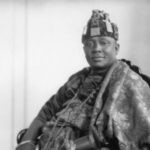
NDLAMBE
- 4 Min Read
Ndlambe (circa 1740-1828), a Xhosa of the Eastern Cape, was regent of the Rarabe Xhosa from 1787-96 and founder of the breakaway Ndlambe Xhosa. Ndlambe was born about 1740 in what is now Ciskei, the grandson of Phalo who was the last Paramount Chief of a united Xhosa nation. He was the son of Rarabe and of Nojoli, a Thembu princess.
His brother, Mlawu, was the heir apparent to Rarabe, but when Rarabe and Mlawu were killed in battle in 1787, the chieftaincy went to Mlawu’s son, Ngqika. Because Ngqika was only eight years of age at the time of his father’s death, his uncle Ndlambe was appointed regent of the ama-Rarabe and guardian of the heir Ngqika and of his brother Ntimbo. Nalambe served as regent for 12 years.
At this time, before the split up of the chiefdom, the ama-Rarabe were living between the Great Fish River and the Kei River. To the south, Boer settlers had pushed out into the far reaches of the Eastern Cape Colony and had settled to the south of the Fish River.
From the late 1770s, until the British intervened in the 1820s, Boer and Xhosa were constantly pushing and shoving against one another in a series of border wars. As regent, Ndlambe consolidated the strength and prestige of the Rarabe Xhosa, playing off neighbouring chiefdoms against the Dutch settlers.
When Ngqika came of age, Ndlambe refused to relinquish power. The fight between uncle and nephew over the succession continued for the rest of their lives and eventually splintered the Rarabe Xhosa. In 1797, in an attempt to gain control, Ngqika took Ndlambe hostage for two years. Ndlambe was not mistreated but he was humiliated by Ngqika who had an affair with Thuthula, one of Ndlambe’s wives (all of whom were allowed to accompany Ndlambe during his captivity).
Ndlambe escaped from captivity and crossed over the Fish River border. He took with him many Rarabe supporters who had turned against Ngqika because of the way he had humiliated Ndlambe. Ndlambe settled in the Zuurveld, along the coastal region of Lower Albany and established the breakaway Ndlambe Xhosa. In 1808, Ndlambe gathered his forces and attacked Ngqika, destroying his kraal, taking his cattle and forcing him into the mountains. Ngqika was a broken man, his followers reduced to about 900 in number.
Even in Ngqika’s debilitated state, the British representatives from the Cape Colony continued to deal with him as the chief, ignoring his condition and giving him all the treatment accorded a powerful chief. Meanwhile, in the fourth Border War in 1811-12, Ndlambe was chased out of the Zuurveld, back across the Fish River into the Ciskei where he fought again with Ngqika.
In 1818, in another of the many border wars, Lord Somerset, then governor of the Cape Colony, moved against Ndlambe who was settled near Peddie. Ngqika tricked the British into giving him some of the cattle they had captured from Ndlambe’s people. When Ndlambe learned of the trickery, he got the support of Hintsa, the paramount Xhosa Chief, and fought Ngqika in “one of the most bloody battles in Xhosa history.”
Ngqika fled and took refuge at Great Winterberg; there he called on the British for help and this caused Ndlambe to flee across the Fish River. The British and the Boers took 23,000 head of Ndlambe’s cattle thus robbing him of his wealth and status. The next year Ndlambe attacked the Albany district with 18,000 warriors, killing and burning everything in sight. In April of 1819 he attacked Grahamstown with about 10,000 Xhosa. When Ndlambe stormed the Grahamstown barracks his men were mowed down by soldiers firing muskets.
Xhosa weapons were mostly stabbing assegais and required close up combat. The Xhosa lost about 1,000 men, including three of Ndlambe’s sons. In 1819 in the continuing push for more land, settlers again pushed up from Cape Colony, forcing the Xhosa back over the Keiskamma River. Ndlambe fled into exile where he remained for two years. Eventually, he achieved a reconciliation of sorts with Ngqika.
In 1823, still reeling from the pressures from the south, the Xhosa were overwhelmed by refugees from the Mfecane in the north who were suddenly pushing south. Some Xhosa fled into the Cape Colony to get away from the Mfecane. By 1827 the waves of people from the north had abated and the Xhosa in Cape Colony were able to return.
In 1828, Ndlambe died in Mount Coke, now King William’s Town, on the Buffalo River. Ironically, his son and heir died fairly soon thereafter and he was succeeded by Maqoma, a son of Ngqika.
VIRGINIA CURTIN KNIGHT