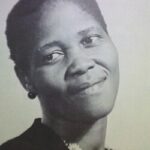
BOSTON, HENRY JOSIAH LIGHTFOOT
- 3 Min Read
Henry Josiah Lightfoot Boston (August 19, 1898 – January 11, 1969), after a distinguished legal career, became the first Sierra Leonean to become governor-general, a position he held from 1962 to 1967.
He was born in Bullom, in the Port Loko district, a son of the Rev. N.H. and Lauretta Boston. His family background predisposed him to educational achievement, for his father had been one of the first graduates of Fourah Bay College in 1879, after the college had become affiliated with the University of Durham in England.
Young Henry attended the Cathedral Boys Primary School in Freetown, and, later, the Church Missionary Society (C.M.S.) Grammar School, the oldest secondary school in West Africa. He graduated from Fourah Bay with an M.A. degree in 1920. He then entered the colonial civil service in Sierra Leone, working in the Secretariat and the Treasury. Studying privately, he passed the London University intermediate law examination in 1922 and left in the same year to continue his legal studies at Lincoln’s Inn in England. In 1924, he gained first-class honours in the final examinations of the Council of Legal Education.
In 1925, he obtained Bachelor of Laws (LL.B.) and Bachelor of Civil Laws (B.C.L.) degrees, both from Durham University. He was also awarded the Barstow scholarship in 1926, returning home to Sierra Leone the same year. In Freetown, he entered private practice as a barrister and solicitor, and was city solicitor from 1926-27.
In 1935, he was appointed justice of the peace, and in 1946 he became a police magistrate. He became registrar-general of the Supreme Court in 1954, and a senior police magistrate in 1955. During the period from 1945-57, he acted on many occasions as a judge of the Supreme Court. When constitutional changes occurred in Sierra Leone, he was appointed Speaker of the newly constituted House of Representatives in 1957.
In 1962, he became governor-general of Sierra Leone, and in November of the same year knighted by the Queen of England. During the 1967 general elections, the leading political parties—the Sierra Leone People’s Party (S.L.P.P.) and the All People’s Congress (A.P.C.) – emerged as close rivals. The onus rested on the governor-general to choose a new prime minister. Sir. Henry, after examining the situation, chose Siaka Stevens, the former Leader of the Opposition.
Soon afterwards, the commander of the Armed Forces, Brigadier David Lansana, announced a military takeover of the government, and put both the governor-general and Prime Minister Siaka Stevens under house arrest. A military government soon followed, remaining in power for a year, during which time Sir Henry was kept under constant surveillance. His health, which was not good during his later years, was further affected during this difficult period.
In April 1968 he went to London for his health, and died there the following January. He was buried in state in Freetown.
C. MAGBAILY FYLE