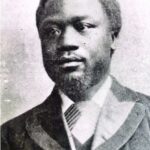
CRABBE, V.C.R.A.C
- 5 Min Read
Vincent Cyril Richard Arthur Charles Crabbe, widely known as V.C.R.A.C. Crabbe (October 29, 1923 – September 7, 2018), was one of Ghana’s most distinguished jurists, a constitutional draftsman of global stature, and a celebrated legal educator. Over his long and impactful career, Crabbe played seminal roles in shaping not only Ghana’s constitutional and legal framework but also those of several countries across Africa and the Caribbean.
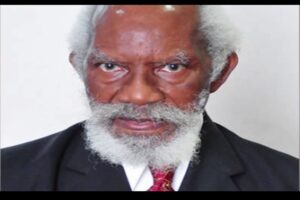
PHOTO CAPTION: A photo of V.C.R.A.C Crabbe. SOURCE: EA Library.
Crabbe was born on October 29, 1923 at Kinkam in Ussher Town, Accra, in the then Gold Coast. Ussher Town, one of Accra’s historic Ga communities, was at the time a vibrant center of public administration, legal practice and civic life. Growing up in this environment, Crabbe was exposed early to the values of public service, discipline and intellectual inquiry that would later define his professional life.
He was born into a family deeply rooted in law, governance and public administration. His father, Richard Arthur Crabbe, served as Chief Registrar of the Courts, the most senior administrative officer of the Judicial Service of the Gold Coast. His mother, Stella Akoley Lartey, was from the Nii Walakataka We of Osu a seamstress.
Crabbe was the youngest of his father’s children. His elder brother, E. A. N. Ffoulkes Crabbe, was a distinguished public servant who served as Clerk of the Gold Coast Legislative Assembly. Another prominent influence within his extended family was Samuel Azu Crabbe, a fellow alumnus of Accra Academy who later rose to become the fifth Chief Justice of Ghana. These strong familial associations with the law and public institutions profoundly shaped Crabbe’s early worldview and reinforced his lifelong commitment to constitutionalism and public service.
His family roots are traced to Ga Mashie (Crabbe family) and Osu (Walakataka family). The Crabbe family in this context is said to have Flemish origins, with an ancestor arriving from Norfolk, UK, to work for F.A. Swanzy’s Company.
In 1950, Crabbe travelled to London to further his education, studying Economics at the City of London College, Moorgate. After two years there, he was admitted in August 1952 to the Honourable Society of the Inner Temple to read law. Demonstrating exceptional aptitude, he completed the standard three-year course in just two and was called to the Bar on 8 February 1955. That same year, he enrolled at the Gold Coast Bar to preserve his seniority among Ghanaian lawyers.
Crabbe’s return to the Gold Coast marked the beginning of a transformative legal career. He joined the Attorney-General’s Department, progressing from Assistant Crown Counsel to become First Parliamentary Counsel, a historic milestone, as he was the first African appointed to that position.
As Parliamentary Counsel, Crabbe provided expert legal drafting services at the highest levels of government, contributing to legislation and legal frameworks across newly independent Africa. His reputation as an authority on legislative drafting expanded internationally, leading to appointments in multiple regions:
- Special Commissioner to Ghana’s 1968 Constitutional Commission and Legislative Draftsman to the 1969 Constituent Assembly, which produced the 1969 Constitution of Ghana.
- Chairman of the 1979 Constituent Assembly, tasked with drafting the 1979 Constitution of Ghana.
- Lead draftsman and advisor to constitutional commissions in Kenya and Zambia, and an advisor to the Fiadjoe Commission reviewing Ghana’s 1992 Constitution.
- Collaborator with international jurists such as Justice P.N. Bhagwati of India and Justice Kayode Eso of Nigeria in advising the establishment of the Constitutional Court of South Africa.
In 1968, Crabbe was appointed the founder and first Chairperson of Ghana’s Electoral Commission, laying the foundation for the nation’s democratic electoral processes.
He later ascended to the bench as a Justice of the Supreme Court of Ghana, serving with distinction and contributing significantly to the development of Ghanaian jurisprudence. Crabbe was equally eminent in legal education. He held academic posts across the Commonwealth, including as Professor of Legislative Drafting at the Cave Hill Campus of the University of the West Indies in Barbados. In mentoring generations of legal drafters and constitutional experts, he helped professionalize legislative drafting across multiple jurisdictions.
Later in life, he served as a Professor of Law at Mountcrest University College in Accra, where he continued imparting legal knowledge with passion and generosity. For many years, Crabbe was Statute Law Revision Commissioner of Ghana, a role in which he undertook the monumental task of revising the country’s laws from 1852 to 2004 across seven comprehensive volumes, a vital reference for lawyers, judges, and policymakers.
Crabbe’s contributions were widely recognized. He was elected a Fellow of the Ghana Academy of Arts and Sciences and, in 2017, delivered a celebrated inaugural lecture entitled The Philosophy of Man, reflecting his profound engagement with the human dimensions of law and society.
He also served as Co-Chair of the Coalition of Domestic Election Observers (CODEO) in Ghana, reinforcing his lifelong commitment to credible, transparent electoral processes.
In 2016, his life and work were chronicled in the biography Unfinished Journey: The Life and Times of V.C.R.A.C. Crabbe, A Legal Luminary, by Kwesi Amoako. Crabbe was known for his warmth, intellect, and the legendary white beard that became a familiar sight in legal and academic circles. He was also a Freemason, belonging to the District Grand Lodge of Ghana under the United Grand Lodge of England.
He passed away in Accra on 7 September 2018, after a short illness, at the age of 94. A state funeral was held on 4 October 2018 at the Accra International Conference Centre, attended by dignitaries, legal luminaries, and national leaders, a testament to his enduring impact on Ghana and beyond. His legacy lives on in the constitutional foundations of national governance, the laws that guide society, and the many legal minds he inspired.
EA EDITORS