GRANT, MARY
- 4 Min Read
Mary Grant (6 August 1928 – 18 September 2016) was a pioneering Ghanaian physician and politician, widely recognized for her contributions to public health, women’s advancement, and national governance. She was the first alumna of Wesley Girls High School to become a medical doctor and played a critical role in Ghana’s health administration and political development during the late 20th century.
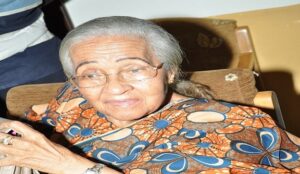
PHOTO CAPTION: A photo of Mary Grant. SOURCE: EA Library.
Mary Grant was born on August 6, 1928 in the Gold Coast (present-day Ghana). She was the daughter of James Grant and Sarah Grant, members of the prominent Grant family of Ghana. She was also a relative of George Alfred “Paa” Grant (1878–1956), a wealthy merchant and political activist who played a pivotal role in Ghana’s independence movement. Paa Grant was instrumental in founding the United Gold Coast Convention (UGCC) in 1947, the first political party in the Gold Coast, and his influence and resources helped nurture early nationalist leaders, including Kwame Nkrumah.
Being part of the Grant family connected her to Ghana’s independence struggle and political leadership, while the family’s social standing and emphasis on education enabled her to pursue medicine, following pioneers like Susan Ofori-Atta and Matilda J. Clerk. The Grants’ deep involvement in civic and political life also influenced Mary Grant’s own commitment to public service, shaping her path as a physician, Deputy Minister of Health, and Ghana’s first female member of the Council of State.
Grant received her early education at Obuasi Methodist School before continuing her secondary studies at the prestigious Wesley Girls High School in Cape Coast. At Wesley Girls, she became the first alumna of the school to qualify as a medical doctor, a significant milestone for women in Ghanaian professional life.
After completing her secondary education, Grant pursued medical studies in the United Kingdom, where she qualified as a physician in 1959. She became the third Ghanaian woman to qualify in medicine, following Susan Ofori-Atta (1947) and Matilda J. Clerk (1949). Her training abroad equipped her with skills and perspectives that she later applied to the development of health services in Ghana.
Upon returning to Ghana in 1961, Grant joined the National Health Service, serving in a range of clinical and administrative capacities. She worked at multiple facilities, including government hospitals and clinics, and was involved in maternal and child welfare programs, health education, and preventive medicine initiatives. Her medical career was characterized by dedication to patient care and the improvement of national health standards.
Grant entered public service formally in the 1980s during the era of the Provisional National Defence Council (PNDC), led by Jerry John Rawlings. In 1985, she was appointed Deputy Secretary (Deputy Minister) for Health, advocating for primary health care and strengthening maternal and child welfare programs.
She later served as Deputy Minister of Health, Minister of Education and Culture, and a Member of the Council of State, becoming one of Ghana’s first female members of this important advisory body. In these roles, she participated in shaping health policy, educational initiatives, and grassroots governance guidelines. She also served on boards such as the National Council on Women and Development and contributed to party vetting processes within the National Democratic Congress (NDC).
Grant represented Ghana at multiple international forums, highlighting her role as a global advocate for health and women’s rights. She led delegations to World Health Organization (WHO) General Assemblies in Geneva, WHO Regional Conferences in Africa, World Bank health meetings, and the Cairo Conference on Population and Development. She also participated in the Beijing Conference on Women’s Rights (1995), reflecting her commitment to advancing women’s roles in health and governance.
Grant’s achievements earned her multiple accolades:
- Certificate of Honour, Ghana Medical Association (1997), for her concern for the welfare of doctors.
- Companion of the Order of the Volta (Civil Division), awarded by the state for her service to health and education.
- Recognition at the Maiden Ghana Women’s Awards (2012) for her leadership and contributions to national development.
She was known for her steadfast dedication to health and governance, her advocacy for women in professional leadership, and her mentorship of younger professionals.
Grant passed away on 18 September 2016 at the 37 Military Hospital in Accra, aged 88.
EA EDITORS