SEME, PIXLEY ka IZAKA
- 3 Min Read
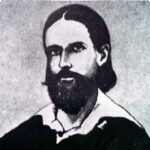
Pixley ka Izaka Seme (circa 1880-1951) is best known as a co-founder of the present day African National Congress and the founder and publisher of the national newspaper, Abantu-Batho.

PHOTO CAPTION: Pixley ka Izaka Seme. SOURCE: EA Library.
Seme may have been a Tonga or a Zulu: this is unclear. He was largely raised on the Inanda Mission Station in Natal, where an American missionary, the Rev. S. Pixley took a particular interest in him. Rev. Pixley arranged for the young Seme’s education, sending him to the Mount Hermon School in Massachusetts.
It appears that Seme was able to make the transition between these environments without undue difficulty for he excelled in the role of foreign student. Upon matriculating from Mount Hermon, Seme entered Columbia University, where he distinguished himself enjoying an award-winning undergraduate career, receiving his B.A. in 1906. Seme then pursued a law degree at Jesus College, Oxford. This he received in 1910, subsequently having been admitted to the bar at the Middle Temple, London.
Returning to South Africa that same year, Seme found that his prior contemplation of a project to enhance Zulu unity had expanded in scope. There was, to his mind, a clear need for an organization that would generate unity among and speak for Africans as a whole. Seme worked to bring representatives from the whole of South Africa and the Protectorates together, and on January 8, 1912, his vision was realized in the founding conference of the South African Native National Congress (SANNC).
Seme recommended that it be structured on an American model, with an upper chamber of Chiefs and a lower house for general representatives. Seme was elected Treasurer. Later that same year, Seme initiated the first national newspaper for Africans, Abantu-Batho, which was to be published in English and three African languages. The paper lasted 20 years.
Seme was an intelligent man, but while he was an initiator, he was not necessarily a leader. After co-founding the African National Congress (ANC), he played little role in it until he was elected President in 1930 when, facing the rise of Communist influence, Seme and other ANC old guard conservatives succeeded in having him elected.
The years of his presidency (1930-37) are considered years of ANC decline, with member participation stagnant and little innovation. Following Seme’s ouster, he continued to participate in minor capacities in the ANC while maintaining his law practice, until he died in 1951.
PHYLLIS NTANTALA