SEKHUKHUNI I
- 3 Min Read
Sekhukhuni (circa 1810-August 13, 1882) was a Bapedi chief who, because of his resistance to both the Boers and the British, is regarded as one of the heroes of the 19th century in Southern Africa. Sekhukhuni succeeded his father, Sekwati, as chief of the Bapedi in 1861.
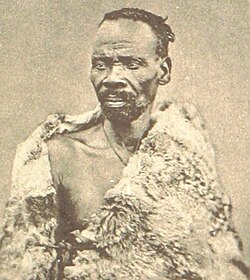
PHOTO CAPTION: Sekhukhuni I. SOURCE: EA Library.
Sekhukhuni, originally named Masile, received his name at a time when the Pedi fortress Phiring was under attack by Boer forces. Cut off from water, Sekhunkhuni and his regiment were said to have crept under enemy fire to reach a water source, “sekhukhuni” being an offshoot of the Pedi verb “to creep.”
Through such exploits he came to be recognized as a leader. He and his followers settled along the northeast border of the South African Republic in the Leolu Mountains close to the Lydenburg goldfields. Sekhukhuni was opposed to the increasing number of gold miners and prospectors in his area and refused to pay taxes or give up land which the Boers maintained was part of their 1846 concession from the Swazis.
In 1876 Sekhukhuni came into direct conflict with Boer forces led by President Burgers, but from his mountain stronghold, Sekhukhuni was able to force the Boer commanders to retreat.
However, the Boer forces were ultimately able to starve Sekhukhuni out of his stronghold, and in 1877 he signed a treaty with the Boers which involved a payment of cattle to them and recognition of South African Republican sovereignty over them.
However, the revolt by Sekhukhuni had demonstrated the military weakness of the Boers, particularly since they were at the same time engaged in major efforts to contain the Zulu forces led by Cetshwayo.
The British annexed the South African Republic in 1877 and insisted that Sekhukhuni agree to pay 2,000 cattle in reparations which he had promised to do to the South Africa Republic. More significantly, he was finally defeated by them in November 1879 and surrendered on December 2 of that year. He was sent to a prison in Pretoria where he remained until 1881, when he was released after the Convention of Pretoria was signed. In 1882 he was murdered by his half-brother, Mampuru.
Sekhukhuni has long been regarded as a major heroic figure by black nationalists in South Africa.
Edward Roux has noted how the Africanists (a group within the African National Congress), “to reinforce the sense of historic grievance and to evoke the memory of African resistance to white conquests. . . made frequent references to the heroes of the tribal past: Moshesh, Shaka, Hintsa, Sekhukhuni, Makhana, and a host of lesser figures.”
It is also noteworthy that, in his last statement before being imprisoned on Robben Island in the 1960s, Nelson Mandela wrote how, as a young man in the Transkei, he had been impressed when the elders spoke of heroes of the past, such as Sekhukhuni, who had defended their lands.
PATRICK O’MEARA