THEILER, ARNOLD
- 2 Min Read
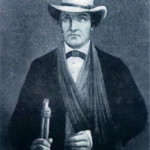
Arnold Theiler (March 26, 1867-July 24, 1936), the bacteriologist and veterinary research scientist, is remembered especially as the founder of Onderstepoort Veterinary Laboratory and for his work on rinderpest and other livestock diseases.

PHOTO CAPTION: Arnold Theiler. SOURCE: arc.agric.za
Theiler was born in Frick, Switzerland, and after passing his veterinary examination in 1889, emigrated to South Africa and settled in the Transvaal as a private practitioner. He was confronted by a host of unknown animal diseases and by the Boer farmers’ total lack of confidence in veterinary science. Although he lost his left arm in an accident soon after his arrival, he continued to work with untiring enthusiasm.
When rinderpest broke out in Rhodesia (Zimbabwe) in 1896, Theiler was sent to investigate the disease and, on his return, was appointed state veterinarian. He drew up elaborate quarantine regulations, but because the government was slow to implement them, the illness spread rapidly throughout the country, killing about 50 percent of the cattle. Undaunted, Theiler continued his research and played an important part in developing an effective vaccine. Shortly afterwards he established the first veterinary research laboratory at Despoort, north of Pretoria, which later moved to Onderstepoort. Under his expert guidance, this institution became one of the largest and most important of its kind in the world.
During the Anglo-Boer War, Theiler served as veterinarian to the Transvaal State Artillery. After the war, Lord Milner expanded veterinary services and Theiler, who had obtained a doctorate at the University of Berne in 1901, was appointed government bacteriologist. During the ensuing years he continued his research on a wide range of animal diseases, and his findings aroused worldwide interest. Much of his time was spent in an attempt to perfect a horse-sickness vaccine.
In 1919, Theiler established the first faculty of veterinary science at the Transvaal University College (later the University of Pretoria). After his retirement in 1927, he continued his research and frequently attended international conferences in Europe and America. Many decorations and distinctions were conferred on him, and he was knighted in 1914.
Theiler not only rendered great service to veterinary science, but more than any other person placed South Africa on the scientific world map. He possessed outstanding abilities: an acute awareness, a systematic approach, thoroughness and a tremendous capacity for work.
K.J.HEYDENRYCH