BRENNER, SYBNEY
- 6 Min Read
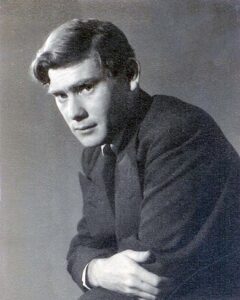
PHOTOCAPTION: Sydney Brenner. SOURCE: Cold Spring Harbour Authority.
Sydney Brenner (1927–2019) was a South African-born biologist and Nobel Prize laureate renowned for his groundbreaking work in molecular biology and genetics.
Sydney Brenner, biologist/geneticist and winner of the 2002 Nobel Prize in Physiology/Medicine, was born in Germiston, South Africa, in 1927. His parents were Jewish immigrants from Eastern Europe; his father from Lithuania, and his mother from Latvia. Sydney came from a low-income family. His father was a cobbler (a vocation he would have throughout his entire life), and they lived in two rooms in the back of the shoe repair shop.
Young Sydney was taught how to read by the wife of a tailor who lived nearby, for his father could neither read nor write. When it was discovered that he was reading fluently at the age of four, he was sent to a kindergarten run by a Presbyterian church the only school his parents could afford to send him to. He quickly acquired a love of reading and learning.
He discovered the world of books at the Carnegie-built public library in Germiston and read voraciously. He soon developed an interest in chemistry and biochemistry and conducted basic experiments he found in various books. He quickly mastered his school subjects and graduated from Germiston High School at the age of 15.
With a stipend from the Town Council of Germiston, Brenner was able to attend the University of the Witwatersrand in Johannesburg. For two years, he took basic science courses in preparation for medical school. Realising that he was too young to practice medicine, Sydney enrolled in additional classes in the Anatomy Department.
During this time, his interest in laboratory research emerged. He completed with an honours degree and an MSc in Anatomy and Physiology. He furthered his education with a Doctor of Philosophy (DPhil) at Oxford University. He later joined the Laboratory of Molecular Biology in Cambridge, where he became the director of the Medical Research Council in 1979.
To pursue his interest in Medical Laboratory, he applied for a grant from the Carnegie Corporation for travel and study in the United States. His stated intentions were to meet researchers in the fields of chemical microbiology, microbial genetics, and virology, study the organisation of laboratories and teaching methods, and to obtain strains of viruses and bacteria which were not available in South Africa, all of which he accomplished.
In July 1954, Brenner arrived in the United States. He spent his first 1/2 months at a Laboratory in Cold Spring Harbour, attending courses on bacteriophage and bacterial genetics while continuing experiments with biosynthesis of tryptophan. There, he met many people who played important roles in the development of the study of molecular biology.
Brenner made visits to several laboratories while in the United States, including Ahmed Zewail’s Caltech and the Kerckhoff Biological Laboratory, and the Virus Laboratory at the University of California. In California, he carried out research on the growth of bacteriophages in bacterial cells from which the cell walls had been removed.
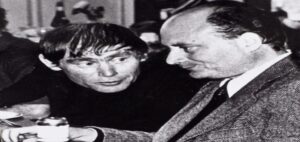
PHOTO CAPTION: Sydney Brenner in a discussion with a colleague. SOURCE: Cold Spring Harbour Authority (Archives).
In November of 1954, Brenner went to Great Britain and visited Francis Crick in Cambridge, where, among other things, they discussed the possibility of working together in the future. However, he was obligated to return to South Africa, where a staff appointment was waiting for him at the Medical School. Brenner set up a laboratory in the Department of Physiology, and he was awarded a grant to study phage co-factor genetics.
Brenner is most noted for his investigation of genetic information and its development through his experiments with Caenorhabditis elegans. In October of 1963, he requested a culture of free-living nematodes, C. elegans, from E. C. Dougherty at the University of California, Berkeley.

PHOTO CAPTION: Sydney Brenner lecturing in the 1970s. SOURCE: Cold Spring Harbour Authority (Archives).
For his pioneering studies, Brenner has received many awards and numerous honorary degrees from many colleges and universities, including the Universities of Oxford, Cambridge, Harvard, London, Glasgow, Chicago, and Witwatersrand, where his scientific career began.
In 2002, the Nobel Prize in Physiology or Medicine was awarded jointly to Sydney Brenner and his research partners H. Robert Horvitz and John E. Sulston “for their discoveries concerning genetic regulation of organ development and programmed cell death.”
Sydney Brenner died at the age of 92 on April 5, 2019, in Singapore, where he had helped develop scientific institutes. Sydney Brenner was widely regarded as the “father of biomedical sciences” in Singapore. He was pivotal to the establishment of Singapore’s first life sciences research institute in 1985, the Institute of Molecular and Cell Biology, which was officially opened at the National University of Singapore (NUS) in 1987. He was an adjunct professor at the NUS Yong Loo Lin School of Medicine and was conferred the Honorary Doctor of Letters in 1995 for his contributions to Singapore.
Among other accolades he received for his dedication and commitment to Singapore were the Distinguished Friends of Singapore award in 2000, Honorary Citizen in 2003, and the National Science and Technology Medal in 2006.Dr. Brenner led a distinguished research career in the field of genetics and molecular biology.
In the early 1960s, he co-discovered the existence of messenger RNA and demonstrated that the nucleotide sequence of mRNA determines the order of amino acids in proteins. For this discovery he was awarded the Lasker Award in Basic Medical Research in 1971.
He not only established the roundworm (Caenorhabditis elegans) as a model organism for research in the fields of genetics, neurobiology and developmental biology, but his pioneering research on it won him the Nobel Prize in Medicine or Physiology along with his colleagues Drs. H. Robert Horvitz and John Sulston in 2002.

PHOTO CAPTION: Sydney Brenner at a conference in Singapore. SOURCE: Royal Society Publishing.
In 2017, Sydney organised and participated in a series of 24 lectures (two lectures a day each month held over 12 months) called “10-on-10: The Chronicles of Evolution” by 24 prominent scientists from around the world who traced evolution through ten logarithmic time scales starting from the Big Bang to the present day technological and cultural evolution. A compilation of these lectures was published in November 2018 (Sim and Seet 2018) and was formally released by the President of Singapore.
Sydney embarked on this mammoth project despite his frail healthanother testimony to his indefatigable passion for science. His legacy continues through the accomplishments of generations of scientists he inspired and nurtured right to his final days. His towering intellect, sage advice, and legendary wit will be deeply missed.
EA EDITORS