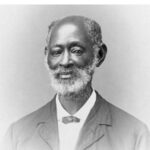
CHEIKH AHMADOU BAMBA MBACKÉ
- 3 Min Read
Cheikh Ahmadou Bamba Mbacké (1853–1927) was one of the most influential Islamic scholars and spiritual leaders in West Africa, particularly in Senegal. He is best known as the founder of the Muridiyya (also spelled Mouride Brotherhood), a major Sufi Islamic movement that continues to play a central role in Senegalese society.

PHOTO CAPTION: Cheikh Ahmadou Bamba Mbacké. SOURCE: EA Library.
Cheikh Ahmadou Bamba was born in 1853 in the village of Mbacké, in central Senegal, into a family of respected Muslim scholars. His father, Muhammad ibn Habibullah, was a learned cleric who ensured that Bamba received a strong foundation in Islamic education. From a young age, Bamba showed exceptional intelligence, piety, and devotion to religious studies, mastering the Qur’an, Islamic jurisprudence, and theology.
As he grew older, Bamba became increasingly devoted to spiritual life, emphasizing prayer, hard work, discipline, and total submission to God. In 1883, he founded the Muridiyya brotherhood, which taught a unique combination of Islamic spirituality and the dignity of labor. His teachings encouraged followers (known as Murids) to live simple, disciplined lives while engaging in productive work, especially agriculture.
During the late 19th century, Senegal was under French colonial rule, and Bamba’s growing influence raised concerns among colonial authorities. They feared that his large following could threaten their control. As a result, he was exiled several times. In 1895, he was deported to Gabon, where he spent seven years in harsh conditions. Despite this, he remained steadfast in his faith and continued to inspire his followers through writings and prayers.
After returning from exile, he was later sent to Mauritania for another period of isolation. Throughout these trials, Bamba gained a reputation for patience, resilience, and unwavering devotion to God.
One of Bamba’s greatest legacies was the founding of the holy city of Touba. Touba became the spiritual center of the Muridiyya order and remains one of the most important religious cities in Senegal. It is home to the Great Mosque of Touba, a major pilgrimage site for millions of followers.
Cheikh Ahmadou Bamba was also a prolific writer. He composed numerous religious poems and texts in Arabic, focusing on themes such as faith, devotion, ethics, and the love of the Prophet Muhammad. His works continue to be studied and recited by his followers today.
He died in 1927 in Senegal, leaving behind a powerful spiritual legacy. Today, he is revered not only as a religious leader but also as a symbol of peaceful resistance against colonial oppression. His teachings continue to influence millions across West Africa and beyond. Every year, millions of followers gather in Touba to celebrate the Grand Magal of Touba, which commemorates his exile and honors his life and contributions.
Cheikh Ahmadou Bamba Mbacké remains a towering figure in African Islamic history. His emphasis on faith, discipline, non-violence, and hard work has shaped generations and continues to inspire people around the world.
EA EDITORS