HAIDARA, KONTORFILLI
- 5 Min Read
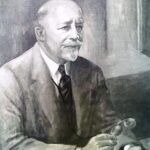
Kontorfilli Haidara (1890?-February 16, 1931) was a Soso Muslim (a Mande speaking group spreading across northwest Sierra Leone and Guinea) who had a short and dramatic career in Sierra Leone as a radical religious leader of Islamic reform. He posed a dangerous threat to the colonial administration at a time of serious economic crisis by openly defying its rule and combining his religious radicalism with political resistance. This led eventually to the Haidara War of 1931 – an armed confrontation with the government troops sent to arrest him, during which he killed the commanding officer, and was himself killed.
Haidara entered Sierra Leone from the then French colony of Guinea as a “missionary” in May 1930. It is not known when exactly he was born, but judging from the estimates of contemporary observers he would appear to have been between 30 and 45 when he arrived. After initial wanderings in the northwestern part of the country, he settled at Bubuya in the Kambia district from where he disseminated his religious teaching. His second name, “Kontorfilli” -a descriptive name that comes after his real name–is a nickname, meaning “unsteady” in the Soso language.
By October 1930, less than six months after his arrival, Haidara’s influence was already strong and he had attracted a considerable following. His religious fanaticism, healing power and ability to perform miracles drew people of all kinds from Sierra Leone and Guinea who would travel long distances to hear him preach or to receive medical treatment. Towards the end of 1930 he intensified his campaign of radical missionary activity, preaching the necessity for religious reform. On January 2, 1931, he wrote to the district commissioner in Kambia, threatening to kill all those who would not adhere to Islam and practice the true faith.
The colonial administration, reacting with a mixture of fury and confusion, took no chances. Haidara was charged with subversion and served with an expulsion order on February 9, 1931. He ignored the order. The following day, on February 10, 1931, he wrote an open letter to the people of Kambia, in present-day Kambia district, telling them that Bai Inga, the paramount chief of Mange Bure chiefdom, in Port Loko district, had fallen (i.e. lost his political powers), and that nobody should fear a European, either French or British. Furthermore, he urged them not to pay the hated house tax. It was at about this time that Haidara declared himself Alimamy a title, usually that of a sub-chief, found among the Temne and neighbouring groups influenced by Islam. (This was also the title adopted by Samori Toure, the great Mandinka leader of anti-imperialist resistance in Upper Guinea.)
It was now clear to the administration that Haidara was openly challenging the foundations of colonialism, and would not leave Sierra Leone unless forced to do so. Accordingly, on February 16, 1931, troops of the Royal West African Frontier Force were dispatched from Kambia to arrest him at Bubuya. Haidara, encouraged by the size of his following, refused to submit to a humiliating arrest. Armed with swords and machetes, he and some of his followers went out to meet the advancing troops. In the ensuing fight, which lasted only a few minutes, Haidara and four of his followers were killed, but not before he had killed the commanding British officer, Capt. H.J. Holmes. Thus ended Hiadara and his movement. Nothing remained to be done except to disperse the crowds at Bubuya.
Haidara’s short rise to influence has earned its place in history due to factors other than his own religious-inspired leadership. Had it not coincided with the worst economic depression the colonial administration had so far experienced, his activities might not have been taken so seriously, and bloodshed would have been avoided. With the example of the Gold Coast cocoa hold-up (boycott) of late 1930 and early 1931 before them, however, the administration had reason to panic at the possibility of a similar hold-up in Sierra Leone. Yet although the administration detected “seeds of discontent” in the depression, Haidara’s area suffered no special hardships; neither did he exploit the situation to promote his religious and political interests. From the evidence at present available, it would be misleading to speak of him as a manipulator of rural discontent.
Nevertheless, his movement, based on Islamic revivalism, reminded both British and French of events during the partitioning of Africa a few decades earlier, when organised resistance had occurred in different parts of the continent. For months after Haidara’s death, the French in Conakry, the capital of Guinea, and the British in Freetown, continued to exchange information about the political situation in the border regions, and succeeded in restoring calm within a short time.
In spite of the political implications of his teaching, it should be emphasised that Haidara rose and died as a religious leader. Like Usman dan Fodio (1754-1817), the revolutionary reformer and mystic who founded a militant Muslim state in what is now northern Nigeria, as well as some others in the 19th century, he was out to reform Islam. Only after he discovered that the government of infidels” (according to the Koran) would not allow him to carry out his mission did he declare himself both a religious and a political leader. Significantly, in Islam the division between the two is almost non-existent. Unfortunately Haidara did not live long enough to make his movement an effective political weapon.
M.H.Y. KANIKI