MENSAH, JOSEPH HENRY
- 4 Min Read
Joseph Henry Mensah (31 October 1928 – 12 July 2018) was a distinguished Ghanaian economist, statesman, and politician, recognized for his profound contributions to economic planning, public administration, and national development. He was a founding member of the New Patriotic Party (NPP) and played a key role in shaping Ghana’s economic policies and democratic institutions over several decades.
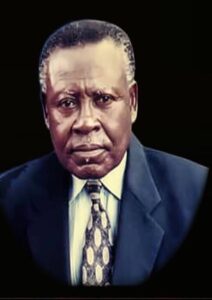
PHOTO CAPTION: A photo of Joseph Henry Mensh. SOURCE: EA Library.
Joseph Henry Mensah was born on October 13, 1928 in Sekondi, Gold Coast (present-day Ghana), the third of ten children in a family deeply committed to education and public service. His father served as a government official, while his mother was a merchant at the Kumasi Central Market. This combination of civic engagement and entrepreneurial spirit influenced Mensah’s lifelong dedication to national development.
Mensah’s early education was at St. Peter’s Cathedral School in Kumasi, followed by Achimota School, one of Ghana’s premier secondary institutions. He subsequently joined the University of the Gold Coast (now University of Ghana, Legon) to study economics, becoming one of the university’s pioneer students. At Legon, he was also President of the Junior Common Room, demonstrating early leadership among his peers.
After completing his studies in Ghana, Mensah pursued further training abroad. He attended the London School of Economics (University of London) in the United Kingdom and later studied at Stanford University in the United States, earning advanced degrees in economic theory and development. This education laid the foundation for his influential work in economic planning and policy formulation.
Mensah began his professional career in 1953 as an Assistant Inspector of Taxes under the colonial administration. In 1954, he became a Research Fellow in Economics at the University of the Gold Coast. In 1958, he joined the United Nations Secretariat in New York as an Economic Affairs Officer at the Centre for Development Planning, Projections, and Policies.
He returned to Ghana in 1961 to serve as Head of the National Planning Commission, where he oversaw the development and implementation of the country’s Seven-Year Development Plan (1962–1969). His work helped lay the foundations for modern economic planning in Ghana.
Mensah was first elected to parliament in 1969 and appointed Minister of Finance and Economic Planning under the Progress Party government led by Kofi Abrefa Busia. He held this position until 1972, when the administration was overthrown in a military coup led by Ignatius Kutu Acheampong.
During the 1970s, Mensah continued contributing to national development through the private sector and local governance. He served as Chairman of the Sunyani District Council (1978–1981) and as proprietor of Banka Farms Ltd. Between 1975 and 1978, he was imprisoned by the National Redemption Council for political reasons. Although barred from formal political activity in 1979, he remained active in Ghanaian politics through advisory and party roles.
After a period in exile in England during the early 1980s, Mensah returned to Ghana and became a central figure in the New Patriotic Party, which he helped found. He also served on the African Advisory Council of the African Development Bank (1993–1997).
In December 1996, Mensah was elected Member of Parliament for Sunyani East, a position he held until 2009. He served as Minority Leader (1997–2001) and later as Senior Minister under President John Agyekum Kufuor, also holding ministerial positions including Minister for Public Sector Reform (2001–2005). Throughout his career, he was respected for his expertise in economic planning, governance, and parliamentary leadership.
Mensah’s legacy is defined by his commitment to public service, economic development, and democratic governance. From his early roles in the UN Secretariat and national planning, to his leadership in parliament and government ministries, he shaped Ghana’s economic and political institutions. He is remembered as a visionary economist, principled politician, and mentor to generations of Ghanaians, leaving a lasting imprint on the nation’s development trajectory.
Joseph Henry Mensah passed away on Thursday, 12 July 2018, at the 37 Military Hospital in Accra, after a protracted illness, having suffered a stroke a year earlier. In recognition of his immense contributions to Ghana’s economic development and democratic governance, he was accorded a state funeral by the Government of Ghana on Friday, 17 August 2018, held at the Accra International Conference Centre. He was laid to rest at the new Military Cemetery at Burma Camp.
EA EDITORS