SULUKU
- 5 Min Read
Almamy Suluku (circa 1820-1906), chief of Bumban, was a forceful and able leader who ruled over the Biriwa Limba in a large area of northern Sierra Leone from 1873 to 1906. Strongly aware of the commercial importance of his territory, he maintained an uneasy alliance with the Sofa forces of the Mandinka emperor Samori Tour, as well as establishing good relations with the British in Freetown a game which became increasingly difficult to play once Samori’s forces had attacked his country.

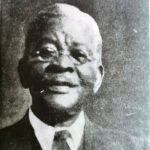
PHOTO CAPTION: Almamy Suluku. SOURCE: EA Library.
Suluku was of the Limba Konte clan, which originated in Sankaran, and was the second son of Sankailay, the gbaku (ruler) of Biriwa Limba country. He was brought up at Bumban, the capital of Biriwa, situated between the upper Mabole and Rokel rivers, and grew up to be a great warrior. While his brothers were made heads of towns by his father, Suluku remained at the capital as kurugba (warrior).
As a warrior he was responsible for bringing the Safroko Limb under Biriwa rule. Because of his continued presence at the capital and the degree of influence he came to wield, the question of succession in Biriwa was easily determined. When his father Sankailay died in 1873, Suluku succeeded him as ruler, thus becoming the “biggest man in the country,” despite his father’s earlier nomination of his elder brother Bubu as successor.
Under Suluku, Biriwa included Mandinka and Fula settlements which accepted his authority. These promoted the development of commerce in his territory. As ruler, he appointed his son, Kpebe as governor of the Safroko provinces, while still retaining a large measure of control himself. Suluku’s polity was considered one of the largest in Sierra Leone hinterland, extending for “over two days’ march.” He developed a considered commercial policy to back his political authority, bringing growth to Biriwa. He fostered trade in gold, ivory, and hides from the northern interior which then passed to the Colony through his country thus earning him additional income. Those who robbed traders in Biriwa were punished by Suluku.
He also made alliances with the neighboring Temne rulers of Port Loko, an important trading centre on Port Loko Creek, in order to protect trade. These measures earned him the attention of the colonial administration, which sent him annual presents in the 1870s and 1880s to secure his friendship. Since much of the produce sustaining the Colony came from around Biriwa, Suluku’s friendship was well worth cultivating.
In 1884, the Sofa attacked Biriwa. Suluku put together a force and defended his country but by November of that year had been defeated by the Sofa general Nfa Ali. The Sofa then stationed a force of occupation in Biriwa which, in collusion with Suluku’s Mandinka subjects, planned to bring about Suluku’s economic ruin. Calculating that British interest in commodities coming from Biriwa would spur them on to intervene and save him, Suluku made urgent representations to the Colony. He also enlisted the support of the Alikali of Port Loko, whose trade had been similarly affected, in approaching the British. Eventually, Major Morton Festing, one of the governor’s special service officers, persuaded the Sofa force of occupation to leave Biriwa in 1888.
Suluku then re-established his authority over the Biriwa Mandinka who had collaborated with the Sofa. He became hostile to all Sofa traders passing through Biriwa, and stopped the passage of Sofa arms through his country. The colonial administration, interested in the Sofa as a new means of channelling trade to the Colony, sent a mission to Suluku to persuade him against these moves. Suluku merely treated the messengers from the Colony to lavish hospitality, feeding them sumptuously and pressing gifts on them.
They returned full of his praises, but without having carried out the purpose of their mission. Suluku continued to play a double game, even while the British sought to administer the hinterland as a Protectorate, though he still maintained a reputation of unswerving loyalty to their cause, which he used to overawe neighbouring local rulers. When the Protectorate was finally declared in 1896, Suluku’s tactics could no longer ensure his independence of action. The British imposed a house tax which aroused opposition from local rulers and resulted in the uprising of 1898. Biriwa, as part of the Koinadugu district which was initially exempted from taxation, did not participate actively in the war. But Suluku was reported to have supplied arms secretly to the Temne rulers to help them in the war, apparently to retain his position as a leading chief in the area.
The war of resistance was crushed and the tax was again imposed. In the division of the country into administrative districts the former Safroko Limba province was detached from Biriwa, to which it had owed allegiance, and added to the Temne chiefdom of Mapaki. As tax from each village and town was to be paid to the paramount chief of its chiefdom, the Safroko were expected to pay to Massa Paki, head of the Mapaki chiefdom. Most of the Safroko Limba towns claimed they would not pay him but only Suluku, whom they considered their rightful overlord, thus indicating the loyalty Suluku had inspired in his former subjects. The matter was resolved after a lengthy inquiry which resulted in re-attaching Safroko towns to Biriwa.
Suluku died in 1906. When very old, he was asked by the district commissioner to name his successor. He replied, “Suluku will never die.” He did so physically, but not in the minds of the Biriwa.
C. MAGBAILY FYLE