NTSIKANA
- 2 Min Read
Ntsikana, the Christian Xhosa prophet (c1760 – 1820), was born to Gaba, a councillor of Ngqika, and Nonibe, his second wife, and spent most of his youth with his outcast mother at Quakeni. He lived a traditional Xhosa life, marked by circumcision, an olygamous marriage, and praise as an orator, singer, and dancer.
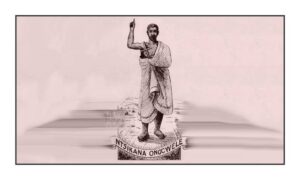
PHOTO CAPTION: Ntsikana. SOURCE: EA Library.
Even before his conversion in 1815, Ntsikana encountered two strands of Christianity: the proselytism of the Revs. Van der Kemp, Read and Williams of the London Missionary Society, and that of the Xhosa millenarian prophet Nxele (Makhanda), who rejected missionary ideology in favour of a belief in opposing gods for whites and blacks.
His followers argued, however, that it was a vision Ntsikana received which converted him to Christianity. Thus they claimed a pedigree for Xhosa Christianity independent of missionary influence. Ntsikana’s teachings in fact reflected both missionary doctrine and Xhosa tradition: while he accepted, for example, the former’s notions of sin, repentance, and salvation, he expressed these in the language of hunting and pastoralism. During the dislocation on the Eastern Frontier in the early 19th century, a period characterised by white encroachment and brutal frontier and Xhosa dynastic wars, Ntsikana’s message appealed especially to refugees of Khoi Khoi and mixed descent, and to others who fell between the interstices of both colonial and Xhosa societies.
Ntsikana died in 1820, but left a legacy of sacred songs (the first hymns composed in the vernacular) and committed followers (one of his initial recruits was the father of Tiyo Soga, the first Xhosa ordained minister). His best known hymns were the Life Creator hymn, and “Ulo Thixo omkhulu ngosezulwini” (He, the great God in Heaven). A century later his spirit was resurrected by the independent Industrial and Commercial Workers’ Union in its attempt to draw on the wellsprings of Xhosa nationalism and Christian separatism.
ANDREA VAN NIEKERK