MAAME HARRIS TANI
- 3 Min Read
Maame Harris Tani (c. 1870s –1958), also known as Grace Tani, was a prominent Ghanaian prophetess, traditional priestess turned Christian evangelist, and co-founder of the Twelve Apostles Church, one of the most influential independent Christian movements in Ghana.
Maame Tani was born in the late nineteenth century in the coastal fishing town of Krisan, located in the Western Region of the Gold Coast (present-day Ghana). Her name, meaning “one born of Tano,” reflected the belief that her birth was made possible through the intervention of the local river deity, Nana Tano.
By middle age, she had become a highly respected Nzema chief priestess devoted to the Tano deity. Within her community, she was widely known for her spiritual authority, particularly her abilities in spirit possession and healing rituals, which earned her significant recognition and influence.

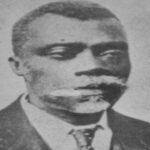
PHOTO CAPTION: Prophet William Wadé Harris.
Her life transformed during the 1913–1915 evangelical tour of Liberian prophet William Wadé Harris, when she converted to Christianity, abandoned her traditional role, and joined his missionary team as a key female chorister, contributing through singing, dancing, and the use of ritual instruments like calabash rattles. Harris, recognising her spiritual gifts, incorporated her into his inner circle, and she became one of his polygamous wives alongside other converts such as Helen Valentine and Mary Pioka.
Following the departure of William Wadé Harris from the region in 1915, Maame Tani, together with fellow convert Papa Kwesi John Nackabah, continued their religious work independently due to the absence of follow-up from European missionaries. Operating within a context shaped by British colonial rule, missionary resistance, and opposition from traditional authorities, they helped initiate an indigenous Christian movement.

PHOTO CAPTION: Logo of The Twelve Apostles Church Ghana.
In 1919, they went on to establish the Twelve Apostles Church which is most often referred to as Awoyo or Nackabah. Within this movement, Tani emerged as a central spiritual leader, noted for her emphasis on healing practices, vibrant charismatic worship, and the incorporation of local cultural elements, including the use of mother-tongue liturgy and herbal remedies inspired by visions.
Under her guidance from bases in Krisan and other western Ghanaian sites like Half-Assini and Axim, the church expanded rapidly, incorporating symbols such as the calabash for exorcism and fostering extended services focused on prayer, song, and communal healing that could last several hours. She ordained successors, including Prophetess Hagar Efuah Ntsimah in 1949, ensuring the continuation of her legacy in ritual practices and church governance.
In the mid-1950s, Maame Harris Tani experienced health issues that limited her active travel and direct involvement in church activities, though she maintained an advisory role from her base in Krisan.
She died in 1958 at approximately 80 years of age. Her work not only propagated the church across Ghana but also exemplified the broader phenomenon of independent African religious movements emerging in the early 20th century. The church remains popular today; central to its existence is the healing ritual known as sunsum edwuma, or “spiritual work”, performed with water in basins.
EA EDITORS