DIOP, DAVID MANDESSI
- 3 Min Read
David Mandessi Diop (July 9, 1927 – August 29, 1960) was one of the most powerful poetic voices of the Negritude movement and a passionate advocate for African liberation.
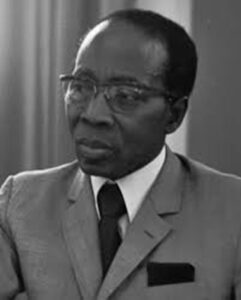
PHOTO CAPTION: David Mandessi Diop. SOURCE: EA Library.
He was born on July 9, 1927, in Bordeaux, France, to a Senegalese father and a Cameroonian mother. Although he was born in France, his African heritage deeply shaped his identity and literary vision. He spent part of his childhood in Senegal, and the experience of moving between Europe and Africa exposed him early to the realities of colonialism and racial inequality. These experiences later became central themes in his poetry.
Diop was educated in France, where he developed a strong interest in literature at a young age. As a student, he began writing poems that reflected his anger at colonial oppression and his pride in African culture. He became closely associated with the Negritude movement, a literary and political movement founded by Black intellectuals such as Léopold Sédar Senghor and Aimé Césaire. The movement sought to celebrate African identity, history, and cultural values while resisting European cultural domination. Among the poets of Negritude, Diop was known for his uncompromising tone and revolutionary spirit.
In 1956, he published his only collection of poetry, Coups de pilon (“Pounding”). The poems in this collection fiercely criticized colonial exploitation, slavery, and racism. His language was direct, emotional, and often militant. Unlike some writers who focused on reconciliation, Diop’s work openly called for resistance and liberation. His poetry expressed deep sorrow for Africa’s suffering but also strong hope for freedom and renewal. Through vivid imagery and rhythmic intensity, he gave voice to the pain and determination of colonized peoples.
After completing his studies, Diop worked as a teacher in Senegal and later in Guinea. He remained deeply committed to African independence movements during a period when many African nations were fighting for and gaining independence from European powers. His writings inspired young Africans who were seeking political and cultural freedom.
Tragically, David Diop’s life was cut short. On August 29, 1960, he died in a plane crash near Dakar, Senegal, at the age of thirty-three. Much of his unpublished work was lost in the crash, which was a great loss to African literature. Despite his brief life and limited published output, his impact has been lasting and significant.
David Diop is remembered today as one of the most radical and passionate poets of the Negritude era. His work continues to be studied in schools and universities around the world as an important expression of anti-colonial thought and African pride. Though he lived only a short time, his voice remains powerful, echoing across generations as a symbol of resistance, dignity, and hope for Africa.
EA EDITORS