HADDAD, TAHAR
- 3 Min Read
Tahar Haddad (August 29, 1960 – 7 December 1935) was a Tunisian intellectual, social reformer, and nationalist whose bold ideas helped shape modern Tunisia.
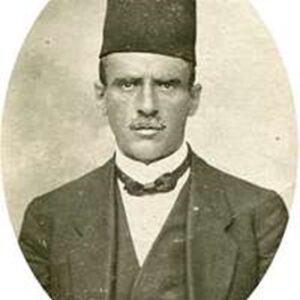
PHOTO CAPTION: Tahar Haddad. SOURCE: EA Library.
He was born in 1899 in Tunis into a modest family, he grew up during a period when Tunisia was under French colonial rule. From an early age, he received a traditional Islamic education and later enrolled at the renowned Ez-Zitouna University, one of the most important centers of Islamic learning in North Africa. There, he studied Islamic law, Arabic literature, and theology, graduating in 1920. His education deeply influenced his thinking, especially his desire to reconcile Islamic principles with social progress and justice.
After completing his studies, Haddad briefly worked as a notary. However, he soon turned away from a conventional career and became actively involved in political and social reform movements. He joined the nationalist Destour Party, which sought independence from French colonial rule, but later distanced himself due to disagreements over workers’ rights.
In 1924, he played a key role in the founding of the Confédération Générale des Travailleurs Tunisiens (CGTT), one of the earliest Tunisian labour unions. Through his activism and writings, he defended workers’ rights and criticized social and economic injustice under colonial rule. His book Les Travailleurs tunisiens et la création du mouvement syndical (1927) documented the struggles of Tunisian workers and highlighted the importance of organized labor in achieving social reform.
Haddad is most widely remembered for his courageous advocacy of women’s rights. In 1930, he published his most famous work, Notre femme dans la législation islamique et la société (“Our Women in Islamic Law and Society”). In this groundbreaking book, he argued that Islam, when correctly interpreted, supports the education and empowerment of women.
He called for reforms in marriage laws, opposed polygamy, and demanded better access to education and employment opportunities for women. Haddad believed that the oppression of women stemmed not from religion itself but from outdated customs and rigid interpretations of religious texts. His ideas were revolutionary at a time when conservative attitudes dominated society.
The publication of this book sparked intense controversy. Many religious scholars strongly criticized him, accusing him of attacking tradition and religion. As a result, Haddad faced social isolation and professional marginalization. He was publicly condemned and excluded from many aspects of public life. The harsh criticism and rejection deeply affected him, and he withdrew from public activities in his final years.
Tahar Haddad died on 7 December 1935 at the young age of 36. During his lifetime, he did not witness the acceptance of his ideas. However, after Tunisia gained independence in 1956, many of his proposals were reflected in the country’s progressive reforms, particularly in the Personal Status Code introduced under President Habib Bourguiba. These reforms improved the legal status of women, abolished polygamy, and promoted gender equality—principles Haddad had passionately defended decades earlier.
Today, Tahar Haddad is remembered as a pioneer of social reform and women’s rights in Tunisia and the Arab world. Though controversial in his time, history has recognized him as a visionary whose courage and intellectual depth laid the foundation for important social transformations. His legacy continues to inspire debates on religion, modernity, and human rights in contemporary society.
EA EDITORS