NEWAY, GARMAME
- 3 Min Read
Garmame Neway (1924 December 1960) was the intellectual who inspired and, together with his brother, Brigadier-General Mengestu Neway, led the 1960 coup against Haile Selassie‘s government.
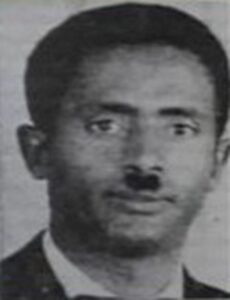
PHOTO CAPTION: Garmame Neway. SOURCE: EA Library.
Garmame belonged to an important Shawan family, and was a descendant of Garmame, counsellor to Emperor Menilek II [reigned 1889-1913]. He was old enough to observe and to resent the Italian invasion and occupation of 1935-41, but was too young to play a part in the Patriot resistance to it. He went to the United States, where he became a student of political science, held degrees from the University of Wisconsin in Madison and Columbia University in New York, and was elected president of the Ethiopian Students’ Association.
At Columbia he wrote a thesis on colonialism in Kenya, which showed his interest in Mau Mau (the resistance movement of the early 1950s among the Kikuyu people) and in land reform. His writing reveals the influence of socialism and Pan-Africanism, his interest in landownership problems, and his anger over racial prejudice in the United States.
He returned to Ethiopia in 1954 and was appointed governor of the Walamo district in Sidamo province, where he showed hostility towards the landed nobility and to foreign missionaries, whom he used to shock with his Marxist ideas. He established several schools, financed by contributions extorted from the aristocracy, and tried to increase government services in Walamo. His interest in the underdog and his desire to improve conditions made him popular with the local inhabitants.
He won over the local Somali by digging wells and storing grain for them. But the aristocracy’s dislike for him led to his transfer to Addis Ababa as titular governor of Jijiga. The freedom he had from administrative duties gave him time to plan his revolution, which he did while dominating weekly luncheon meetings held in his brother’s house.
Some of the officers of the Imperial Body Guard, as well as Garmame Neway himself, had taken extension courses at the University College some months before the coup, and had made contact with some of the students, who later supported the coup. From the students, the officers gained an understanding of Ethiopia’s backwardness. Some of Garmame’s supporters were idealists who wanted to modernize the Ethiopian government. But Garmame overestimated the political clergy and aristocracy.
Yet he believed that even an unsuccessful coup could lead to a series of reforms which might help to modernize the Ethiopian government and Ethiopian society. Official government sources claim that Garmame advocated land nationalization and the disestablishment of the Ethiopian Orthodox Church. In order to achieve his aim of a modernized and progressive Ethiopia, it is alleged that he planned the assassination of members of the governing aristocracy, from the level of governor-general down to sub-district governors, ministers, judges, notables, and tribal leaders.
The conspirators arrested Crown Prince Asfa Wassan Haile Selassie, whom they named head of state on December 13, 1960, as well as several ministers and traditionalists. After the establishment of a Revolutionary Council, dominated by Garmame, they published their program of reform.
But the Ethiopian Army, with some help from the United States, crushed the coup. Before the failure of the coup, Garmame shot 14 of the captives, and, while being pursued, shot and wounded his brother Mengestu. He then committed suicide. His dead body was later hanged outside St. George’s Cathedral in Addis Ababa.
RICHARD GREENFIELD