SOBHUZA I
- 3 Min Read
King Sobhuza I (circa 1780s-1839), popularly known as Somhlolo (creator of miracles), was declared Ngwenyama and King of Swaziland after the death of his father Gungunyane in 1815. He was the first Dlamini King to establish his capital near the Mdzimba Mountains, which he called Lobamba. He is known to have accepted an invitation to visit King Shaka of the Zulus and to have foretold the coming of the European settlers to Swaziland.
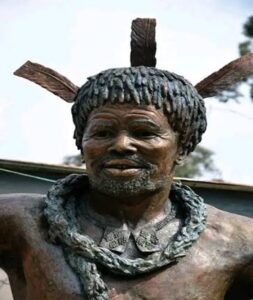
PHOTO CAPTION: Bronze Sculpture of King Sobhuza I. SOURCE: sarahrichards.
Sobhuza I was adopted by the Ndlovukazi (Queen Mother) Lojiba as successor to Gun-gunyane, since she had no son, while Sobhuza’s own mother, Somjalose Simelane, had died. He vigorously pursued the nation-building strategy of his grandfather Ngwane III, and built his administrative capital in 1820 in central Swaziland, his residence at Elangeni and a third royal village near the Mbandzani River, which he named Ezulwini. He married the daughter of Zwide, Thandile, who was later to become the famous Ndlovukati, known to the Swazi as laZidze.
Sobhuza I was a contemporary of great Nguni leaders such as Dingiswayo of the Mthethwa, Zwide of the Ndwandwe and Shaka of the Zulu. He avoided conflicts with these powerful leaders through marriage alliances and demonstrations of goodwill.
His marriage to Zwide’s daughter and the betrothal of two of his own daughters to Shaka were examples of his peaceful intentions. At home his policy was that of incorporation and assimilation of less powerful clans. As a result, his following grew dramatically, numbering several thousand people of different cultures and origins. When Sobhuza died in 1839, he left a strong kingdom respected and feared by his neighbors.
His domain extended as far as Barberton in the north, Carolina in the west, the Pongolo River in the south and the Ubombo Mountains in the east. Shortly before his death, whose circumstances and time he had foretold, Sobhuza I had a vision in which he foresaw the coming of the white settlers bringing with them “umculu” (book), later identified as the Bible, and “indilinga” (money). He advised his people to accept umculu, to be wary of indilinga and never to shed the blood of the white settlers. These words were remembered throughout Swazi history. He died in his residence at Elangeni and was succeeded by laZidze’s son, Mswati II.
Sobhuza I is the most highly honored of the Dlamini Kings in Swaziland today. At the granting of independence to Swaziland on April 25, 1967. Sobhuza II declared a public holiday, which he called Somhlolo Day, while a year later, on August 25, 1968, he officially opened a national stadium which he named Somhlolo Stadium.
STEPHEN SHISIZWE HLOPHE