BAMBAFARA
- 4 Min Read
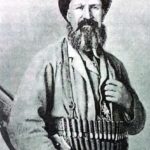
Bambafara (circa 1830s-July 7, 1921) was the ruler from the 1870s to 1921 of Nieni, today a chiefdom in the Koinadugu District in northeastern Sierra Leone. In the 1890s, he resisted the territorial expansion of Samori Touré (1830-1900), the famous Mandinka warrior whose power at one time extended from Futa Jallon to Upper Volta.
Popularly known as “Bambafara of Nieni,” he was the son of Yirimusukali of the Koroma clan of the Koranko, who was the ruler of Nieni before him. He was born at Yifin, which was the chief town in the Nieni country. Much of Lower Koranko (which was south of the Seli, or Rokel, River) as well as parts of Konike Temne country had by this time apparently come under the rule of his father. In consequence, Bambafara grew up secure in the knowledge that he was the son of an important mansa (ruler).
By the 1850s, war had developed between the Koranko of Nieni, led by Yirimusukeli, and the Biriwa Limba, led by their kurugba (military leader) Suluka. After six years of fighting, Nieni was overcome, and young Bambafara was captured. He was taken as a prisoner to Bumban, the capital of Biriwa Limba. He apparently spent a number of years at Bumban, where he was accorded the treatment due to one of noble birth, and continued to be trained in the warrior tradition. By the 1870s, he had been released, after some of his Koranko brethren had traveled to Bumban bearing presents to petition Suluku (who had become gbaku, or ruler, of Biriwa) to let him return home again.
Upon his release, Bambafara became ruler of Nieni. He first consolidated his rule over the state he inherited from his father, which was of considerable extent. In the neighbouring Kaliang country of the Thoronka Koranko, (in the western part of what is now the Nieni chiefdom) to which his authority extended, he installed as sub-ruler one of his lieutenants, Sayo Demba, himself a Thoronka and a great warrior.
Bambafara also exerted some control or influence over the Kono of Sando (a pre-colonial state) and the Koranko of Sambaia (now in Tonkolili District), as well as over the territory of Wuli, in the northern section of what is now Nieni, where another of his lieutenants, Banda Karifa, ruled. As ruler of this extensive area, he was renowned for the help he gave his subjects, which earned him the name of konkifaga, or hunger killer.
By 1890, the political and military expansion of the Mandinka warrior Samori Touré had reached Nieni. Bambafara resisted Samori, but lost his able general, Sayo Demba, in the fighting. He nevertheless successfully defended Nieni itself against the Sofa, as Samori’s warriors were called. It is recorded in Koranko tradition that he won some important battles against the Sofa north of the Loma Mountains of northeast Sierra Leone. In this he was aided by his lieutenant Banda Karifa of Wuli. But the overwhelming force of the Sofa led him to move his capital from Yifin (probably destroyed by the attacking forces) to Kintibalia. Here, on one of the peaks of the Loma ranges, many of the Kono of Sando rallied to him to seek his protection. At Kintibalia, in 1893, he met with Captain E. A. W. Lendy of the Sierra Leone Frontier Police who was on a mission against the Sofa. (In December of the same year, Lendy was shot dead by mistake, when British and French forces clashed, each being under the erroneous impression that they were fighting Samori).
By the time the Sofa threat had lessened, the British were moving in to establish a protectorate over the Sierra Leone hinterland. Early in 1895 the British convinced Bambafara to move his capital from the impregnable Kintibalia to a newly-built town named Kruto, about 6 km (4 mi) away. Bambafara was initially recognised by the British as paramount chief of Nieni, Kaliang, Wuli, and Sambaia – the areas over which he had ruled before the Sofa invasion.
By 1899, however, his territory had been reduced. His former lieutenant, Banda Karifa, was made paramount chief of Wuli, after which other paramount chiefs were appointed to rule Sambaia and Kaliang. Bambafara, however, who continued to rule as paramount chief of Nieni, remained much respected by these chiefs. His authority was habitually invoked by the British colonial administration in the settlement of disputes in many neighbouring Koranko and Temne chiefdoms. He died, a grand old man, in 1921.
C. MAGBAILY FYLE