BOURGUIBA, HABIB
- 4 Min Read
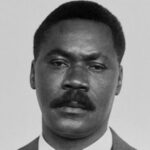
Habib Bourguiba (August 3, 1903 – April 6, 2000) was a Tunisian lawyer, nationalist, and statesman who led Tunisia to independence from French colonial rule in 1956 and became the country’s first President, serving from 1957 to 1987. Widely regarded as the “Father of Modern Tunisia,” Bourguiba played a central role in the Tunisian nationalist movement through the Neo Destour Party.
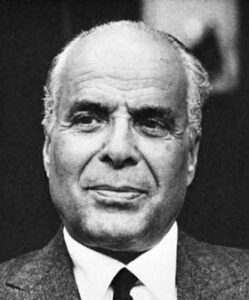
PHOTO CREDIT: Habib Bourguiba. SOURCE: Baike.daidu
Habib Bourguiba was born on August 3, 1903, in Monastir, a coastal town in eastern Tunisia, then a French protectorate. He was the youngest child of Ali Bourguiba, a retired officer in the Tunisian army, and Fattouma Khefacha Bourguiba, a devoted homemaker. Coming from a modest but respected family, Bourguiba was raised in an environment that emphasized discipline, education and public service.
His father, despite limited financial resources, ensured that his children received quality education, believing that learning was the key to overcoming colonial domination. Bourguiba began his education at the local Qur’anic school before attending primary school in Monastir. He later enrolled at the prestigious Sadiki College in Tunis, one of the country’s leading institutions for higher learning, where he distinguished himself academically.
In 1924, he travelled to France to pursue higher education at the University of Paris, studying law and political science while earning a diploma from the Paris Institute of Political Studies. His years in France exposed him to European political thought, constitutional law and nationalist movements, experiences that greatly influenced his political philosophy. After completing his legal studies, he returned to Tunisia in 1927 and established himself as a lawyer in Tunis, where he frequently defended Tunisians who suffered discrimination under French colonial rule.
While practising law, Bourguiba became increasingly active in nationalist politics through journalism and public advocacy. He contributed articles to nationalist newspapers, condemning French colonial policies and calling for political reforms and self-government.
In 1934, dissatisfied with the moderate approach of the Destour Party, he founded the Neo Destour Party alongside a group of younger nationalists. As the party’s principal leader, Bourguiba travelled extensively throughout Tunisia, organizing political meetings, educating citizens about nationalism and encouraging resistance to colonial rule. His activities resulted in repeated arrests, imprisonment and periods of exile by the French authorities, yet these hardships only strengthened his popularity among Tunisians.
Following the end of the Second World War, Bourguiba intensified diplomatic efforts to secure Tunisia’s independence by engaging both French leaders and the international community. His persistence eventually led to negotiations that culminated in Tunisia gaining independence on March 20, 1956. He became the country’s first Prime Minister and, when the monarchy was abolished in July 1957, he was elected the first President of the Republic of Tunisia.
During his thirty-year presidency, Bourguiba pursued ambitious programmes of modernization. He introduced free and compulsory education, expanded healthcare services, encouraged economic development and industrialization, and invested heavily in national infrastructure. One of his most remarkable achievements was the enactment of the Code of Personal Status in 1956, which abolished polygamy, established judicial divorce and granted women unprecedented legal rights, making Tunisia a pioneer in women’s emancipation in the Arab world. He also promoted secular governance, national unity and closer relations with African, Arab and Western nations.
Despite these accomplishments, his government gradually became increasingly authoritarian, with political opposition restricted and power concentrated in the presidency.
In his later years, Bourguiba’s advancing age and declining health raised concerns about his ability to govern effectively. Political instability and economic challenges further weakened his administration. On November 7, 1987, Prime Minister Zine El Abidine Ben Ali removed him from office in a peaceful coup after declaring him medically unfit to continue as President.
Bourguiba spent the remainder of his life in retirement at his residence in Monastir, away from active politics. He died on April 6, 2000, at the age of ninety-six and was accorded a state funeral before being buried in the magnificent Bourguiba Mausoleum in his hometown.
Habib Bourguiba remains one of the most significant figures in Tunisia’s history. His leadership secured the nation’s independence, laid the foundations of the modern Tunisian republic, and introduced reforms that transformed education, healthcare, governance and the status of women.
Although historians continue to debate aspects of his authoritarian style of leadership, his contributions to national development and the modernization of Tunisia have earned him an enduring place among Africa’s greatest nationalist leaders.
EA EDITORS