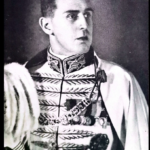
BUNGIE, ALIMAMY
- 4 Min Read
Alimamy Bungie (December 3, 1870-August 20, 1935) was a colorful Krio (Creole) personality who was prominent in Freetown during the earlier decades of the 20th century. He was originally known as William Rainy Lumpkin.
Bungie did not come from a poor family and began life as an apprentice to a master carpenter. His grandfather was the Honourable Henry Lumpkin, an Aku (Yoruba) recaptive, who became an influential businessman and was the first nominated African member of the Sierra Leone Legislative Council. He gave the name of William Rainy to his grandson, who in turn changed it to Alimamy Bungie. Bungie’s father was a money-lender whose legal knowledge was good enough to enable him to practice as a quasi-barrister, though he had not been called to the Bar.
Young Rainy attended St. John’s Maroon School and the Government Model School. He left school early, and was apprenticed to Tillotson Shaw, who ran a flourishing joinery shop and undertaking business on Kissy Road in Freetown. Bungie proved himself hardworking. Subsequently he went to try his luck in Sherbro country, where he worked with a brass band, and obtained experience in newspaper work. In search of adventure, he went to the Congo (now Zaire), at that time a land of opportunity for many Krios. He was away in the Congo for a number of years, and returned home in 1905.
Upon his return to Freetown, he set up a carpenter’s shop in Kissy Street. Soon his diligence marked him out as a successful man, while his latent flamboyance, which became manifest, also proved an asset. He was generous by nature, and his annual invitations to an Awujoh, or feast, at the Recreation Grounds were much sought after. His advertisements were humorous. He made excellent coffins for the poor, no less than for the rich, and if his clientele was short of money, he would advance credit. During the influenza epidemic of 1918, he supplied some coffins free to needy bereaved families. Bungie had a penchant for the dramatic. When the Prince of Wales visited Freetown in 1925, no provision was made for individuals to welcome the royal visitor. Bungie, an enthusiastic supporter of the royal family, had sent a congratulatory cablegram to the Prince in England, and had asked the governor, Sir Ransford Slater, (term of office 1922-27), if the royal procession would stop at his store so that he could pay his respects to “King Pikin” (the “Little King”).
The request was refused. Undaunted, Bungie painted the exterior of his house completely black, and made his own preparations. At the moment when the royal procession reached his shop, his hired band played “God Save the King,” obliging it to come to a stop. Bungie had won recognition as an important citizen. Graham Greene, the English novelist used the example of Bungie to ridicule Krio society. In Journey Without Maps (1935) he wrote: “A few Creoles make money out of their prefects by deliberately playing the inferior, the lower boy: R. Lumpkin, alias Bungie, is the most famous example. He has become a character. Tourists are taken to see his shop.” Greene also reproduced one of Bungie’s melodramatic advertisements in his book.
He liked his pleasures and jokes, and wanted others to be happy. He maintained two country homes, at Hastings and at Brookfields, both near Freetown, which were respectively christened Refreshing Bungalow” and “Awwioh Grounds.” On one occasion however, his boisterous habits led to his arrest for causing a breach of the peace. The governor, however, reported to London that Bungie meant no harm, and liked only to enjoy himself.
His humor, generosity, good nature, and cheerfulness made him widely known in Freetown society. He had little formal education, and was not actively interested in politics, although he numbered the leading politicians of his day among his friends, and contributed to the coffers of the National Congress of British West Africa. He was born an Anglican, but later became converted to Roman Catholicism. He was a devoted husband, but had no children.
On his death, his funeral was conducted with considerable pomp, and the cortege had a police escort. A life-sized painting of him was placed in Wilberforce Memorial Hall in Freetown the following year.
AKINTOLA J.G. WYSE