CHINUA ACHEBE
- 3 Min Read
Chinua Achebe (November 16, 1930 – March 21, 2013), born Albert Chinụalụmọgụ Achebe, was a Nigerian novelist, poet, critic and professor widely regarded as the father of modern African literature. He gained international recognition through his novel Things Fall Apart (1958), one of the most widely read books in African literature. Through his writings, he challenged colonial stereotypes about Africa and gave African people the opportunity to tell their own stories from their own perspectives. His literary works and intellectual contributions made him one of the most influential African writers of the twentieth and twenty-first centuries.
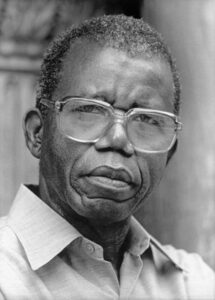
PHOTO CAPTION: Chinua Achebe. SOURCE: The Paris Review.
He was born on November 16, 1930, in Ogidi, a town in present-day Anambra State, Nigeria. He was the fifth child of Isaiah Okafo Achebe, a teacher and Christian evangelist working for the Church Missionary Society, and Janet Anaenechi Iloegbunam Achebe, who was also involved in church work and storytelling.
Achebe grew up in a family that embraced Christianity while maintaining an appreciation for traditional Igbo culture. He attended St. Philips’ Central School at Ogidi and later the Government College, Umuahia, where he excelled academically. In 1948, he entered University College, Ibadan, originally to study medicine but later changed to English, History and Theology, subjects that laid the foundation for his literary career.
After graduating from the University College, Ibadan, Achebe joined the Nigerian Broadcasting Service in Lagos in 1954 and worked as a producer and later as Director of External Broadcasting. In 1958, he published Things Fall Apart, which became an international success and was followed by other notable works such as No Longer at Ease, Arrow of God, A Man of the People and Anthills of the Savannah.
During the Nigerian Civil War, he strongly advocated for the secessionist state of Biafra and travelled extensively to raise international awareness of the humanitarian crisis. He later taught at several universities, including the University of Nigeria, Nsukka, and universities in the United States. Through his novels, essays and lectures, Achebe profoundly influenced African literature, inspired generations of writers and reshaped global understanding of African history and culture.
In his later years, Achebe suffered serious injuries from a car accident in 1990 that left him partially paralysed and confined to a wheelchair. He continued writing and teaching despite his physical challenges. He died on March 21, 2013, in Boston, Massachusetts, United States, at the age of eighty-two. Chinua Achebe’s legacy endures through his literary works, which continue to be studied across the world, and through his unwavering commitment to African identity, cultural dignity, and the power of storytelling.
EA EDITORS