KAYIBANDA, GREGOIRE
- 3 Min Read
Grégoire Kayibanda (May 1, 1924 – December 15, 1976) was a Rwandan politician, journalist and nationalist leader who led Rwanda to independence from Belgian colonial rule in 1962 and became the country’s first elected President, serving from 1962 to 1973. He played a leading role in the Hutu emancipation movement and founded the Parmehutu (Party of the Hutu Emancipation Movement), which became the dominant political force during Rwanda’s transition to independence.

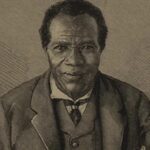
PHOTO CAPTION: Grégoire Kayibanda. SOURCE: EA Library.
Grégoire Kayibanda was born on May 1, 1924, at Tare, in the former Kingdom of Rwanda, now part of the Southern Province of Rwanda. He was born into a modest Hutu family. His father, Simon Kayibanda, was a subsistence farmer, while his mother, Verediana Mukamusoni, managed the household and supported the family’s agricultural activities. Raised in a deeply Catholic environment, Kayibanda developed a strong interest in religion and education from an early age.
He attended Catholic mission schools before enrolling at the Major Seminary of Nyakibanda, where he studied philosophy and theology with the intention of becoming a priest. Although he did not complete his priestly training, his education equipped him with strong literary and leadership skills. After leaving the seminary, he worked as a teacher, editor and journalist for Catholic publications, including Kinyamateka, where he gained recognition for his writings on social justice, political reform and the rights of the Hutu majority under the Belgian colonial administration.
Kayibanda entered active politics during the late 1950s as nationalist sentiments spread across Africa. In 1957, he became one of the principal authors of the Bahutu Manifesto, a political document that called for equal political representation and an end to what its authors described as Tutsi domination under the colonial system.
In 1959, he founded the Party of the Hutu Emancipation Movement (Parmehutu), which quickly gained widespread support among the Hutu population. Following the Rwandan Social Revolution of 1959 and elections supervised by the Belgian administration, Parmehutu emerged victorious, paving the way for Rwanda’s independence on July 1, 1962.
Kayibanda became the country’s first elected President and sought to strengthen national institutions through educational expansion, rural development and the establishment of a republican system of government. His administration worked to increase opportunities for the Hutu majority in public service and education, but it was also marked by ethnic discrimination, the exile of many Tutsi citizens and recurring communal violence. These policies deepened divisions within Rwandan society and attracted criticism both domestically and internationally. In July 1973, amid growing political instability and regional tensions, Kayibanda was overthrown in a military coup led by Major General Juvénal Habyarimana.
After his removal from office, Kayibanda was placed under house arrest in his home district and remained isolated from public life. His health deteriorated while in detention, and he died on December 15, 1976, at the age of fifty-two. Although the official cause of death was not fully clarified, many historians believe that poor detention conditions and inadequate medical care contributed to his death.
Grégoire Kayibanda’s legacy remains one of the most debated in African political history. He is remembered as the leader who guided Rwanda to independence and established the country’s First Republic, but his presidency is also associated with ethnic polarization and political divisions whose consequences continued to influence Rwanda for decades. His life remains an important subject in the study of Rwanda’s colonial, post-colonial and political history.
EA EDITORS