MOLEMA, SILAS MODIRI
- 3 Min Read
Silas Modiri Molema (circa 1891-August 13, 1965) was a medical doctor and an activist in the African National Congress (ANC). He was one of those who approved of cooperation between the ANC and organisations of non-Africans in the early 1950s. He was born in Mafeking into a leading Rolong family. He matriculated at Lovedale and proceeded to the University of Glasgow, Scotland in 1914 for his university education. He studied medicine and qualified for practise in 1919.

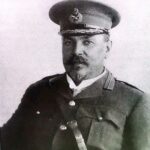
PHOTO CAPTION: Silas Modiri Molema. SOURCE: EA Library
In 1920 he published an important ethno-historical work, The Bantu: Past and Present. In 1921 he returned to South Africa, where he began a medical practise in his hometown of Mafeking.
Molema began to take an increased interest in the political affairs of the African National Congress in 1940, although his isolated life in Mafeking limited active involvement in its activities. He was a member of the ANC’s Atlantic Charter Committee in 1943, and a critic of what he perceived as the ANC’s administrative failings and financial disorder. Dr. Molema was elected national treasurer in December 1949, and re-elected in December 1952.
Molema thus was holding high office at the time of the ANC’s Defiance Campaign, a campaign which set the tone for ANC activities in the 1950s. Molema did participate in the Defiance Campaign and was arrested. However, he was not treated by the courts as an orchestrator of the campaign.
Given Molema’s roots in the older, more cautious period of the ANC, he may well have felt some conflict as to his participation in unlawful activity. Molema was unusual, given the generation he grew up in, for approving of political cooperation between the ANC and non-African organisations. This cooperation led to the formation of the multiracial Congress Alliance, culminating in the Congress of the People in 1955. Dr. Molema did not play an active part in the Congress, as the government had forced his resignation from the ANC in 1953.
Molema wrote throughout his life, and was the author of several pamphlets, and two other biographical studies, Chief Moroka (1951), and Montshiwa 1815-1896, Barolong Chief and Patriot (1966). In Botswana, he was a member of the African Advisory Council, Joint Advisory Council, and the Constitutional Committee which set the territory on its road to independence.
S.M. Molema was a transitional figure in the history of the ANC. He was a highly educated member of the African intelligentsia who was prone to caution in political dealings with the white world. Yet he took part in the movement of African descent from the petition to open disobedience of apartheid laws. He died on August 13, 1965 at the age of 74, at Mafeking.
MOLAPATENE RAMUSI