NKOSI, JOHANNES
- 2 Min Read
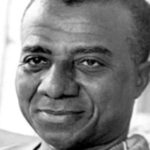
Johannes Nkosi (1905-1930), one of the leading lights of the Communist Party of South Africa (CPSA) in the 1920s and one of that Party’s first African leaders, died as a result of police violence at the age of 25, making him, as described by one author, “the party’s most renowned political martyr.”
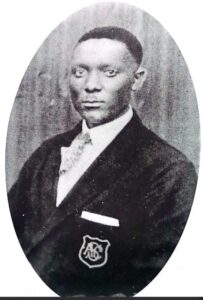
PHOTO CAPTION: Johannes Nkosi. SOURCE: EA Library.
Nkosi was born in Natal, was a Zulu speaker, and though he left Natal for Johannesburg at the age of 14, he would return to Durban to make his mark as a Party organiser. One of Nkosi’s earliest political experiences was his participation in the African National Congress anti-pass campaign of 1919.
Nkosi took up a job as an organiser for Clements Kadalie’s Industrial and Commercial Workers’ Union (ICU) in Johannesburg. There, this former farm worker and domestic servant attended one of the night schools established by the Communist Party. Nkosi, who had a strong political consciousness even as a young teenager must have been moved by the Party’s analysis of and prescriptions for South Africa, as he joined the Party in 1926.
In 1929, ten years after Nkosi arrived in Johannesburg, the Communist Party sent him back to Durban, there to organise the Party’s Durban branch. Nkosi was thus home, and a leading organiser, at the time of the next major anti-pass campaign following the ANC’s 1919 attempt. This campaign, organised by the CPSA, called upon Africans to give up their passes for burning on Dingaan’s Day, December 16, 1930.
At a preparatory meeting in Johannesburg in late October, delegates from all provinces and organisations including the Communist Party, the ANC, trade unions and the ICU gathered. The potential of the campaign, witnessed in this Johannesburg meeting, was not realised, and the Durban area, with Nkosi in charge, was, as Roux notes, the only area to respond substantially to the call. What began as a peaceful meeting turned into chaos when the police attacked. Nkosi and three others were killed that afternoon.
Johannes Nkosi was a motivated and successful young organiser who galvanised the Durban branch of the CPSA and brought a message of dissent before a large African audience in Natal. His martyrdom was not the first, even for one so young, among the African people, and it would be just a harbinger of those to come, as a result of the struggle for African liberation.
ENOCH W.D. DUMA