TULBAGH, RIJK
- 3 Min Read
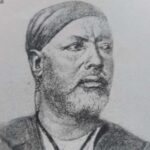
Rijk Tulbagh, (baptd. May 14, 1699-August 11, 1771), was a zealous and capable administrator who rose to become one of the most efficient and respected governors of the Cape of Good Hope in the 18th century.
The son of Dirk Tulbagh of Utrecht in the Netherlands, he came of a military family. Tulbagh was educated at Bergen-op-Zoom and joined the Dutch East India Company at the age of sixteen, reaching the Cape as a cadet on July 9, 1716. He soon transferred to the civil establishment, in which his industry, ability and valuable family connéctions ensured his rapid promotion. Appointed in 1729 to the Councils of Policy and Justice, he took office ten years later as deputy governor in the administration of his brother-in-law, Hendrik Swellengrebel. He succeeded to the governorship on February 27, 1751, and held that office until his death.
As governor, Tulbagh endeavored to promote the well-being of the colony, despite long periods of economic stagnation. He curbed extravagance among company officials by an edict of 1755 and encouraged exploration of the interior with possible new avenues of trade in view. Expeditions in 1752 and 1761 reconnoitered far beyond the colonial boundaries across the Kei and Orange Rivers. In foreign affairs, Tulbagh maintained Dutch neutrality during the Anglo-French colonial struggle of 1756-63, a conflict which brought a measure of relief to a depressed economy through the visits of many foreign ships to the Cape.
Relations with the indigenous and nominally independent Khoi Khoi were not seriously disturbed during Tulbagh’s governorship. He was, however, unable to intervene effectively to regulate conditions of labor for Khoi Khoi in the remote Cape hinterland, where Company officials exercised little control over the trekboers who were steadily expanding the area of White settlement.
Nor were changes effected in the laws governing the treatment of Asian and African slaves at the Cape, although the various local regulations in force were consolidated in 1754 for ease of administration.
Tulbagh was a man of intellectual tastes who took a keen interest in the flora and fauna at the Cape, sending collections to Europe and corresponding with scientists, among them the Swedish botanist Linnaeus, who named a variety of lily after him. He was held in high esteem by whites after him. He was held in high esteem by whites in the colony, and his benevolence and tolerance earned him the sobriquet “Father” Tulbach.
His strenuous efforts to combat the serious smallpox epidemics of 1755 and 1767 did much to limit their severity. For his services to the Dutch East India Company, he was awarded the title of Councillor Extraordinary of India in 1754 and of Councillor Ordinary in 1766.
M. BOUCHER