HOUPHOUËT-BOIGNY, FÉLIX
- 3 Min Read
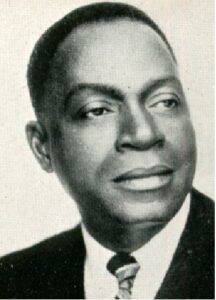
PHOTO CAPTION: Félix Houphouët-Boigny. SOURCE: EA Library.
Félix Houphouët-Boigny (October 18, 1905 – December 7, 1993) was the first President of the Ivory Coast, leading the nation from its independence in 1960 until his death in 1993. Often called the “Sage of Africa” or “Le Vieux” (The Old One), he was a pivotal statesman who transformed the Ivory Coast into one of the most prosperous and stable nations in sub-Saharan Africa through an emphasis on agricultural exports and close cooperation with France. While admired as a master of consensus and dialogue, he was also a controversial figure who maintained a single-party state and spent millions on grand projects like the Basilica of Our Lady of Peace in his birthplace.
Houphouët-Boigny was born in 1905 at Yamoussoukro, the capital city of Ivory Coast. His father was N’Doli Houphouët, a tribal chief and wealthy cocoa farmer, and his mother was Kimou N’Dri, who also descended from a line of hereditary chiefs.
Inheriting his father’s chief status and plantations at the age of five, he was educated at the military post school in Bonzi and the secondary school at Bingerville, where he converted to Christianity and took the name Félix.
He completed his studies at the École Normale William Ponty in Senegal and qualified as a medical assistant from the Dakar School of Medicine in 1925. Between 1925 and 1940, Houphouët-Boigny practiced medicine across various parts of Côte d’Ivoire.
Houphouët-Boigny’s political rise began in 1944 when he co-founded the African Agricultural Union (SAA) to protect local farmers from colonial exploitation, notably leading to the 1946 law that abolished forced labor in French colonies.
Building on his political achievements with the Syndicat Agricole Africain (SAA), Houphouët-Boigny founded Côte d’Ivoire’s first indigenous political party, the Parti Démocratique de la Côte d’Ivoire (PDCI).
The PDCI later became affiliated with a broader coalition of Francophone West African political movements known as the Rassemblement Démocratique Africain (RDA). However, when the French Communist Party sought to exert influence within the RDA, Houphouët-Boigny withdrew from the alliance.
By 1950, he had adopted a position favoring continued political association with France. This shift enabled him to advance rapidly within the French political and administrative system.
Between 1956 and 1959, he served successively as Assistant to the Prime Minister, Minister of Health, and Minister of State in three French governments. Throughout this period, he remained committed to advocating political, social, and economic reforms across French West Africa.
Following Côte d’Ivoire’s independence in 1960, Félix Houphouët-Boigny was elected as the nation’s first president. As President, he fostered the “Ivorian Miracle”, a period of rapid economic growth driven by cocoa and coffee production, and established Yamoussoukro as the nation’s new capital in 1983. His “Françafrique” policy ensured continued French technical and military support, maintaining peace in a region often plagued by coups.
Houphouet-Boigny led a one-party state for thirty years, with the PDCI acting as the only political party of his regime. In 1990, in response to international pressure to increase the nation’s economic growth, Houphouet-Boigny finally allowed a multi-party system.
Unfortunately, his later years were marred by an economic downturn and rising social unrest as the prices of primary commodities collapsed.
Félix Houphouët-Boigny died on 7 December 1993 in Yamoussoukro at the age of 88. He left a complex legacy as the founding father of modern Ivory Coast, memorialized by the Félix Houphouët-Boigny Peace Prize established by UNESCO in 1989.
EA EDITORS