
ADELABU, ADEGOKE
- 4 Min Read
Adegoke Adelabu (full name Gbadamosi Adegoke Adelabu), (September 3, 1915 – March 25, 1958), stands among the most electrifying nationalist figures produced by colonial Nigeria. A son of Ibadan and an uncompromising voice of the African masses, Adelabu embodied the restless political energy of a generation determined to dismantle colonial domination and reclaim dignity, power, and self-definition for African peoples. In Western Nigeria, his name became synonymous with courage, defiance, and resistance to elitism and imperial control.
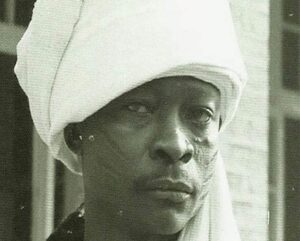
PHOTO CAPTION: A photo of Adegoke Adelabu.
Adegoke Adelabu was born in Ibadan, in present-day Oyo State, in 1915, into a humble Yoruba family. His father, Sanusi Ashiyanbi Adelabu, was a weaver and textile trader, while his mother, Awujola Adelabu, was a petty trader. Awujola was the second wife of Sanusi, but she died when Adelabu was still very young. Following her death, the young Adelabu was raised by a paternal aunt, an experience that further grounded him in the realities of ordinary African life. These were working people whose daily struggles profoundly shaped Adelabu’s lifelong identification with the common man.
He inherited neither wealth nor aristocratic privilege; instead, his rise in public life was driven by exceptional intelligence, self-confidence, and political daring. He later became popularly known as “Penkelemesi,” a Yoruba rendering of the English phrase “peculiar mess,” which he frequently deployed in his speeches to expose the contradictions, failures, and absurdities of colonial governance. The nickname came to symbolize his fiery rhetoric, populist appeal, and unconventional political style.
Although born a Muslim, Adelabu received a secular and Christian missionary education, navigating institutions designed to serve colonial interests and mastering them to challenge imperial authority. He attended St. David’s CMS Elementary School, Kudeti, Ibadan (1925–1929), and CMS Central School, Mapo, Ibadan (1930), before proceeding to Government College, Ibadan, where he distinguished himself academically. In 1936, he gained admission to Yaba Higher College, Lagos then Nigeria’s premier institution of higher learning on a United Africa Company (UAC) scholarship. This education sharpened his nationalist consciousness and provided the intellectual tools that underpinned his political ambition.
After completing his studies, Adelabu worked with the United Africa Company (UAC), rising to senior responsibilities in its produce and haberdashery sections and becoming one of the earliest Africans to hold managerial authority within the firm. He later joined the colonial civil service, serving in the cooperative department, before venturing into private enterprise as a businessman. These experiences across commerce, administration, and entrepreneurship gave him first hand insight into the mechanics of colonial economics and reinforced his conviction that political freedom without economic justice was incomplete.
Adelabu’s entry into partisan politics marked his decisive emergence onto the national stage. Rising rapidly from relative obscurity, he became Chairman of the Ibadan District Council and later served as Federal Minister of Natural Resources and Social Services (1955–1956). Following a decisive break with the ruling regional establishment, he emerged as Leader of the Opposition in the Western Region House of Assembly, where his sharp intellect, fearless criticism, and masterful oratory earned him both admiration and controversy.
Throughout his life, Adelabu moved fluidly between roles as teacher, civil servant, businessman, and politician, reflecting a multifaceted commitment to service, ambition, and radical nationalist politics. His activities spanned education, commerce, and governance, and he became a powerful symbol of self-made success and popular sovereignty in colonial Nigeria. His populist vision resonated with the broader Pan-African awakening sweeping across Africa and the Black world in the mid-twentieth century.
On 25 March 1958, at the age of 43, Adegoke Adelabu was killed in a fatal automobile accident on the Lagos-badan Expressway while returning from Lagos. His sudden death shocked Ibadan and the nation. Protests and unrest followed, accompanied by widespread speculation and conspiracy theories testament to the depth of loyalty he inspired and the threat his political vision posed to entrenched power.
Today, Adegoke Adelabu is remembered as a fearless nationalist, eloquent orator, and populist leader, whose life and career embodied both the promise and the tensions of Nigeria’s late-colonial politics. His residence in Ibadan stands as a historical landmark, while his ideas and legacy continue to inform scholarship and public memory. In Nigeria’s political history, Penkelemesi endures as a symbol of courage, popular struggle, and the unfinished quest for genuine African self-rule.
EA EDITORS