BALIHUTA, KAJIGA
- 5 Min Read
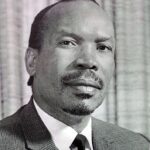
Monseigneur Kajiga Balihuta (1922-1976), was an outstanding churchman, author, and philosopher.
Born in Rugu, he later entered the Catholic secondary school at Mugeri-Katana, 30 km (18 mi) north of Goma, to prepare for a teaching career. Committed to working within the Catholic Church, he attended the seminaries of Nyakibanda and Burasira in Rwanda.
After graduation from seminary, Kajiga assumed increasingly broad responsibilities. On November 11, 1953, he was ordained a priest at Mungombe-Kamituga, and about the same time he was appointed professor of languages and history at the Mugeri-Katana Catholic school. In 1958, he began work as the primary school director and pastor in the parish of Bobandana.
He continued at Bobandana until his nomination and appointment as inspector of Catholic education in the diocese of Goma (North Kivu) on October 1, 1969. In 1974, when the religious educational systems were incorporated into the Zairian government, Kajiga took over administration of the Centre Pédagogique Ntu (Ntu Pedagogical Center), which he had founded in 1967.
Besides serving as a priest and administrator, Monseigneur Kajiga made significant contributions as an author and scholar. The titles of his many publications indicate the wide scope of his interests. (See bibliography below). In particular, the Dictionnaire Swahili-Français, Français-Swahili (Swahili-French, French-Swahili Dictionary,” 1975) is living testimony to Monseigneur Kajiga’s intellectual capacities. He was elected a member of the Société des Linguistes du Zaire (Society of Zaire Linguists”), and counselor to the Société des Historiens Zairois (Society of Zaire Historians”).
Monseigneur Kajiga Bahihuta’s major intellectual contributions were in the realm of African philosophy. Kajiga hoped to study and bring to light the cultural values of the Ntu (African genius), to rehabilitate the Muntu (African man), and give him his rightful role in the broader conception and structure of humanity. The ultimate goal of Kajiga’s philosophy was to ‘ntu-ize’ the African uprooted by many years of colonization and persecution. By Untu, Monseigneur Kajiga meant that which is basic to the Muntu and to Bantu Africa (Black Africa).
Thus, Untu philosophy is a defense of the cultural values and linguistic unity of sub-Saharan Africa. Untu is also the life and torch in African man’s existence. And Untu is the foundation and basis of a new African humanism. To realize his aims, Kajiga wished to take a complete inventory of the different manifestations of the Ntu spirit as expressed in literature, art, philosophy, religion, and social relationships.
Convinced of the importance of such a vast and ambitious project, he made a tour of Africa to explain the problem to his African brothers. He held a series of conferences in Cameroun, Nigeria, Rwanda, Burundi, Uganda, Kenya, and Tanzania to present his thoughts on the Untu and on Africa’s contribution to universal civilization.
Although Kajiga was a competent theoretician, he also was deeply interested in translating his ideas into practical reality. To formulate and disseminate Ntu philosophy, he founded the Centre Pédagogique Ntu, an organization of applied research and a workshop for the production of scholastic materials popularizing Ntu. At this center, he focused his activities on the definition and study three integrally related subjects: a common national language for Zaire, the reform of a colonial-oriented educational system, and the development of a Zairian cultural philosophy within the broader Bantu (African) experience.
Emphasizing that language is the expression of the most profound beliefs of a people, the basis of thought, and the vehicle of communication, Monseigneur Kajiga supported adopting a national language. He argued that a country without a national language is, in reality, mute. He proposed that Lingala become the future national language of Zaire, because it had a national constituency.
It was used in the army, by the police, on the radio, in music, in political dealings, and in tourist exchanges. Taking into account the range of expression and potential for expansion, however, Kajiga stressed that Swahili would play a major role in scientific treatises and the culture and commerce of the African peoples. Swahili, he believed, would become a future language of the Organization of African Unity (O.A.U.).
As a member of the Commission for Educational Reform in Zaire, Morseigneur Kajiga promoted the use of vernacular languages in the primary and secondary schools. In Kajiga’s opinion, such reform was necessary because Zairian students were faced with a double learning task: simultaneously, they had to master the material content of their courses, and they had to learn in French, the borrowed language of instruction.
This problem resulted in the repetition of grades and a massive attrition rate. Monseigneur Kaji-ga was conscious of the complexities and difficulties of modifying an educational system built on the language and methods of Zaire’s former colonizers, but he was convinced that African children could learn properly only when taught in their own languages.
Kajiga frequently reflected on the basic goals of education. He believed that all education aimed to develop capable men, conscious of their duty. He believed that the harmonious development of Zaire would be found in good schools. He knew the competency of teachers was not measured by the number of their diplomas, but by their ability, love for their work, and unselfish dedication for their tasks. It was this ideal which he always promoted, hoping to aid the youth of Zaire to rise, to discover themselves, to know, and to discipline themselves to build a nation founded on an authentic Zairian culture.
When Monseigneur Kajiga Balihuta died on the evening of January 3, 1976, after a long and painful illness, Zaire lost not only a philosopher, but also a linguist, an educator, a psychologist and a humanist.
RUDURI KWEZI and RURIHO MUNANIRA