BANDA, HASTINGS
- 3 Min Read
Hastings Kamuzu Banda (c. 1898 — 1997) was the principal leader of Malawi’s nationalist movement, the architect of the country’s independence from British colonial rule, and the first President of Malawi, serving from 1966 to 1994 after previously serving as Prime Minister from 1964 to 1966. His leadership guided Malawi through its formative years as an independent nation, making him one of the most influential figures in the country’s history.

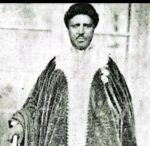
PHOTO CAPTION: Hastings Kamuzu Banda. SOURCE: EA Library.
Banda was born circa 1898 near Kasungu in British Central Africa (present-day Malawi) to Mphonongo Banda and Akupingamnyama Phiri, who were subsistence farmers of the Chewa ethnic group. He came from a modest rural background and received his early education at mission schools in Kasungu under the Church of Scotland. As a young man, he worked in Southern Rhodesia (now Zimbabwe) and later in South Africa, including employment in mining-related work, before pursuing higher education abroad. He enrolled at the Wilberforce Institute in Ohio, graduating in 1929. He wanted to become a medical doctor and briefly enrolled as a premedical student at Indiana University. He was later admitted as a student at Meharry Medical College in Tennessee, graduating in 1937. In order to achieve the qualifications needed to practice in the British Empire, Banda then continued his studies at the University of Edinburgh (1941) and subsequently practised medicine in the United Kingdom and Ghana before returning to his homeland.
Banda’s career reflected remarkable determination and discipline. While practising medicine abroad, he became increasingly involved in African nationalist politics and strongly opposed the Federation of Rhodesia and Nyasaland. Returning to Nyasaland in 1958, he quickly emerged as the leading voice for independence, serving as president of the Malawi Congress Party and mobilising mass support through political rallies and anti-colonial campaigns.
After periods of detention by colonial authorities, he led his party to electoral victory and became Prime Minister in 1963. Upon independence in 1964 and the establishment of a republic in 1966, Banda became President. His administration invested in infrastructure, agriculture, education, and public administration, helping to modernise Malawi.
However, his rule also became increasingly authoritarian, as he established a one-party state and was declared President for Life in 1971. Despite controversy surrounding his governance, his impact on Malawi’s political development and state-building remains significant.
In his final years, Banda’s health deteriorated due to heart and respiratory complications. After being hospitalised in Malawi, he was transferred to Johannesburg, South Africa, where he died on 25 November 1997. His death prompted national mourning, and he was accorded a state funeral attended by thousands of Malawians and several African leaders before being laid to rest at the Kamuzu Mausoleum in Lilongwe.
Banda’s legacy remains complex and widely debated. Many Malawians honour him as the “Father and Founder of the Nation” who secured independence and laid the foundations of the modern state, while critics point to the authoritarian nature of his rule and restrictions on political freedoms. Nevertheless, his role in shaping Malawi’s history ensures that he remains one of Africa’s most consequential twentieth-century leaders.
EA EDITORS