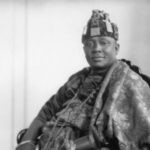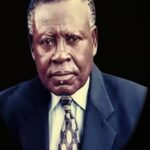
BRIMA LAHAI BOMBO
- 3 Min Read
Bombo Lahai Brima (19?-August 17, 1975), or Bombolai Brima, was chief of Tonko Limba in the Northern Province from 1952-75. In 1955, following some disaffection, he moved the administrative center of Tonko Limba from Kabubuya to Kanumeya.
He was the son of Bombo Lahai Konko Gbanku and Binti Kayako. His father ruled Tonko Limba from about 1884 to 1911. His mother was later married to Bombo Lahai Yusufu, in whose household Brima was brought up. Bombo Lahai Yusuf ruled Tonko Limba from 1922 to 1931, when he was deposed.
On his election in 1952, Brima became the seventh recorded paramount chief of Tonko Limba. His main opponent was Sori Bangura of the Kabubuya ruling house. (The Kabubuya ruling house, together with three other ruling houses had the right to nominate successors to rule Tonko Limba chiefdom.)
Three years after his election, there were anti-chief riots in many parts of the Northern Province. Though his chiefdom was not directly affected, Brima himself suffered some inconvenience. A group of dissidents purporting to represent a large section of the chiefdom made a series of allegations against him. The charges made ranged from the imposition of extortionate fines to the pursuing of a political vendetta against his opponents.
As commissions of inquiry into the conduct of other chiefs were being appointed in neighbouring chiefdoms, the dissidents petitioned that a similar inquiry be instituted into Brima’s conduct. Failing to secure official approval for this action, however, some of the petitioners razed to the ground houses inhabited by members of Brima’s family. Convinced that Kabubuya, the headquarters of the chiefdom, was hostile territory, Brima established a new headquarters at Kanumeya, a town then inhabited by Mandinka blacksmiths who had immigrated to Tonko Limba mostly from neighbouring chiefdoms.
In the years immediately following Sierra Leone’s independence in 1961, Brima gave his political loyalty to the Sierra Leone People’s Party (S.L.P.P.), whose support was largely based on the influence of chiefs and other traditional authorities. But when the All People’s Congress (A.P.C.) was founded in 1960, Brima again found himself at odds with his subjects, who saw the new party as a largely Limba organisation which deserved their support. The differences became aggravated when Brima, on instructions from the government, banned meetings planned by the A.P.C.
Despite this harassment, the A.P.C. won the Kambia East seat in the general elections held in 1962, and won it again in 1967. When the A.P.C. came to power in 1968, Brima and many of his opponents became reconciled. Nevertheless, he never returned to Kabubuya, his former administrative center.
An ardent Muslim, Brima offered his Friday prayers regularly. He made the pilgrimage to Mecca, thus securing the title “Al-Hajj.” Though he had no formal schooling, he had no difficulty in dealing with official correspondence. He died in 1975, after 23 years in office.
D. AMADU TURAY