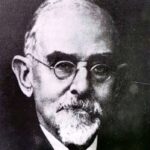
CAULKER, RICHARD CANRAY BA
- 4 Min Read
Richard Canray Ba Caulker (18?-1901) was ruler of the Bumpe chiefdom, in Sherbro territory, about 64 km (40 mi) southeast of Freetown, from 1864-88, and 1895-98.
He was a member of the Caulker family, long prominent in Sherbro territory, which also ruled over another chiefdom from Shenge, further south. He was educated at the Church Missionary Society (C.M.S.) grammar school at Freetown at the expense of the colonial administration. He succeeded his uncle, Theophilus Caulker (ruled 1857-64), as ruler of Bumpe on the latter’s death in 1864.
He was a friend of Gbenjei, ruler of the Kaa-Mende (the western branch of the Mende), and married one of Gbenjei’s daughters, Yogbo. When she left home to join Caulker, she brought with her her brother Bagi. Upon graduating from the Sande and Poro secret societies, respectively—i.e. upon reaching puberty–Yogbo took the name of Bora, and Bagi took the name of Kong. The territory around Senehun came to be called Kongbora, which name it retains to this day.
Bora was a dutiful wife, but had no children. Richard Caulker decided to compensate her by building for her and her brother a new town, not far from Rotifunk. Originally called Mobagi, the name of the town was changed to Senehun as it expanded. Other towns founded in the neighbourhood by Kaa-Mende warriors were annexed to Senehun, thus increasing the territory of the Kpaa-Mende state in the region.
In 1875, the so-called Kinigbo war occurred in Caulker territory. George Stephen Caulker II, who ruled a chiefdom from Shenge, on the coast opposite the Plantain Islands, quarreled with his cousin and deputy, John Caulker. After being attacked by George, John hired Mende warriors, led by Kinigbo and Vana, who devastated the Shenge chiefdom.
The acting governor of Sierra Leone, Samuel Rowe, (later to serve as governor from 1877-80 and from 1885-88), led two punitive expeditions against the Mende in 1875, and had the three ringleaders – John Caulker, Kinigbo, and Vana- sent to Freetown for trial. Found guilty of murdering a policeman in British territory, they were hanged at Bendu, opposite Sherbro Island.
To profit from his victory, Rowe called a large meeting of chiefs at Senehun, in the course of which he made an agreement with the two Caulker rulers, George Stephen, and Richard Canray Ba. By the terms of this compact, they agreed to grant the Colony the right to collect customs duties in their territories, and to submit disputes to the governor for arbitration.
On December 19, 1881, Richard, like the other Caulkers, acknowledged the validity of the Turner Treaty of September 24, 1825, thus bringing the Caulker chiefdoms under the British crown. This treaty, originally concluded with the chiefs of Sherbro country, including the Caulkers, by Governor Sir Charles Turner (term of office 1825-26), had ceded the Sherbro territories to Sierra Leone Colony. It had, however, not been ratified by the British Colonial Office, as the British were then seeking to avoid any extension of their responsibilities. Now, however, in 1881, Rowe was reviving and confirming the treaty.
Although the chiefs had agreed to submit disputes to the British, another Caulker family feud turned into open warfare in 1888. Serious disturbances occurred as two Caulkers, William and Thomas Kugba, again brought in Mende warriors, this time against Thomas Neale Caulker, ruler of Shenge. But William and Thomas Kugba Caulker were taken captive by the British, and were hanged for murder. Richard Canray Ba was suspected of complicity in the disturbances, but could not be convicted. Instead, he and three other supporters of William were sent into exile in the Gambia.
After seven years of exile, Richard returned in 1895, and was reinstated as chief of Bumpe. When the Protectorate was proclaimed in 1896, and the Hut Tax imposed, Richard was at first inclined to ask his people not to pay. He then changed his mind, however, and paid £10. But Governor Sir Frederic Cardew, who was in office from 1894-1900, was suspicious of him, and had him deposed. He was imprisoned at Kwelu, inland from Bumpe. His successor was his cousin, James Canray Ba Caulker, who had already been made a paramount chief in 1889.
ARTHUR ABRAHAM