VAN DER STEL, SIMON
- 4 Min Read
Simon Van der Stel, (October 14, 1639-June 24, 1712), commander and governor of the Cape of Good Hope, was a talented administrator who contributed much to the expansion of the colony during the early period of Dutch East India Company rule.
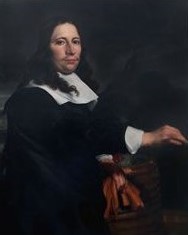
PHOTO CAPTION: Simon Van der Stel. SOURCE: EA Library.
He was born on shipboard between Batavia (Jakarta) and Mauritius, of which island his father, Adrian van der Stel of Dordrecht, became commander in November 1639. His mother, Maria Lievens, was partly of Indian origin. In 1645 the family moved to Ceylon (Sri Lanka), where in the following year the elder Van der Stel was killed in an uprising against the Dutch. His son spent the remainder of his youth in Batavia, sailing for Amsterdam in 1659. There he became a merchant and also served as an infantry captain in the Franco-Dutch War of 1672-78.
Van der Stel assumed command of the Cape settlement on October 14, 1679. His orders were to promote the economic well-being of the colony, a task which he undertook with energy and close attention to detail. Agriculture was a pressing problem, and Van der Stel took immediate steps to encourage production. In November 1679, he decided to offer freehold land to colonists in a district east of the seaport which was named Stellenbosch, after him. The new settlers prospered, local government was instituted, and wheat production rapidly increased.
His success led to the allocation of more farms to the northeast in a region named Drakenstein in honor of the visiting commissioner general of 1685, Hendrik Adrian van Reede tot Drake (n) stein. The arrival in 1688 and 1689 of more than 150 French-speaking colonists, chiefly refugees from the Huguenot persecutions in France, greatly stimulated agriculture at Drakenstein, where most of them were settled. Care was taken to prevent any separatist tendencies among the newcomers.
Viticulture was another branch of farming to attract Van der Stel’s attention, and his advice led to a marked improvement in the quality of Cape wine. He also encouraged the planting of trees and the development of a timber industry, while the garden in Table Valley, useful for the supply of fresh vegetables, was transformed by the culture of indigenous plants. The company’s outposts for trade and defense in the interior were strengthened and placed under closer supervision.
Van der Stel travelled extensively in a search for copper and other minerals, reaching Namaqualand in 1685. Copper deposits, however, were too inaccessible for commercial exploitation. Van der Stel’s careful management of resources greatly reduced the Cape’s annual deficits, although he was accused of extravagance in his successful efforts to make the Castle a comfortable and dignified seat of government.
Slaves continued to supply the labor needs of the Dutch East India Company and, to an increasing extent, those of the colonists. Many slaves were obtained by the company in trading voyages to Madagascar. The disintegration of indigenous society, however, transformed many of the pastoral Khoi Khoi into farm workers whose skills were favorably commented upon in 1695.
The independence of the Khoi Khoi people living outside the social structure of the colony was greatly circumscribed during Van der Stel’s administration. Tribute was collected, and the government confirmed chiefs in office. Illegal trade between colonists and Khoi Khoi on the outer fringes of the settlement was minimized by a regulation of 1692 designed to arrest the movement of stock farmers into the interior in search of good grazing.
The Cape was drawn into a colonial conflict during the Franco-Dutch War of 1688-98, and Van der Stel was responsible for the effectiveness of the shore defenses and the organization of the military garrison and the burgher militia. A notable triumph in 1689 was the capture in Table Bay of two richly laden French merchantmen, the Normande and the Coche.
Van der Stel’s title was elevated from that of commander to governor from June 1, 1691, and in the following year he was made a Councillor Extraordinary of India. After his retirement on February 11, 1699, he withdrew from public life and devoted himself to farming his famous Cape estate, Constantia. He was succeeded as governor by his son Willem Adrian (1664-1733), who was compelled to resign in 1707 following complaints by the colonists that he furthered the financial interests of himself and other officials at their expense. There is no evidence to suggest that Simon van der Stel was implicated in the affair.
M. BOUCHER