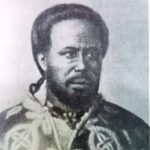
WAIYAKI WA HINGA
- 3 Min Read
Waiyaki wa Hinga (c.1850–1892) was a prominent Kikuyu leader and one of the earliest African rulers to resist British colonial penetration into present-day Kenya.
PHOTO CAPTION: Chief Waiyaki wa Hinga. SOURCE: EA Library.
He was born around 1850 in the region of Dagoretti, near present-day Nairobi, into the influential family of Hinga, a respected Kikuyu elder and leader. He was raised within Kikuyu traditions, receiving instruction in indigenous governance, diplomacy, military organization, and customary law. From an early age, he displayed qualities of leadership that earned him recognition within his community.
Following the death of his father, Waiyaki succeeded as leader of the Dagoretti people. During his early years as chief, he maintained peaceful relations with neighbouring communities and initially welcomed Christian missionaries and traders, believing that cooperation would benefit his people. He even allocated land for the establishment of one of the earliest missionary stations in the area.
However, relations between the Kikuyu and British colonial representatives gradually deteriorated as colonial ambitions became more apparent. The activities of the Imperial British East Africa Company increasingly threatened the political independence, land rights, and traditional authority of local communities. Waiyaki became one of the principal opponents of British interference, refusing to submit to external control and organizing resistance against colonial encroachment.
His opposition culminated in a series of confrontations with British officials during the early 1890s. In 1892, Captain Frederick Lugard ordered his arrest after accusing him of obstructing British authority. Waiyaki was captured under controversial circumstances and removed from his homeland. Historical accounts differ regarding the exact circumstances of his death, but most agree that he died while in British custody during the journey toward the coast later that year. Oral traditions maintain that he was buried alive or otherwise mistreated by colonial authorities, although documentary evidence remains inconclusive.
Although his resistance was ultimately unsuccessful in preventing British occupation, Waiyaki’s determination inspired later generations of Kenyan nationalists who struggled against colonial rule throughout the twentieth century. He became an enduring symbol of African resistance, dignity, and the defence of indigenous sovereignty.
Today, Chief Waiyaki wa Hinga is honoured as one of Kenya’s earliest freedom fighters. Roads, schools, and public institutions bear his name, while historians continue to recognize his role in the early history of Kenyan nationalism and resistance to colonial domination. His life represents the resilience of African communities confronted by imperial expansion and remains an important chapter in Kenya’s national heritage.
EA EDITORS